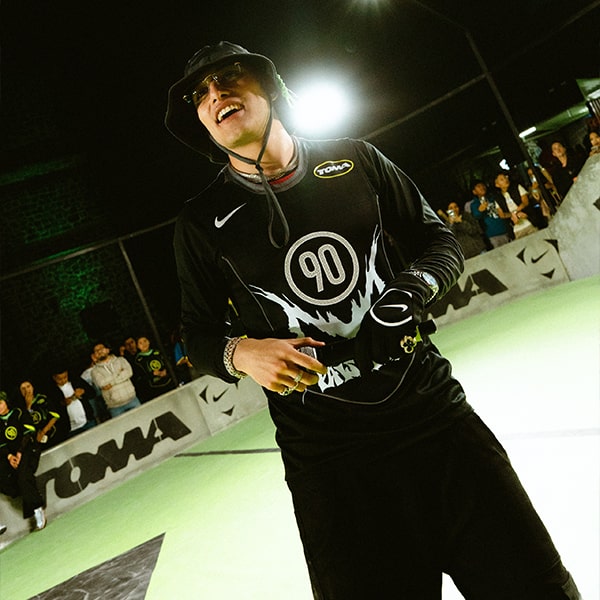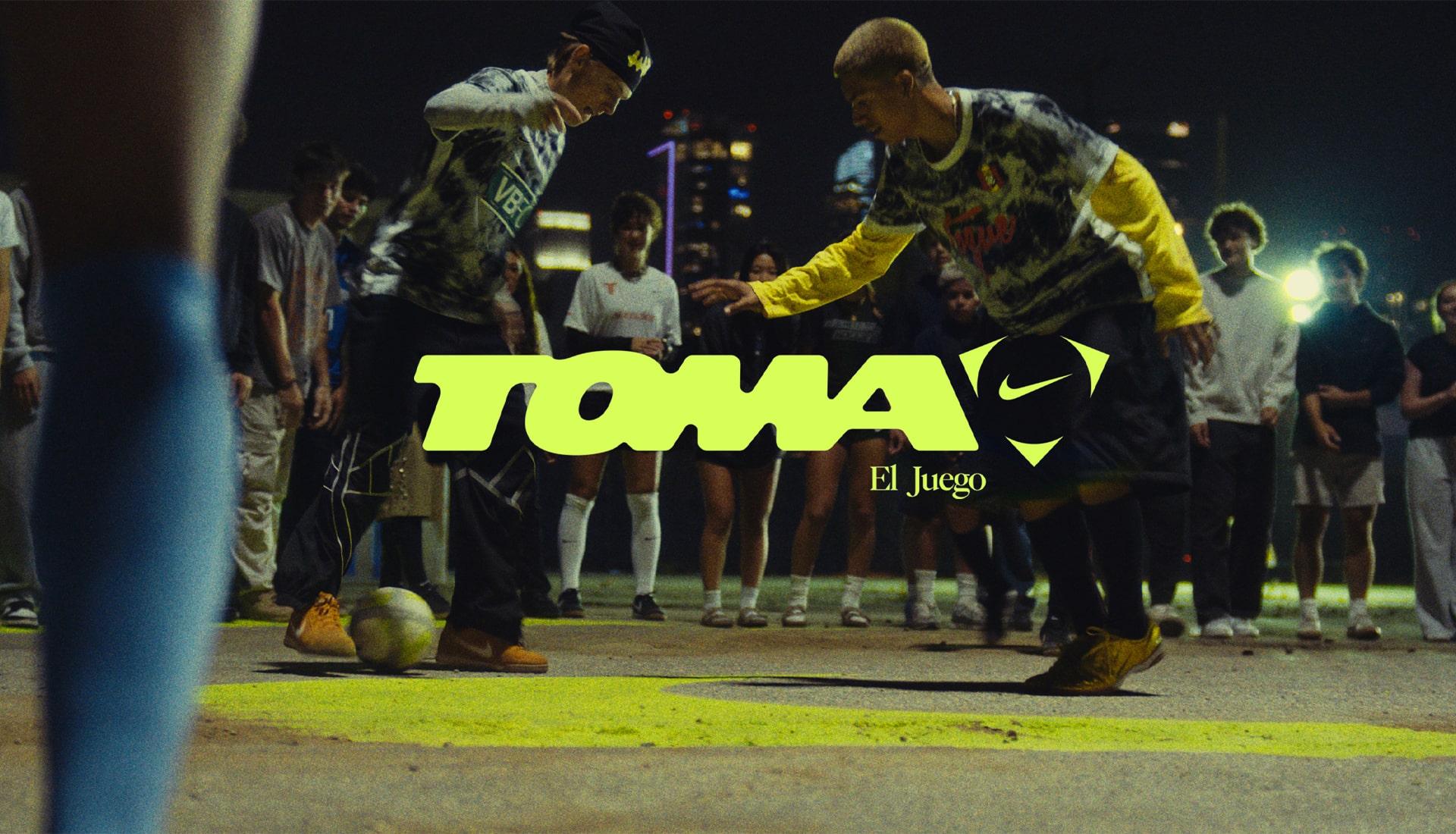
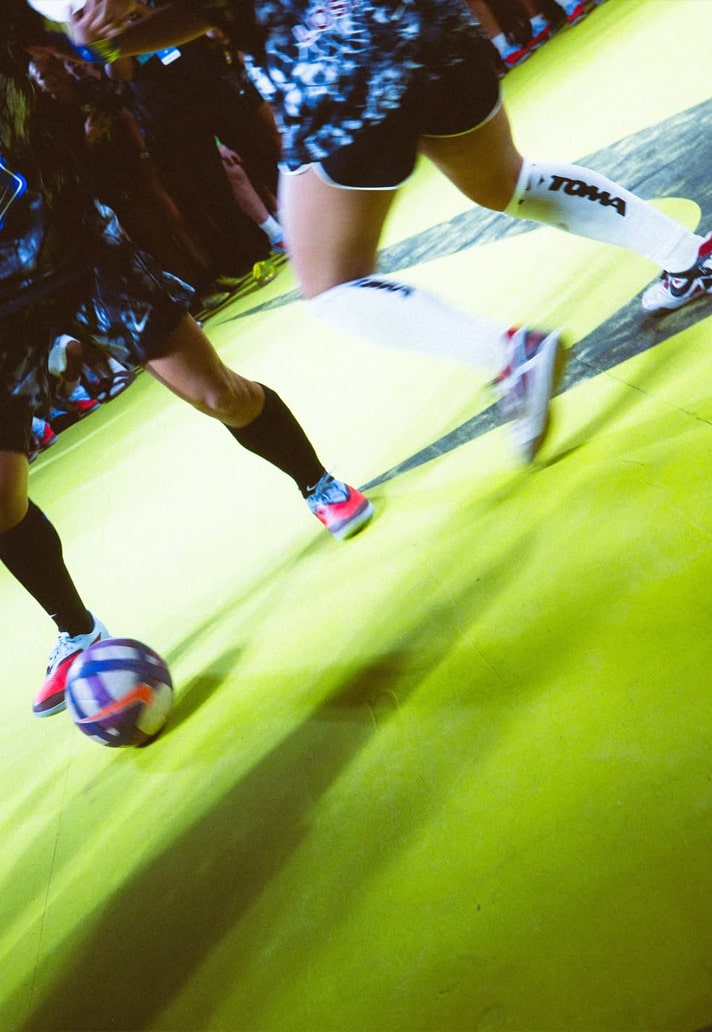
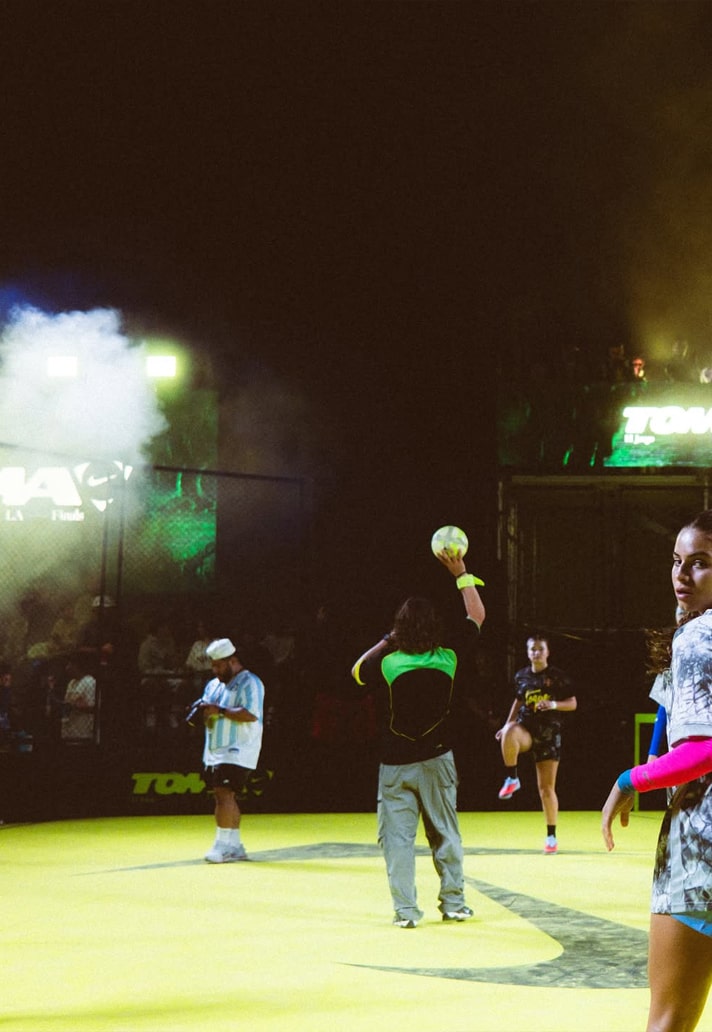
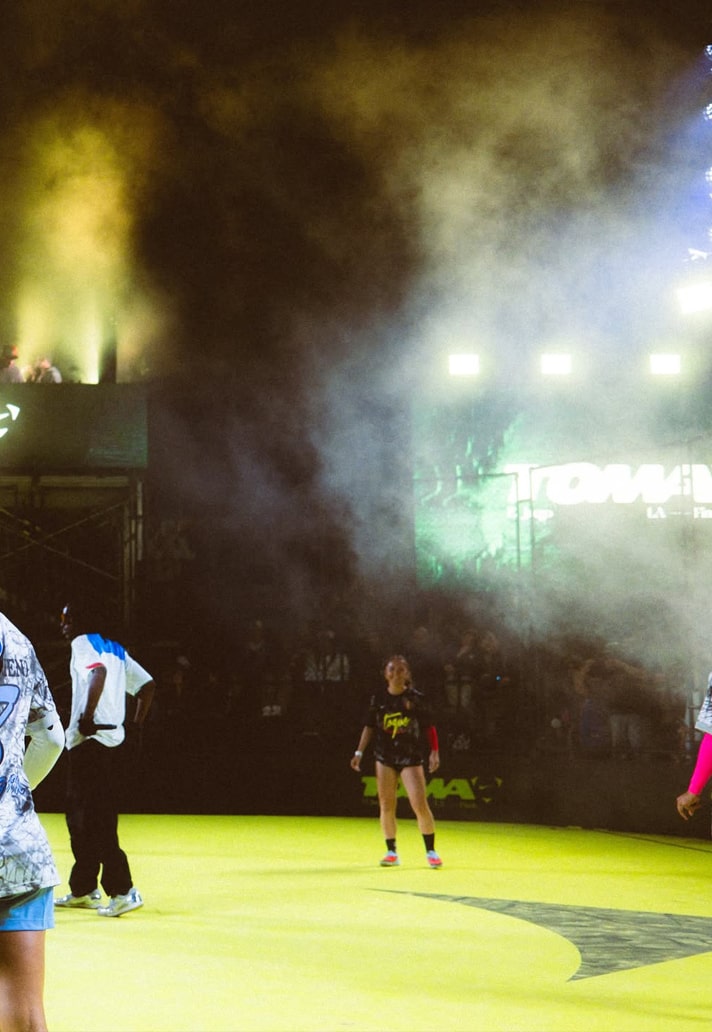
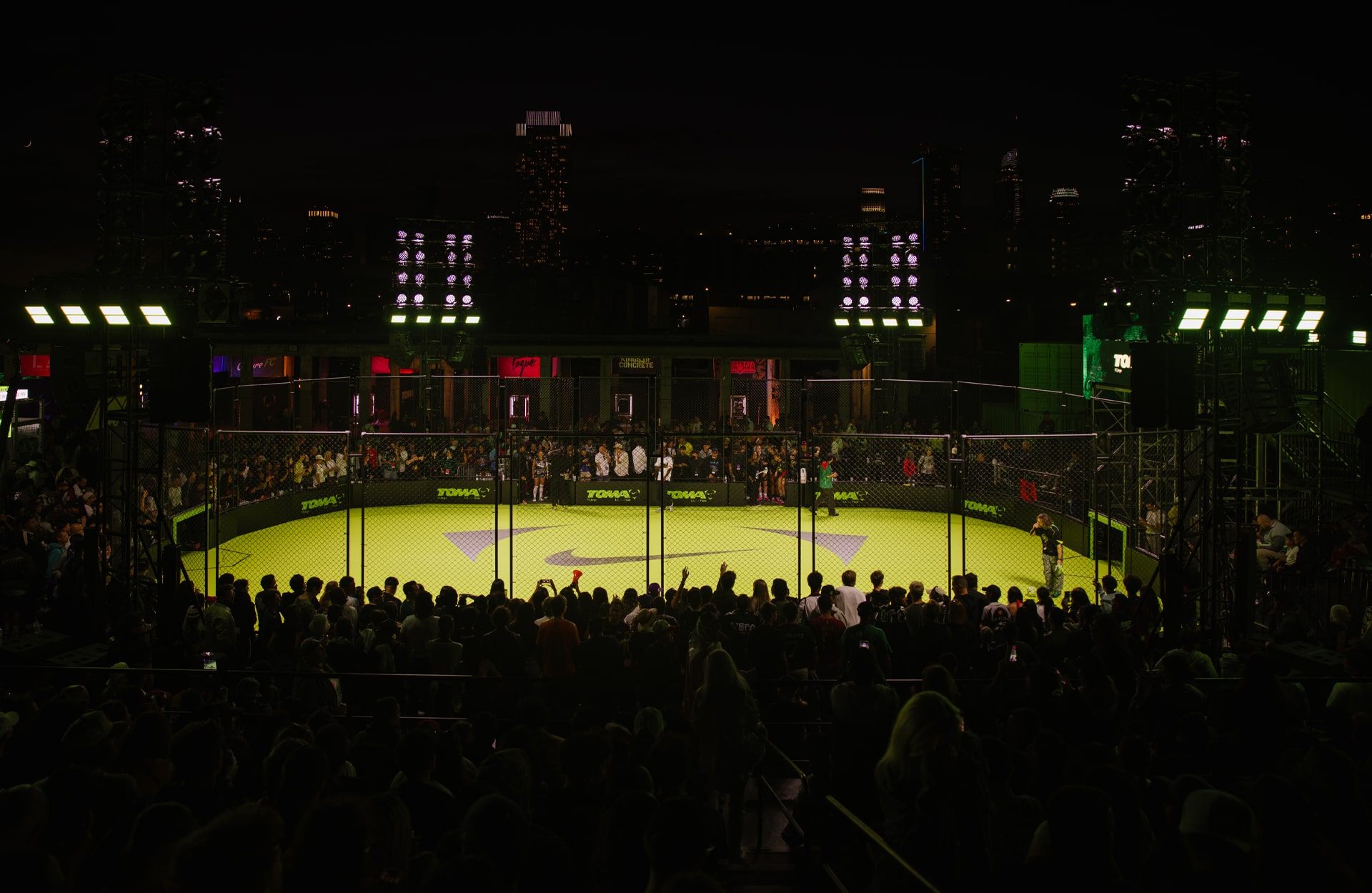
Los Angeles. Night. Eight neighbourhoods. One ball. No big stadiums, no official kits. Just raw energy, hyperlocal pride, and the sound of sneakers slapping concrete. Welcome to Toma El Juego — Nike’s latest cultural imprint on the football landscape.
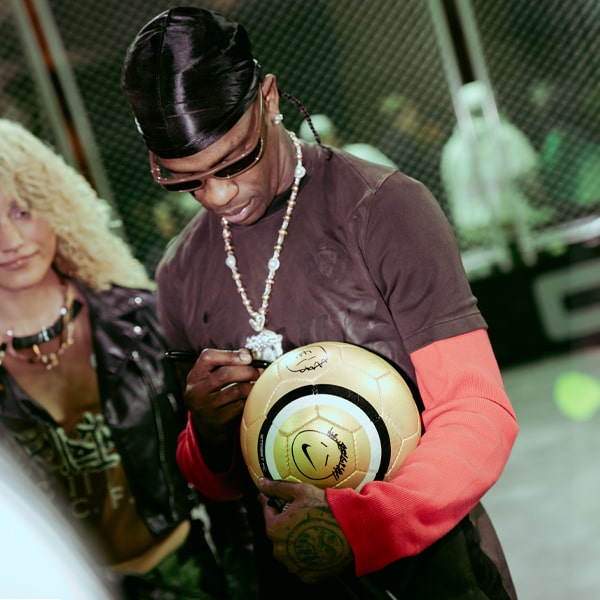
Picture the scene: floodlights overhead. Music bleeding into the night air. Eight crews clashing under an open sky, repping neighbourhoods not just through football, but through style, energy, and story. And then — as if pulled from the pages of a dream — Travis Scott, Vinicius Jr, and Young Miko step in to host. This is Toma El Juego: Nike’s bold new vision for street football.
And last night, it wasn’t just hype. It was history. The Toma LA Finals delivered a cultural moment that blurred the line between game and movement. The best female and male players of the night? They walked away with 2-year Nike deals. The winning team? Now officially signed by Nike.
A traditional football tournament? Barely. This was football myth-making at its most potent.
If you felt something shift when the T90 re-emerged, this is what it was tethered to. A memory, sure. But more than that — a reminder that the soul of football has always been found outside the lines.
Toma El Juego — Spanish for Take the Game — is a youth-led, hyperlocal football platform that reframes the sport through creativity, expression, and identity. It’s built by Nike, but authored by the streets. A redefinition of what football looks like when it’s driven by community, not corporations. Toma LA was the first chapter — and it arrived like a cultural flashbang, albeit with a very familiar vibe.
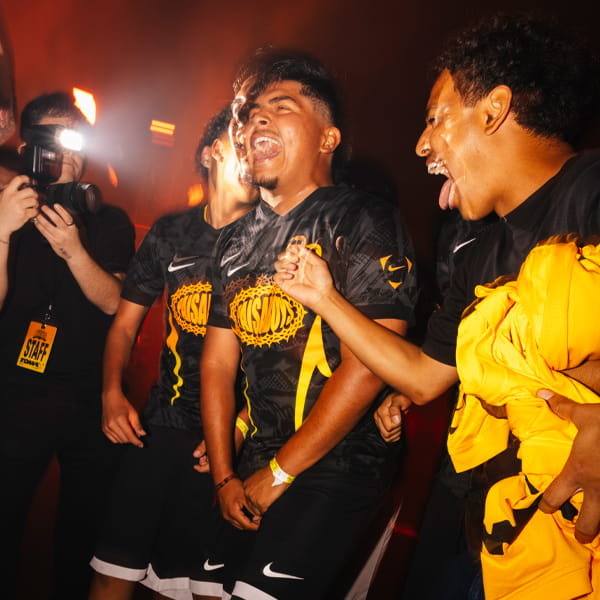
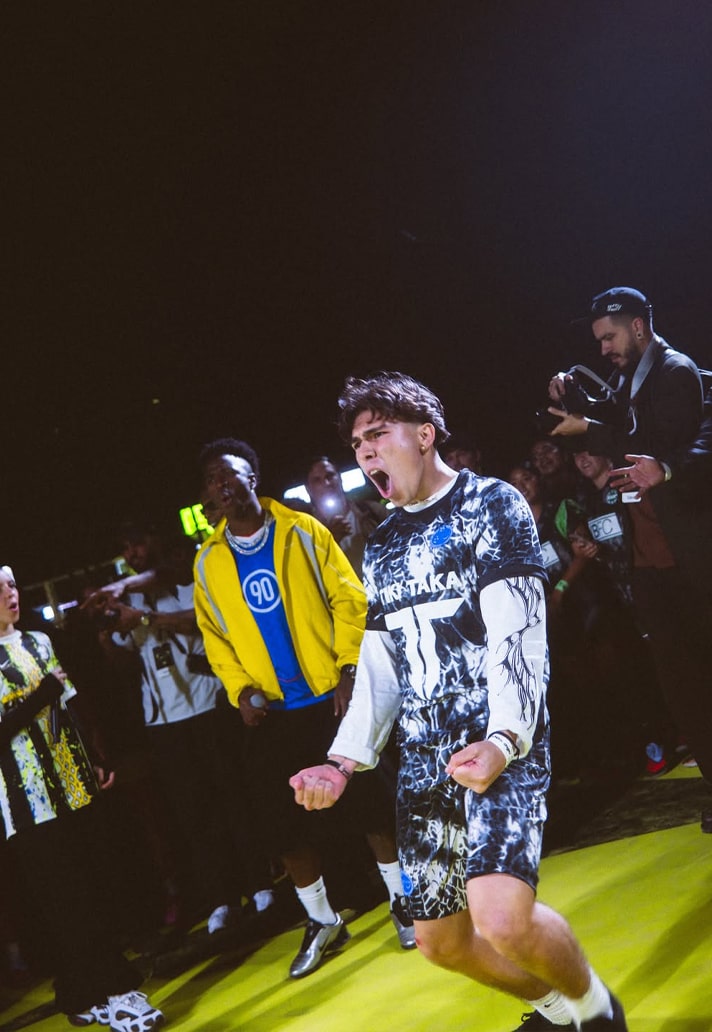
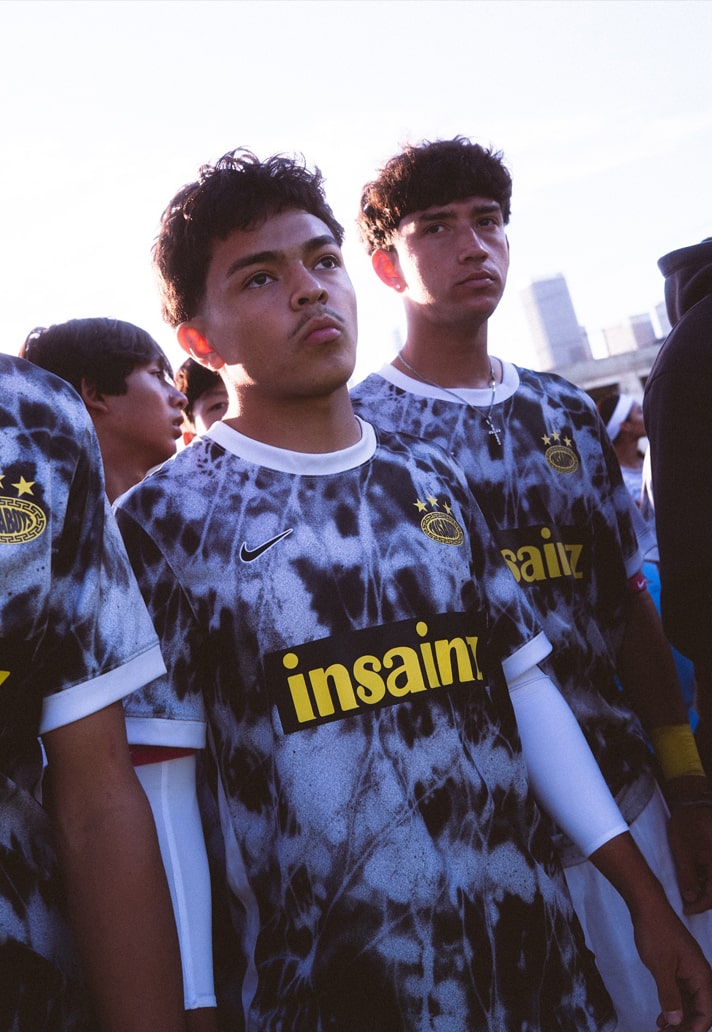
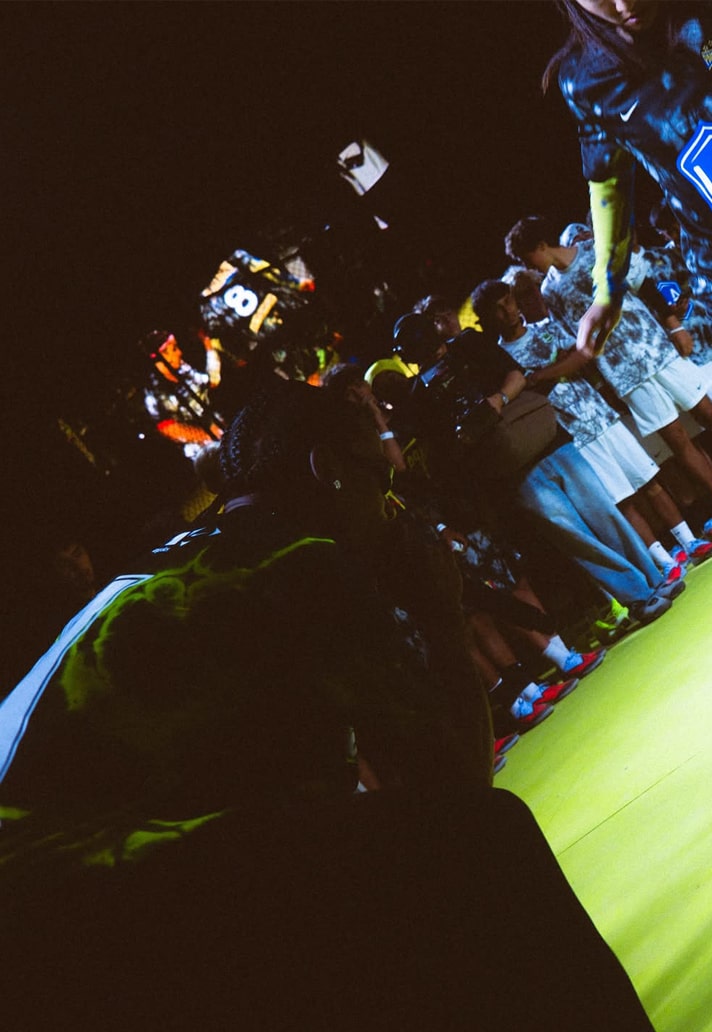
Eight teams, each from a different corner of the city, came together for a knockout tournament that fused football with sound, art, and design. Teams like Culture FC, Insainz, Football For Her, and La Comunidad weren’t just playing for a trophy — they were playing to put their neighbourhoods on the map.
This wasn’t polished. It was raw, urgent, real. The football equivalent of a zine — hand-stitched by the community, broadcast to the world.
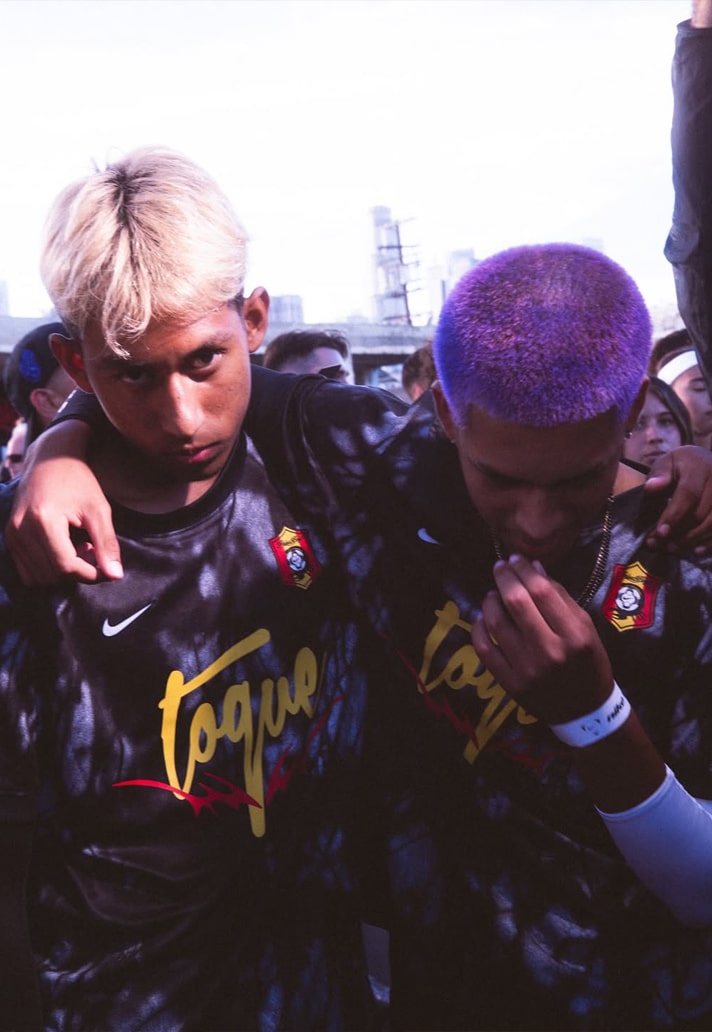
Toma LA was never just about the pitch. It was about presence. Nike, working in collaboration with LA streetwear disruptors Paisaboys and Badfriend, turned the tournament into a creative canvas — one that merged fashion, visual storytelling, and culture with the sport.
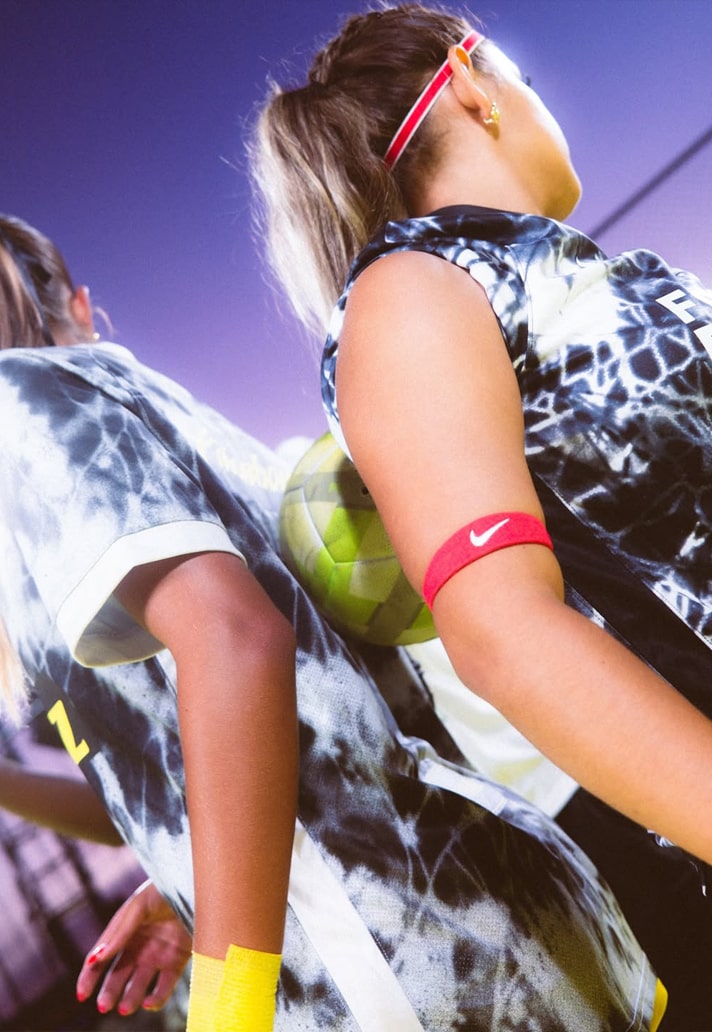
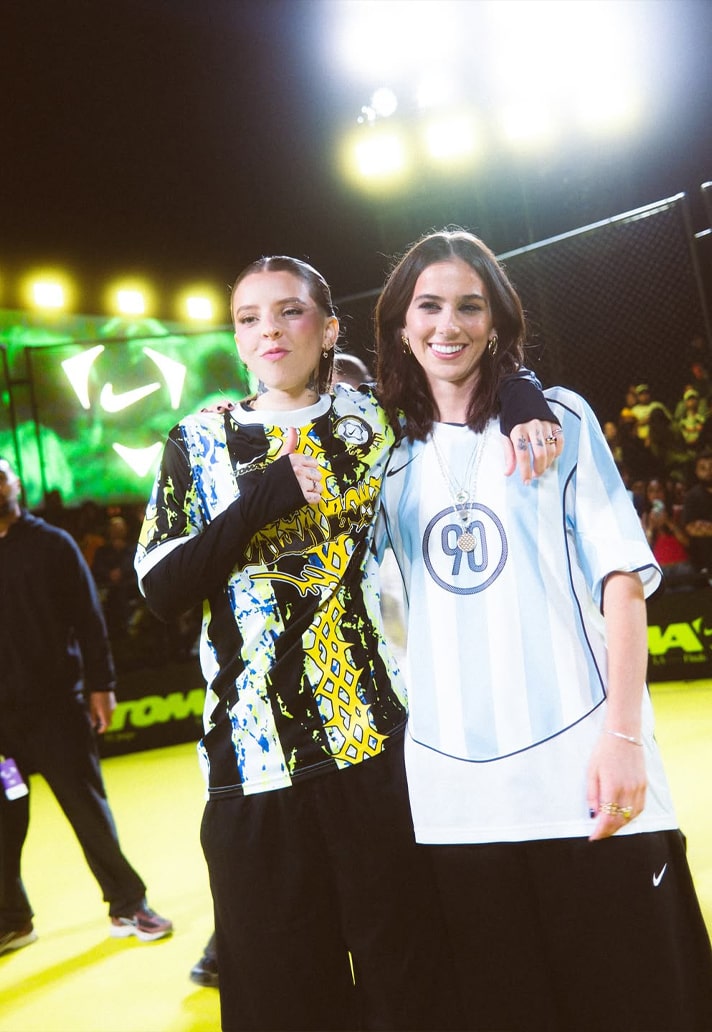
Paisaboys outfitted teams like Insainz, La Comunidad, Toque, and VBFC in kits that defied traditional football aesthetics. Their designs drew on mixed media, claymation, and sculpture — wearable expressions of East LA’s layered cultural fabric. Badfriend, meanwhile, brought a punk sensibility to the kits of Culture FC, Football For Her, House of 626, and Tiki-Taka, infusing each piece with a DIY ethic built on stencilling, repurposed graphics, and visual storytelling rooted in skate and art scenes.
These weren’t just kits — they were uniforms of identity. On the pitch, players became moving installations. Off it, fans could access a limited capsule drop of reworked apparel, including lifestyle versions of the tournament jerseys, exclusive tees, and hoodies that captured the event’s cultural temperature. The drop hit first at the Toma LA Finals — a reward for showing up — and will land more widely across LA on 31 July at retailers like Niky’s Santa Monica, Undefeated La Brea, Union LA, Sally’s Shoes in El Monte, Homebred, Bodega, Private Sneakers Long Beach, and BAIT Melrose.
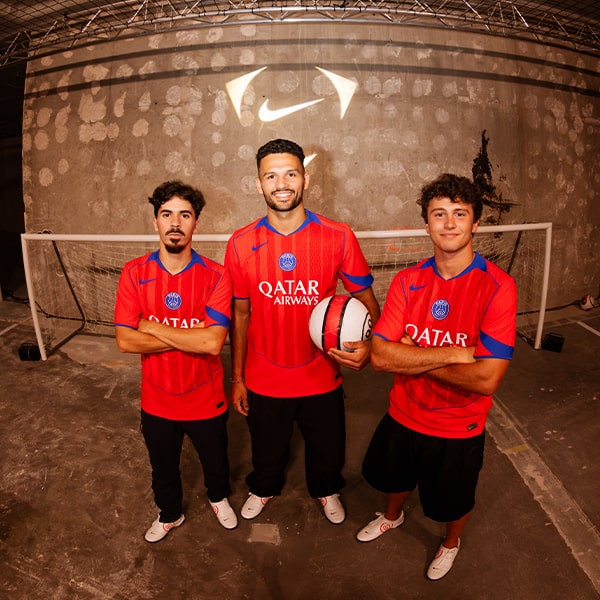
Even the artefacts told stories. A bespoke reworking of Nike’s original Secret Tournament ball surfaced at the finals, bridging past and present. On the sidelines, reinterpreted PSG merch and hand-altered Nike gear created a gallery of what football might look like in the hands of artists instead of agents.
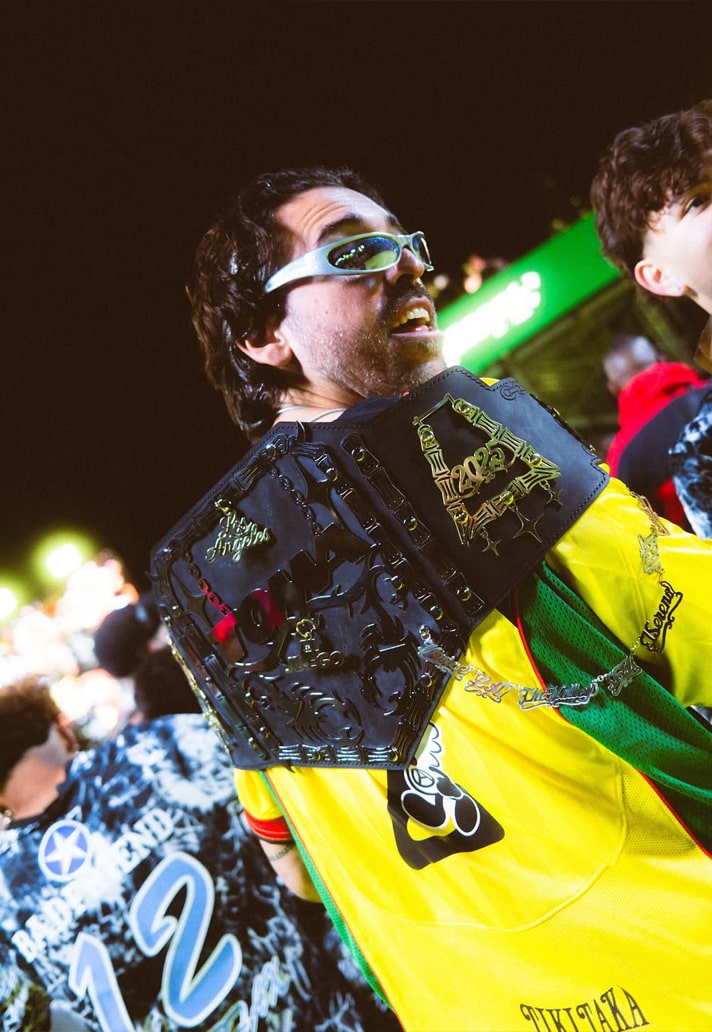
From the balling to the belt custom built for the winners, this was football on a different frequency — not made for broadcast, but made to be lived.
The finals may have wrapped in Los Angeles, but Toma El Juego is already moving. The next wave hits Seoul, where a new generation of football creatives are waiting to shape the format in their image. Europe is inevitable — London, Paris, Berlin, each likely primed to put their own spin on what street football looks like when local culture takes the lead.
What makes Toma different is its tempo. It doesn’t move like other small-sided iterations of the game, like Kings League or the Baller League. Those formats chase spectacle. Toma chases substance. It embeds. It listens. It mirrors the mood of the city, and then amplifies it. It’s not just about the players — it’s about the people who design the kits, shoot the photos, paint the murals, run the pop-ups, and spin the vinyl.
Where others sell virality, Toma nurtures authenticity.
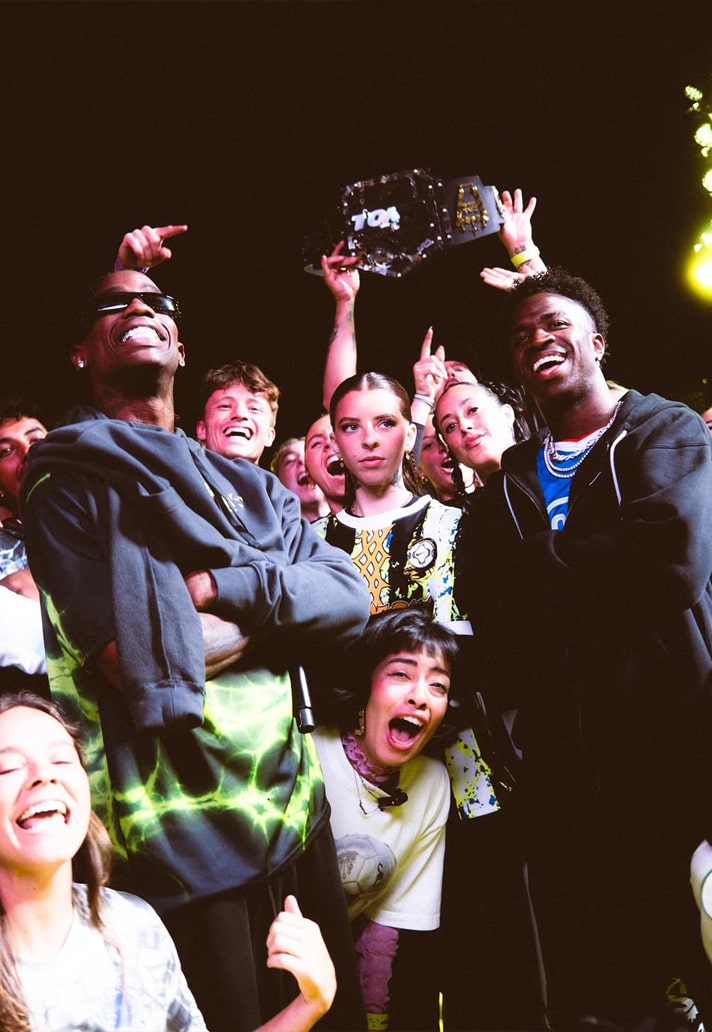
Photography by Gabe Nava
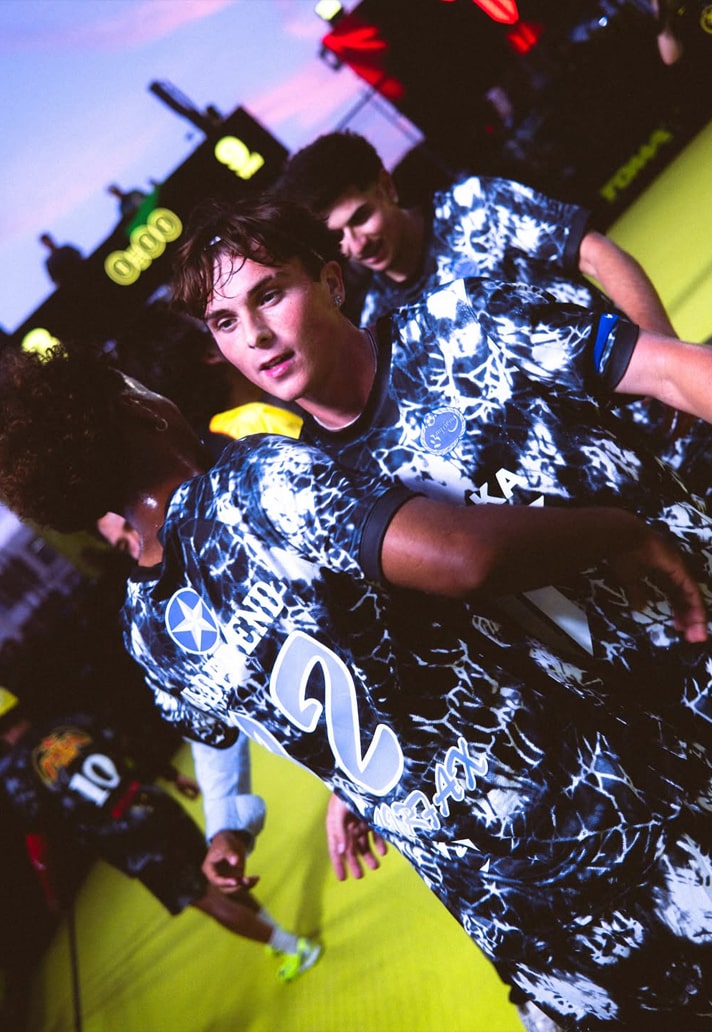
Photography by Gabe Nava
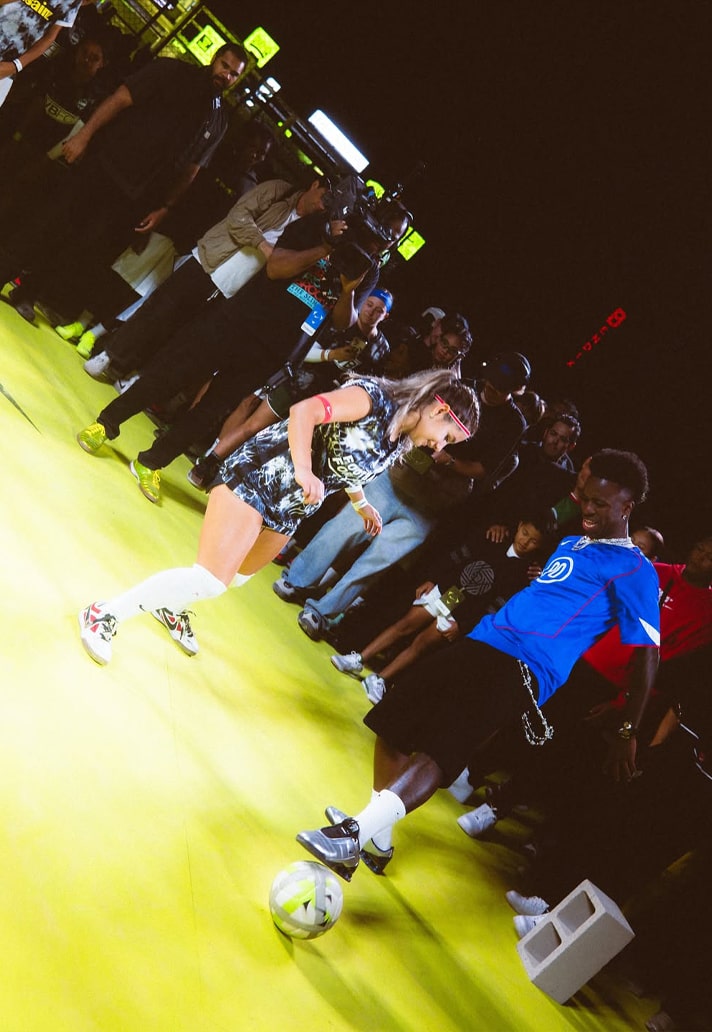
Photography by Gabe Nava
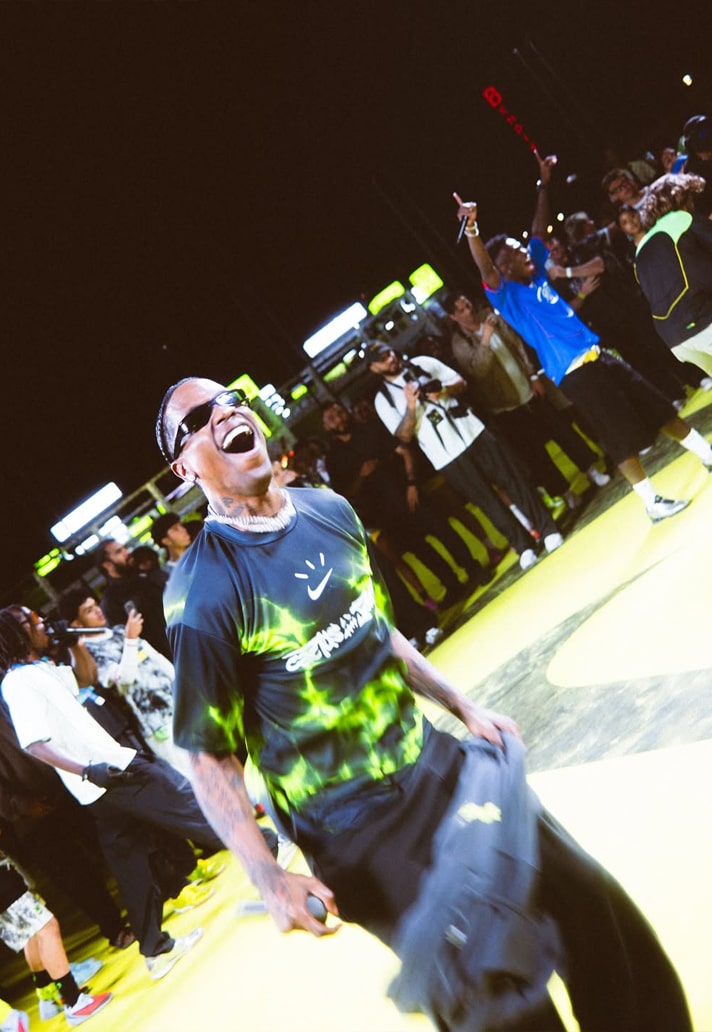
Photography by Gabe Nava
Photography by Gabe Nava
Photography by Gabe Nava
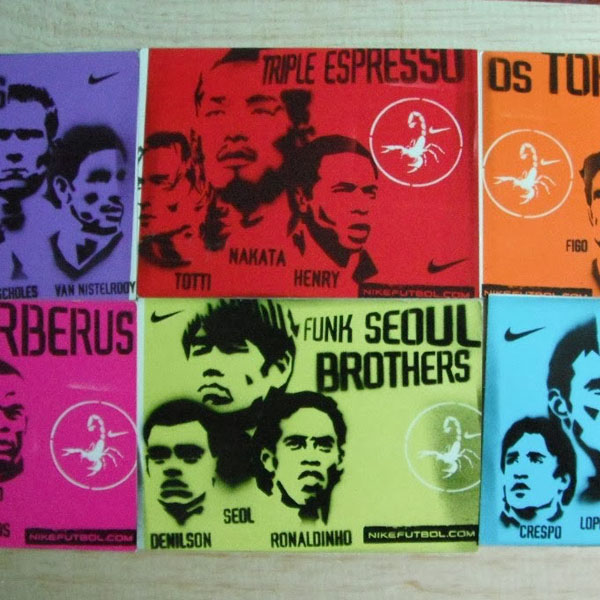
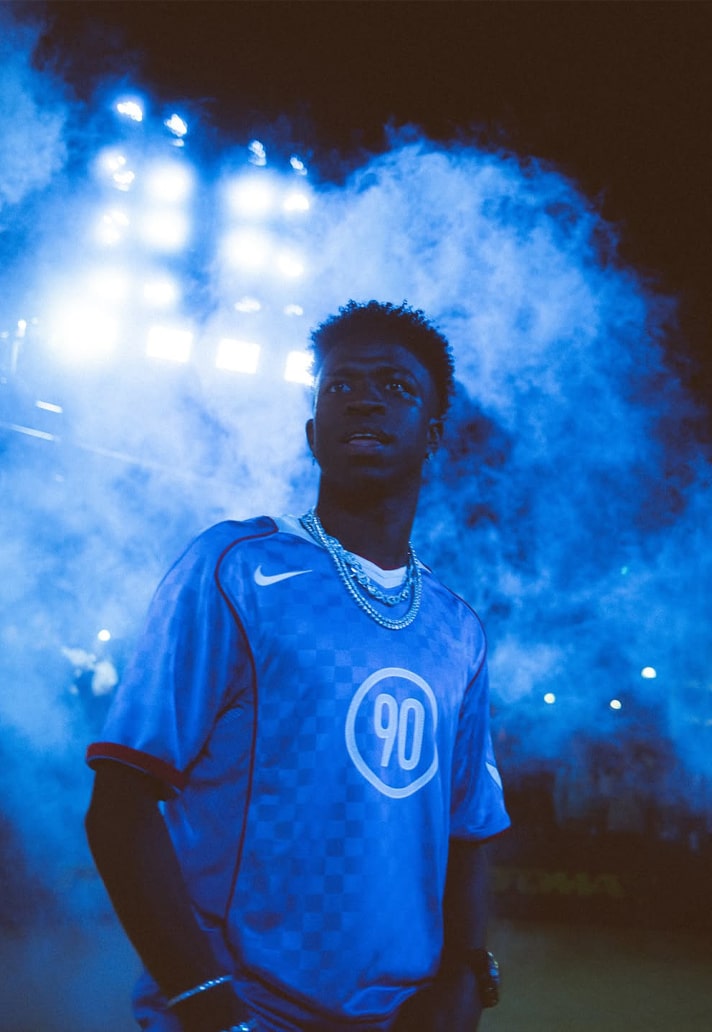
So back to that familiarity. There’s a quiet force behind all of this — an icon, an echo from the past that’s been subtly woven into Toma’s DNA – T90. Its return to the pitch isn’t a throwback — it’s a torch. The same vibe that dominated cages in 2002’s legendary Secret Tournament now finds itself anchoring a new generation of street footballers. Back then, the T90 was war paint. A weapon. A symbol of a player who didn’t just play the game — they owned it.
Now, it carries that energy into a new context. What started with Nike x Travis Scott street soccer experiences, Mad Maximus and Secreto Maximus, the experience is growing, evolving, taking on new life. And Ronaldinho’s presence throughout it all feels more than ceremonial — it’s generational. The connection between eras, sealed in studs. His is a presence that links generations, overseeing proceedings with a godly air.
Don’t be fooled though, Toma isn’t retro. It’s future-facing. But it understands that culture is a timeline, not a moment. And the T90 ties that line together — giving weight, grit, and a certain kind of defiance to this new movement.
Football has always been romanticised through distant lenses — dusty pitches in Rio, back alleys in Marseille, concrete courts in Naples. But Toma tells a different story. One shaped in the shadows of LA freeways. In South Central backyards. In Koreatown futsal courts and Eastside parks.
With this project, Nike flips the traditional script. No longer is the street game something to be co-opted or referenced — it’s now the main event. And the community? They’re not supporting cast. They’re the authors.
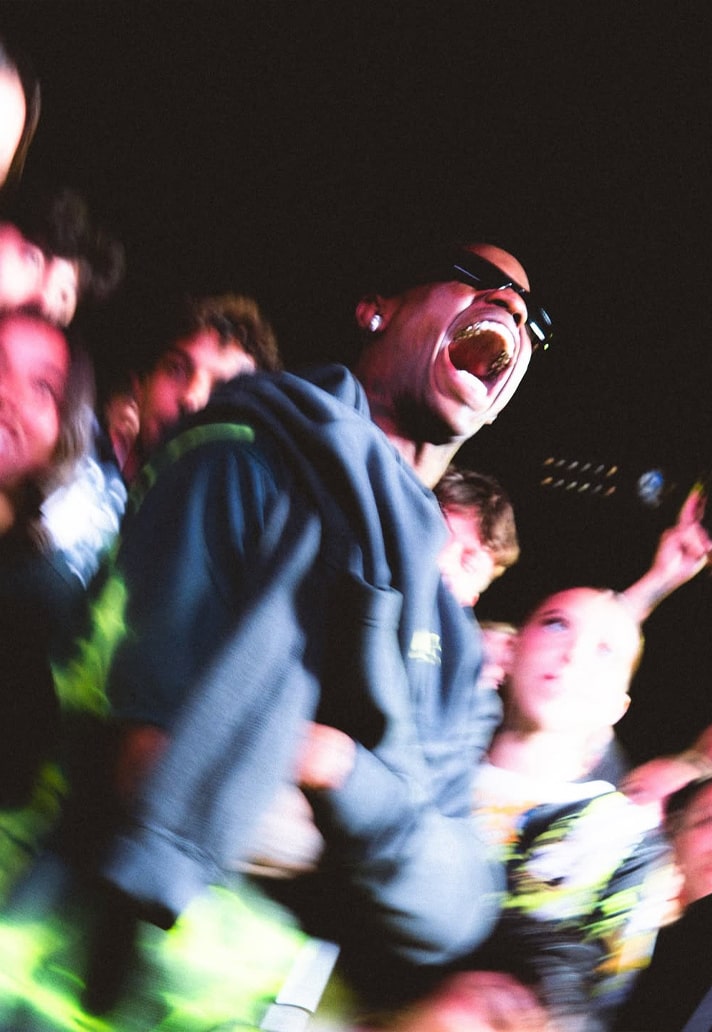
This isn’t Nike going back to its roots. This is Nike planting new ones. Football was never just 90 minutes. It’s the mixtape someone plays before the match. It’s the logo you iron onto your sleeve. It’s the way your laces match your mood. Toma El Juego knows this — and more importantly, lets it breathe. It’s football stripped back, then rebuilt — with a speaker in one hand, a stencil in the other, and a ball at your feet.
It’s the future of football, not just played, but lived. Loud. Local. And unapologetically cultural.