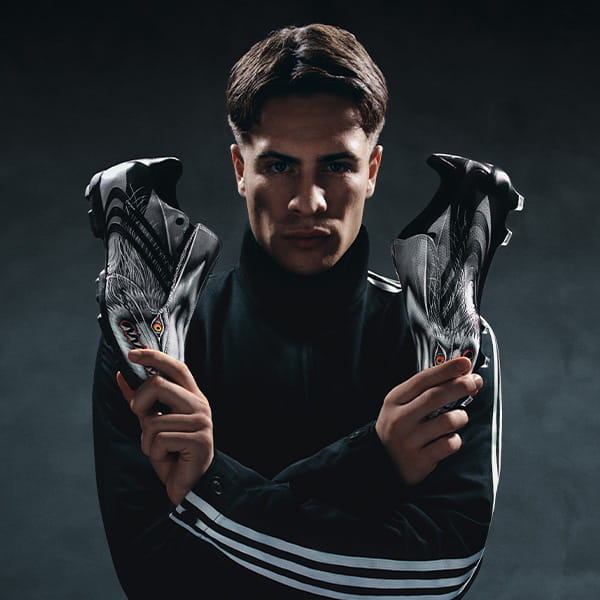
Football has a habit of agreeing on its favourites. Ask someone to name the great adidas boots and the answers tend to arrive fully formed, whether that's the Copa Mundial, with its hushed, leather tones, or the Predator, classic rubber-finned upper.
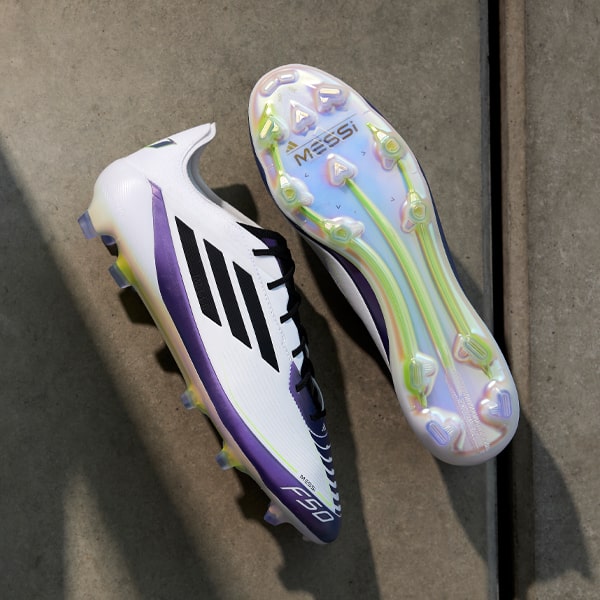
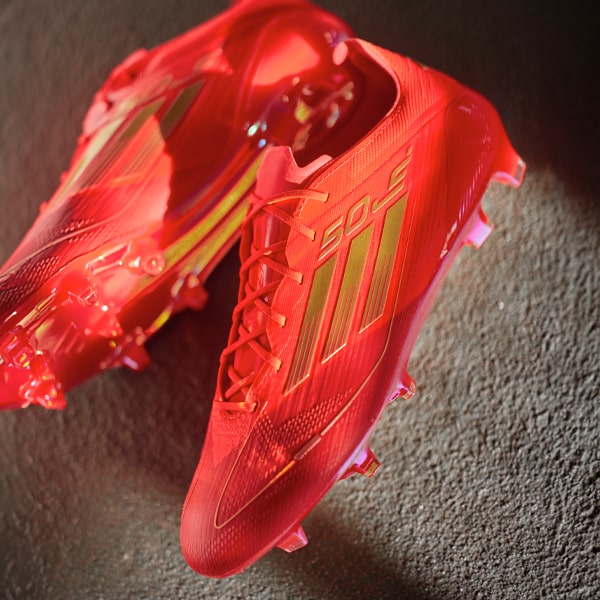
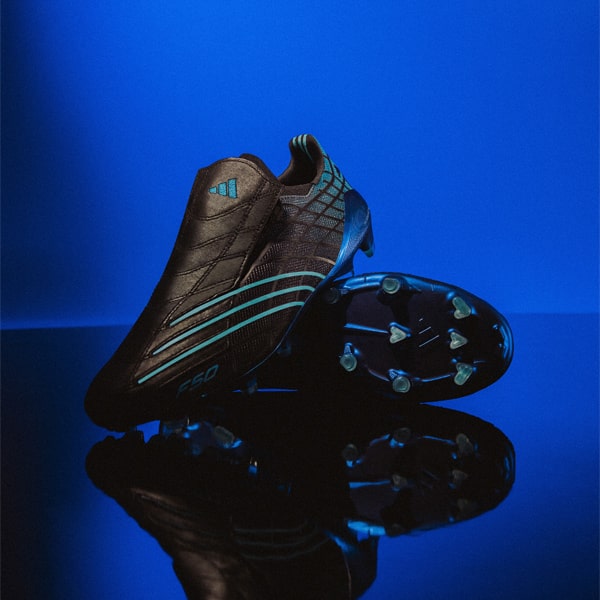
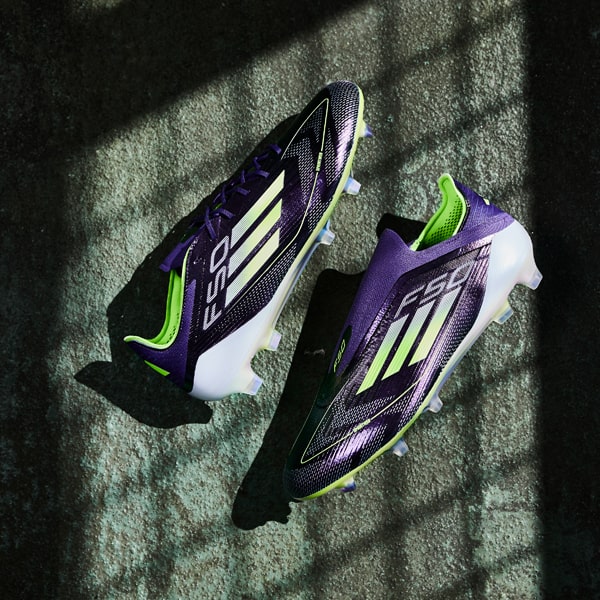
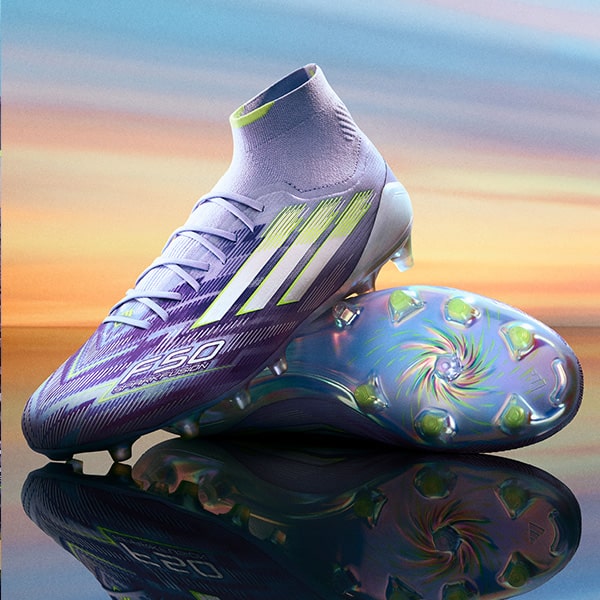
Fair enough. They deserve their place. But speaking truthfully, neither of them have ever really been the boot for me. That honour, for those asking, belongs to the F50, which feels worth saying out loud now that the futuristic-looking fella is fully back in circulation. Actually, it’s not just back, it’s properly present with new iterations and colours, all nodding back to the familiar (albeit-slightly-altered-from-day-one) shape from yesteryear.
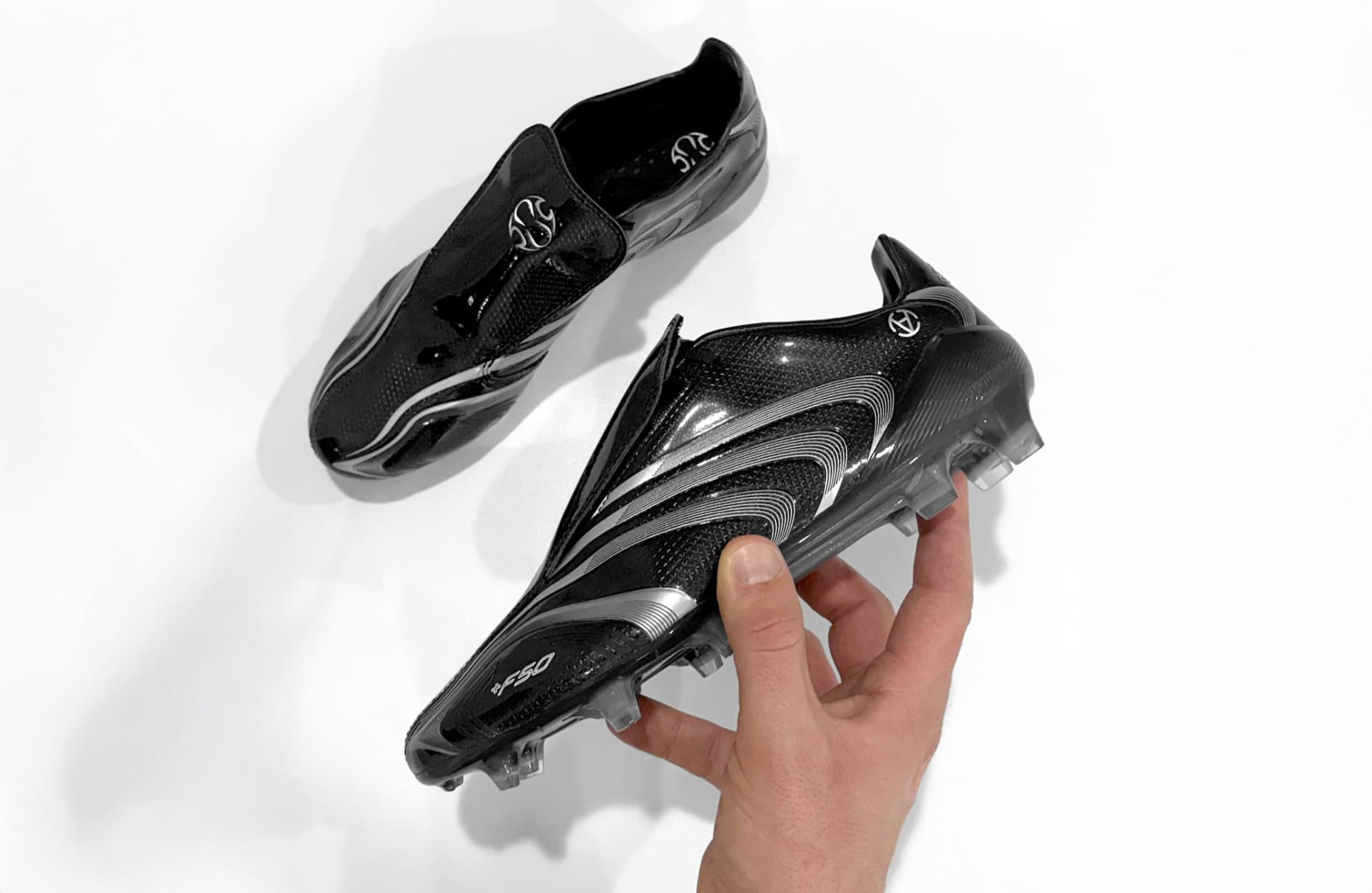
I’m happy about that not because football needs more nostalgia – although I’m sure we all have memories of Djibril Cissé wearing the F50+ Spider at Euro 2004, or a pre-balding Arjen Robben wearing the black and yellow originals during his maiden Chelsea season – but because the F50 is a boot that's always been criminally overlooked.
When adidas first released it back in 2004, just before that year’s Euros, it wasn’t trading on the brand's heritage. Instead it was introducing something leaner, lighter and louder to the party. You noticed them immediately, irrespective of who was wearing them.
The introduction of the +F50 two years down the line also marked the first time you could really customise boots without ordering a new pair. Then came the F50 Tunit, the F50 adizero era and, in more recently in 2024, the F50 Fast Reborn – what I like to call the silhouette’s "full-circle return".
The pair I had, a birthday gift for my thirteenth birthday, were the white originals with blue accents. I still remember putting them on and feeling like I’d skipped a step in getting dressed. I even scored wearing them that day too, which was enough to turn any piece of kit into folklore in my house back then. From then on, the F50 carried a little bit of belief with it. Not magic, exactly. More confidence.
Such was the boot's build, there was no cushioning to hide behind with the F50s, or bulk to absorb mistakes. It was a boot that made you feel – even if you weren’t – cleaner, quicker and more decisive. If you were sharp, it amplified that, and if you weren’t, well, it didn’t soften the truth.
Visually, it was a statement. The colours, the shape, the attitude. It looked like football catching up with the pace it was being played at, seemingly clearing the way for faster transitions, wider broadcasts and more eyes.
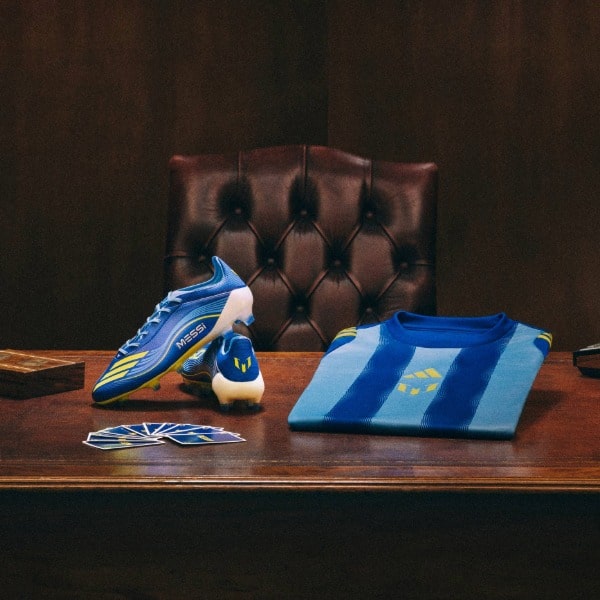
Seeing it worn by players like Lionel Messi in the later years only underlined the point for me. The F50 in its modern form – which now is donned by Lamine Yamal, Florian Wirtz, and Trinity Rodman to name only a few – still isn’t about power or control in the traditional sense, but more about immediacy and reducing everything to movement and touch.
The Copa and the Predator will always get the reverence. They’re the safe choices. The F50, though, is the more interesting risk, and that’s why it's endured.
Point is, the F50 never tried to win everyone over. Since day one it’s been more a boot that yearns to feel at home. And for me, it always did. Especially the day I scored that goal.
You can shop the latest adidas F50s at Pro Direct now