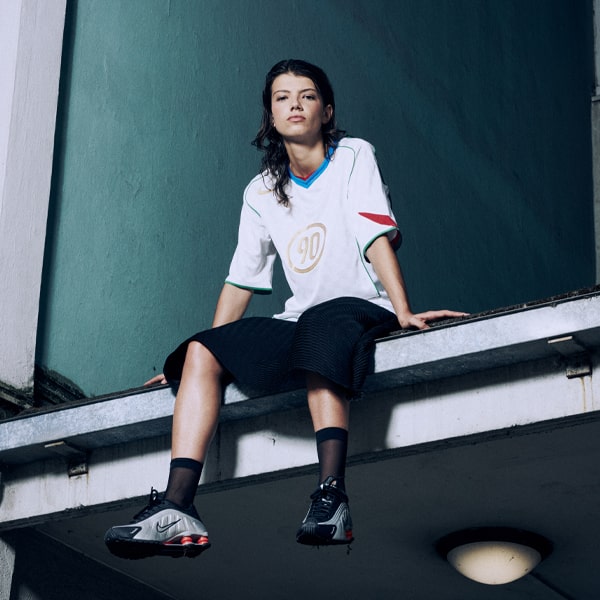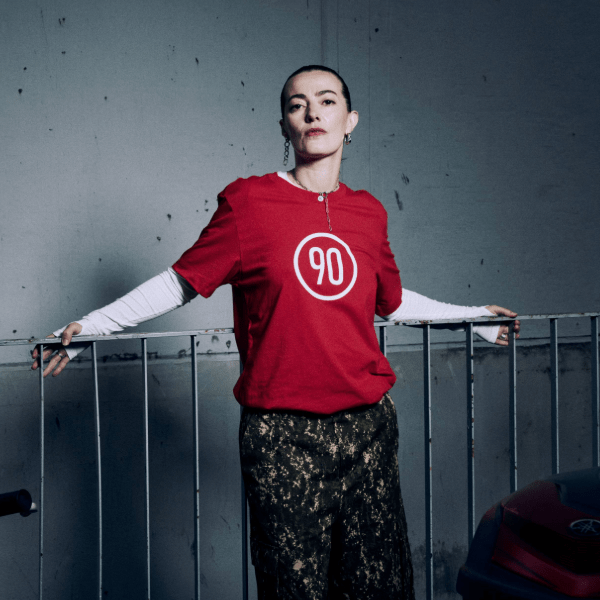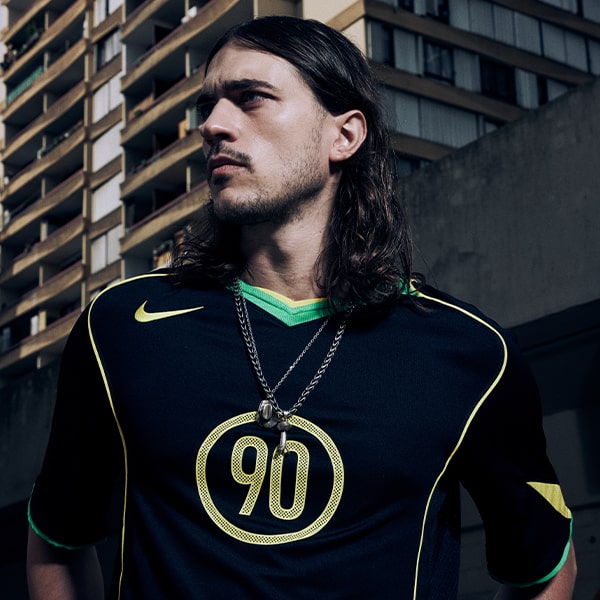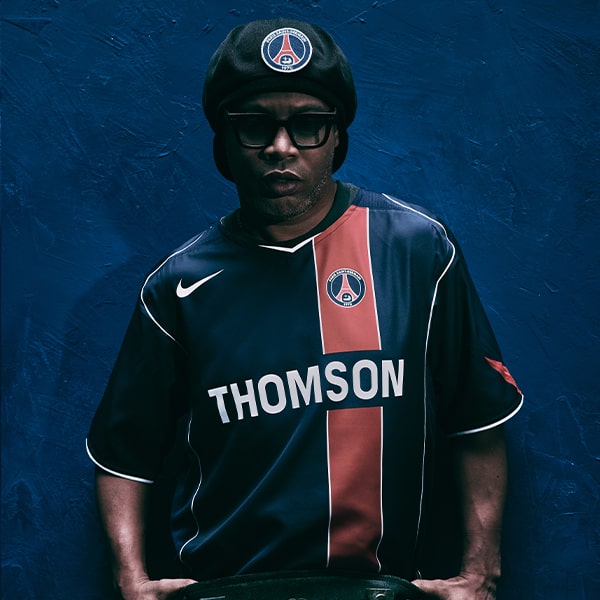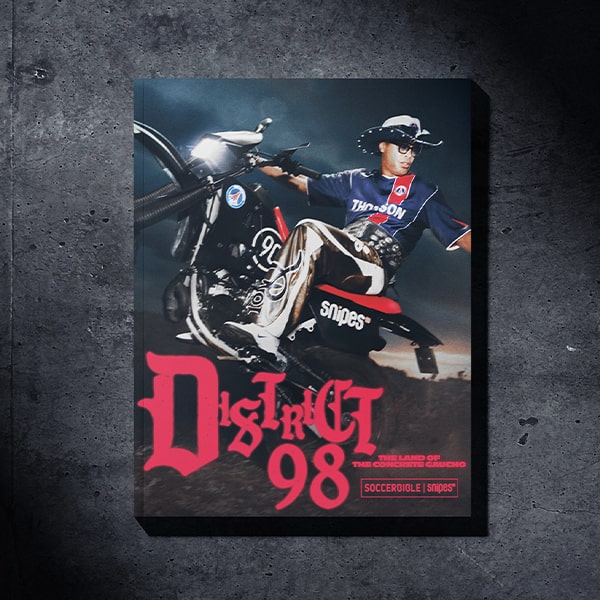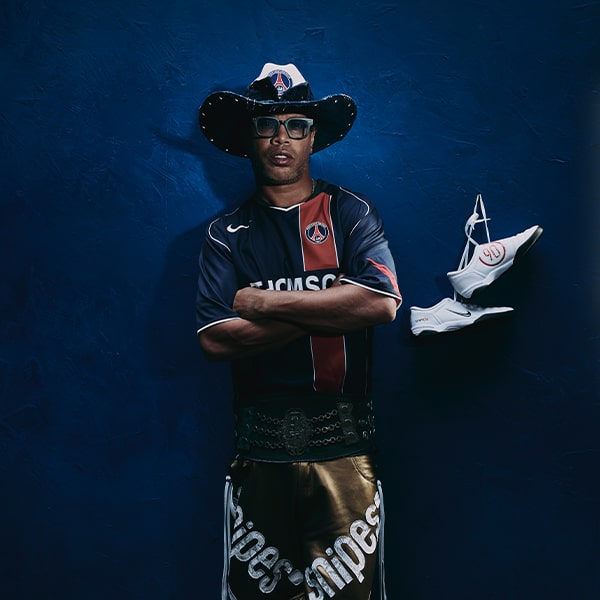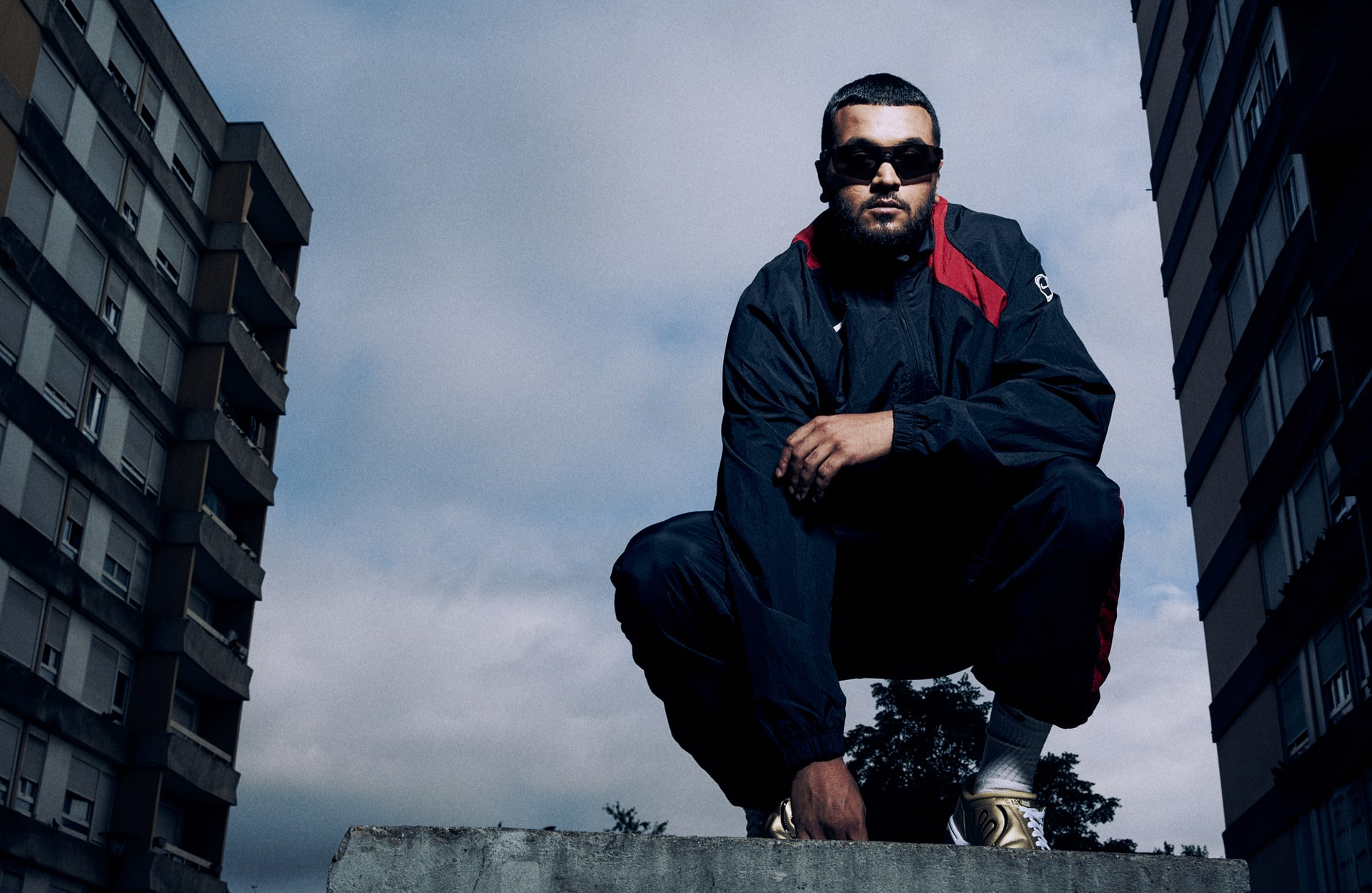
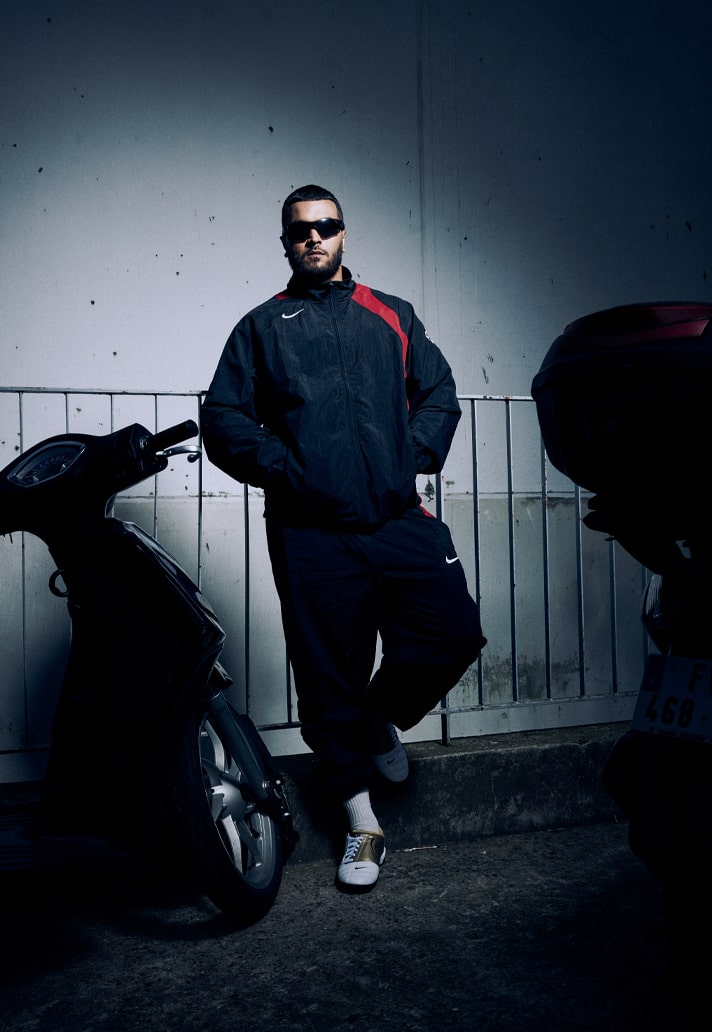
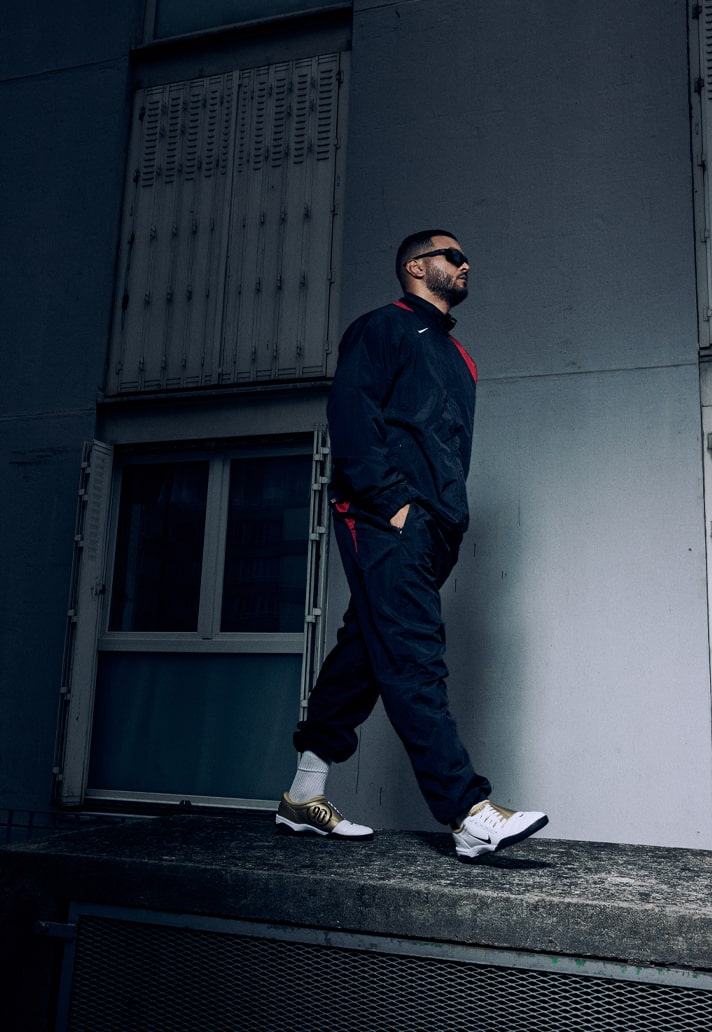
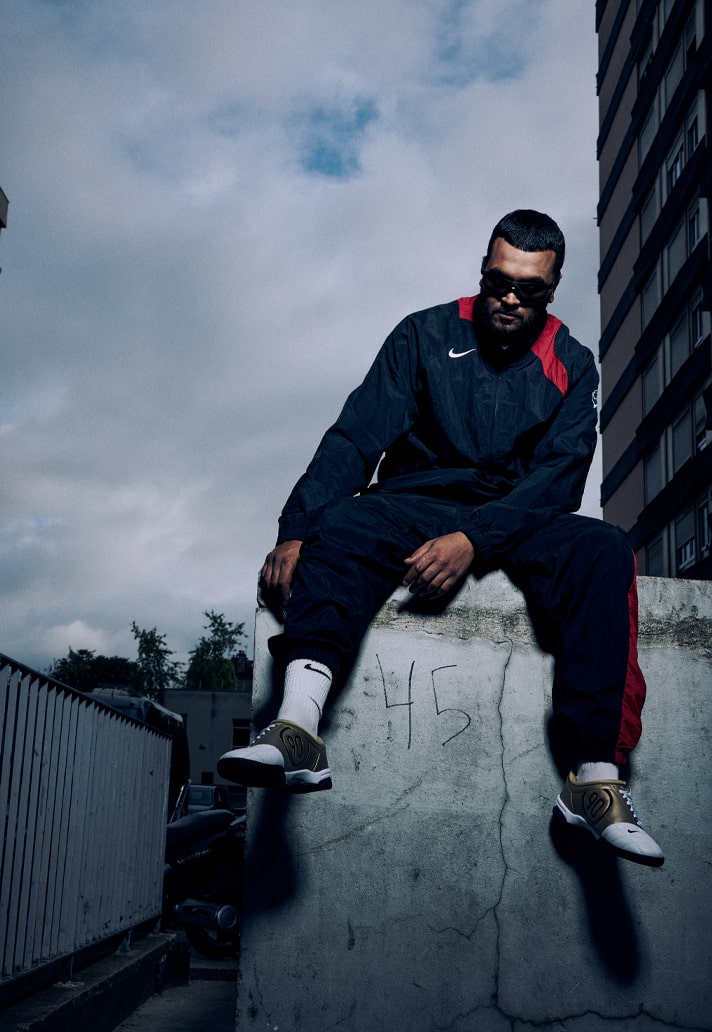
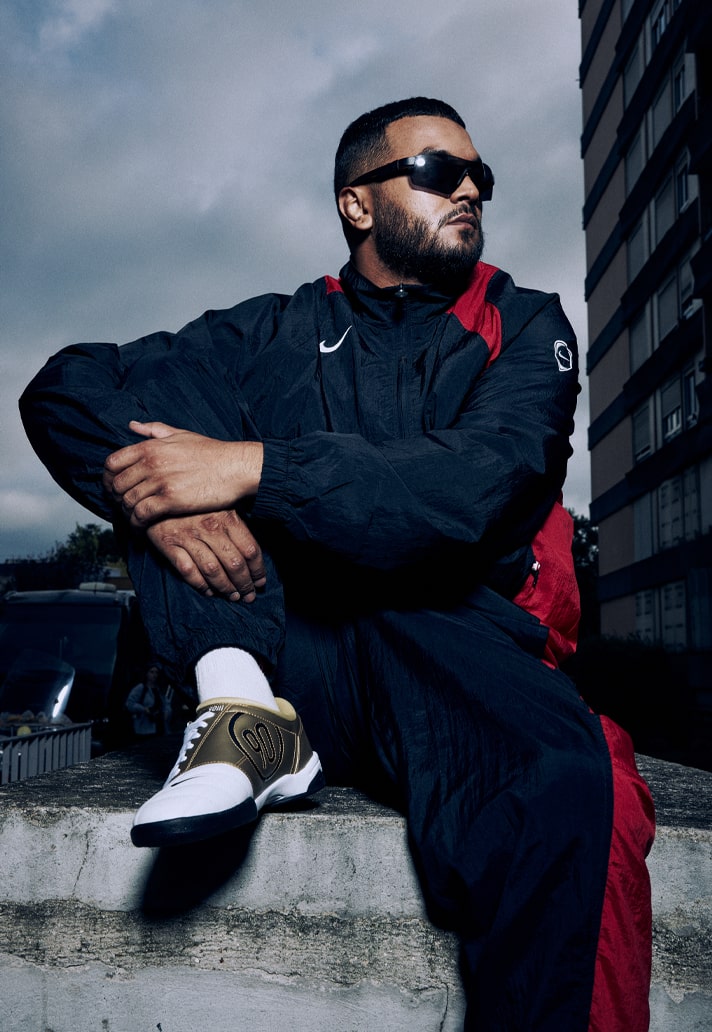
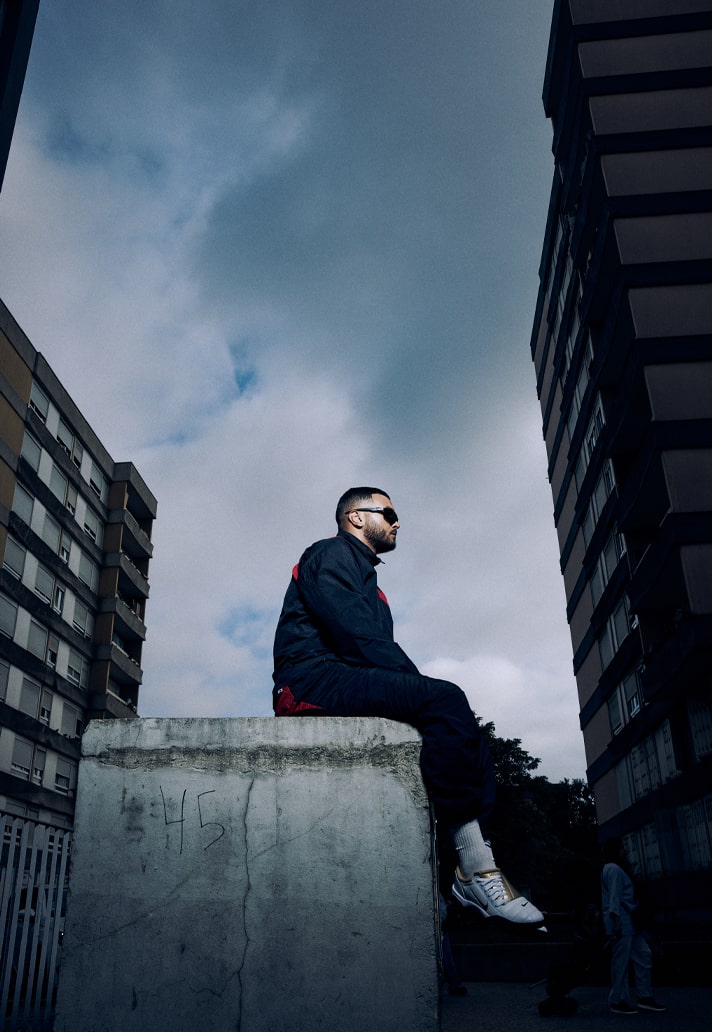
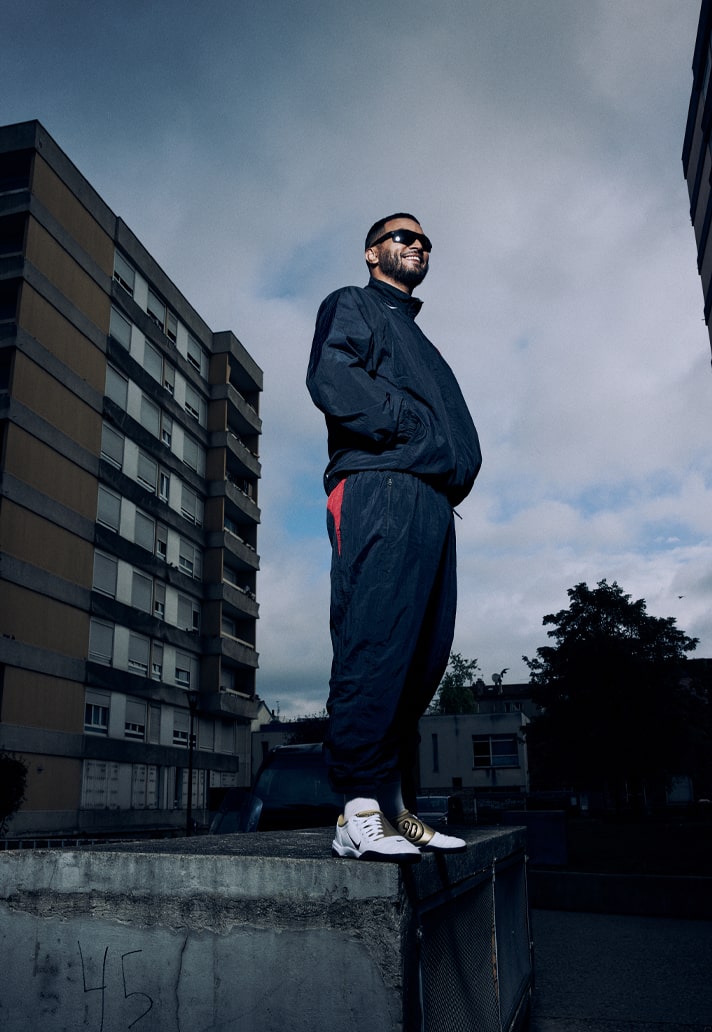
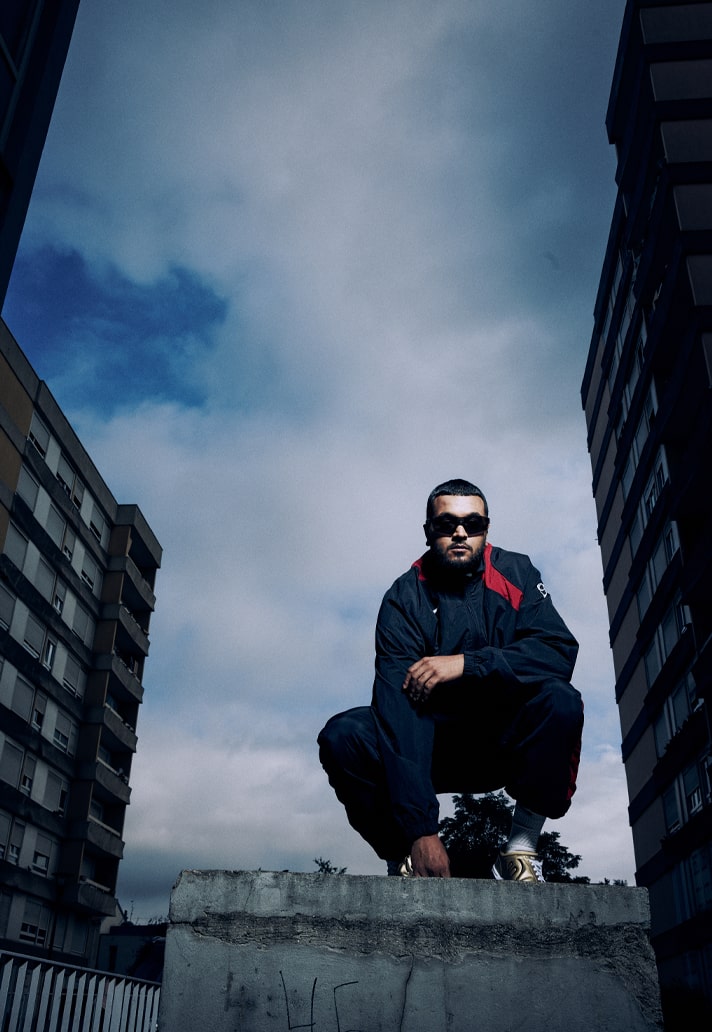
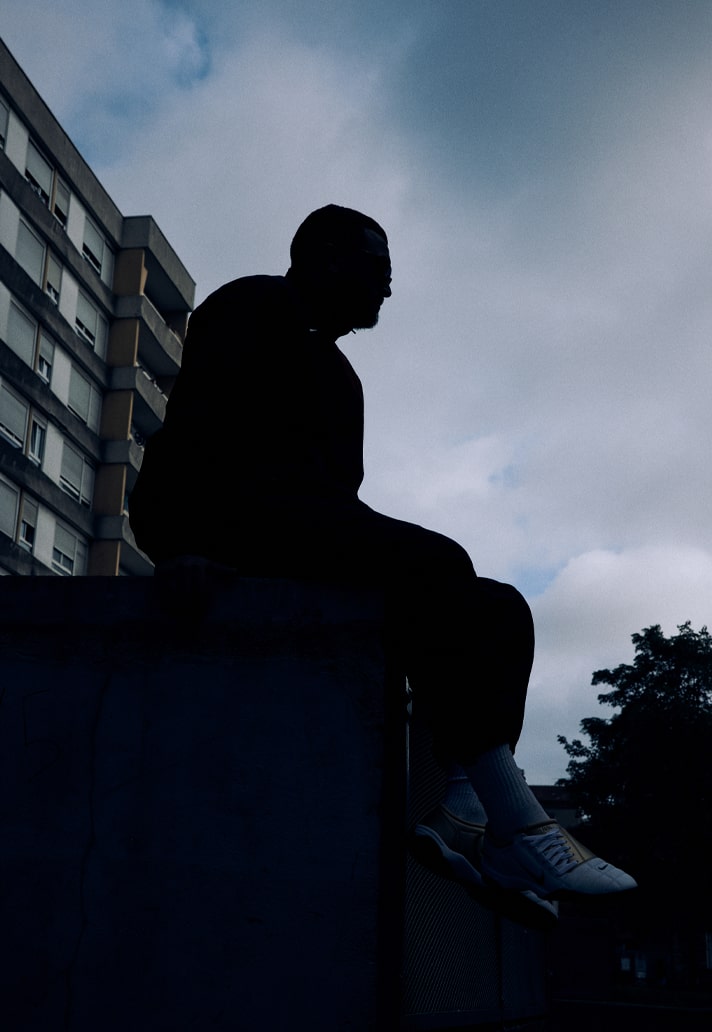
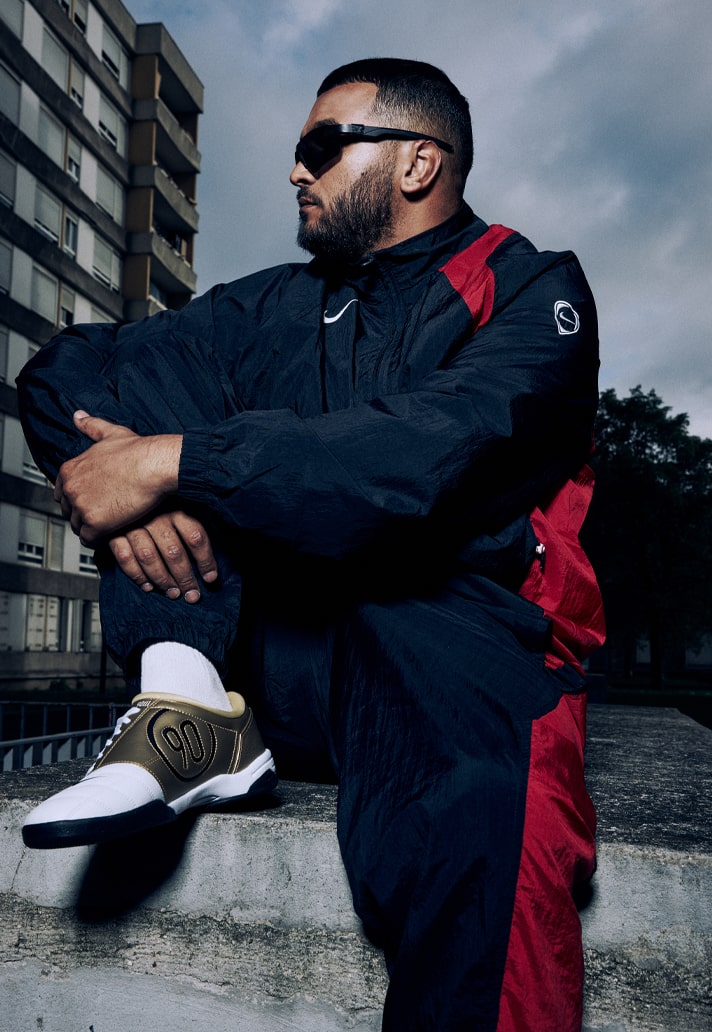
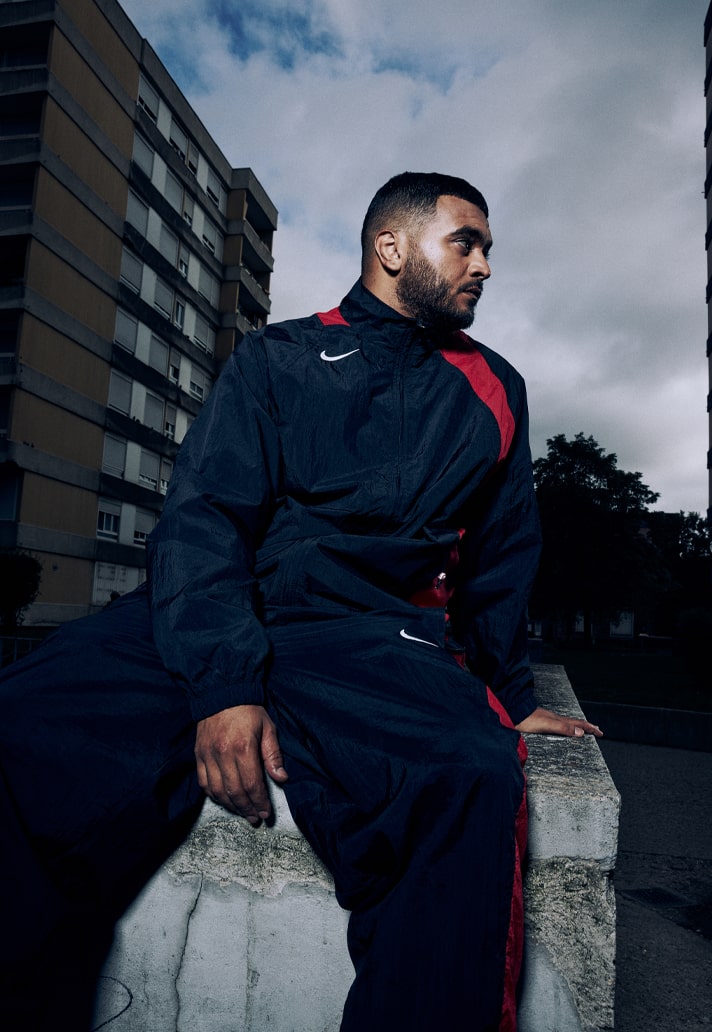
The first in our ‘Concrete Gaucho’ series, Irfane is a Paris-born creative producer carrying stories from the streets to the screen. From Bondy to hero shots with Ronaldinho, his work channels the spirit of Nike’s Total 90 through the city’s unique cultural lens.
The first drop in our Concrete Gaucho series with SNIPES lands in Paris, where Irfane — creative producer, storyteller, and son of Bondy — moves between street corners and studio sets with the same flair as a no-look pass. His work lives where football meets culture, pulling from the city’s rich mix of influences and the unapologetic creativity of the Nike Total 90 era. From growing up under tower blocks to capturing hero shots with Ronaldinho, Irfane turns lived experience into visual narratives that hit as hard as a ball off concrete.
Can you tell us about your journey as a creative producer?
I’ve been a creative producer for two years, but my path wasn’t linear — and that’s shaped how I work today. Before this, I was in a completely different field, which gave me perspective, helped me understand myself, and led me to align my professional and personal life with my deepest aspirations. I wanted every project to have meaning and reflect who I am. That decision changed everything.
What does creating in Paris mean to you?
Creating in Paris, especially in Île-de-France, drives me. I grew up in Bondy, so telling stories from here is both an honor and a responsibility. I want my projects rooted in reality, culture, and people — especially in sports and football, which I know well. I think beyond visuals: strategy, casting, influence, meaning. The voices we amplify must be legitimate, coming from these environments. Working here means telling our stories from the inside.
What inspires you in the projects you choose?
I’m inspired by staying close to reality. Even in more creative or fictional forms, I want a strong cultural foundation. I choose projects for their authenticity, impact, and alignment with my values.
How would you describe Paris’s creative energy today?
Paris’s energy is constantly evolving, fueled by multiple cultures. Movements once seen as marginal — like rap or certain urban cultures — are now central. There’s a richness in these influences, but more needs to be done for younger scenes to be truly heard. Every city has its own vibe; the challenge is connecting them to tell stories beyond borders.
How does Paris’s diversity show in your work?
I grew up surrounded by Angolan, Congolese, Algerian, Malian, Gypsy, and South Asian cultures, all mixing into a shared language and culture. That richness is my foundation. Today’s French culture can’t be separated from these influences, and my work naturally reflects that.
What’s your personal connection with football?
For me, football is pure joy — stepping onto a pitch was an escape where you could dream and express yourself. It gave me friendships, values, and life lessons. A passion like football can truly change — even save — your life.
How does football show up in your daily life in Paris?
I play several times a week with my team, Foot Sérieux (FS9AM), created during COVID to keep playing safely and at a good level. Beyond the pitch, football is in my outfits, music, and work, where I often connect artists and footballers with meaning.
Do you see football as a source of storytelling?
Absolutely. Football inspires universal passion, making it a powerful lens to share values, motivate, and make people dream — on or off the pitch.
Have you worked on projects connected to football culture?
Yes. My career began with football projects — ironically, my first was a campaign for PSG despite being an OM supporter. That world felt natural to me and made me want to explore further. Since then, I’ve worked across sports, culture, art, and fashion, always with my values and a strong visual identity.
Does the Total 90 era still influence creatives today?
Definitely. Total 90 and Joga Bonito celebrated freedom, creativity, and joy in football — the opposite of today’s stat-focused approach. Those campaigns still resonate because they captured the soul of the game.
What about the return of the T90 in visual storytelling?
It’s refreshing. It revives the playful, street football spirit, free from performance pressures. I’d love to see the Joga Bonito era explored again — and I’d be the first to volunteer as producer.
How does football in Paris connect communities?
Like visual production, football creates shared emotions that unite people from different backgrounds. That ability to connect through a common experience is its real beauty.
What excites you about mixing football, fashion, and creativity in Paris?
The freedom to merge worlds. Paris’s cultural depth and boldness let sport, fashion, and art speak to each other — and elevate our culture.
Can film capture football culture in a unique way?
Video is perfect for it. With image, sound, and storytelling, you can recreate the intensity and emotion of the game, reaching both die-hard fans and casual viewers.
How has football influenced your storytelling?
Football taught me teamwork, responsibility, communication, and the drive to lift others. On the pitch and in production, I have the same competitive mindset — aiming high and living up to our craft.
If football in Paris were a movie scene…
It would be a long one-shot after a World Cup final victory, moving through Paris’s streets — people singing, dancing, hugging, problems forgotten. I remember the Champs-Élysées that night: smiles everywhere, strangers becoming friends, even the police in good spirits.
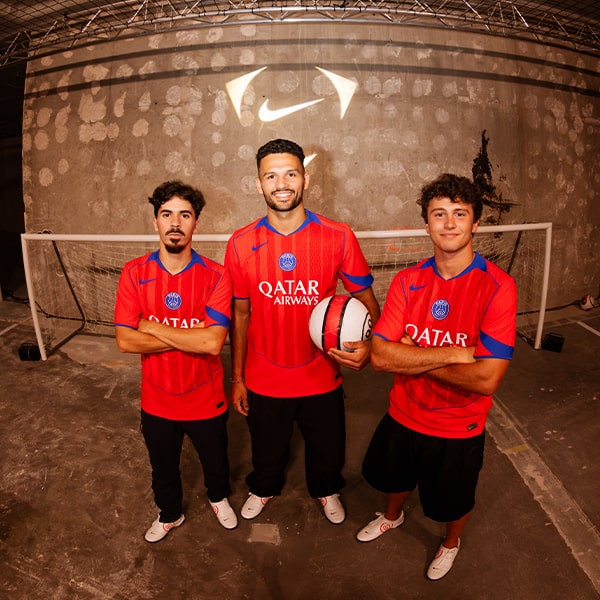
The PSG 2004/05 T90 jersey is available now in limited quantities at official PSG stores and on store.psg.fr