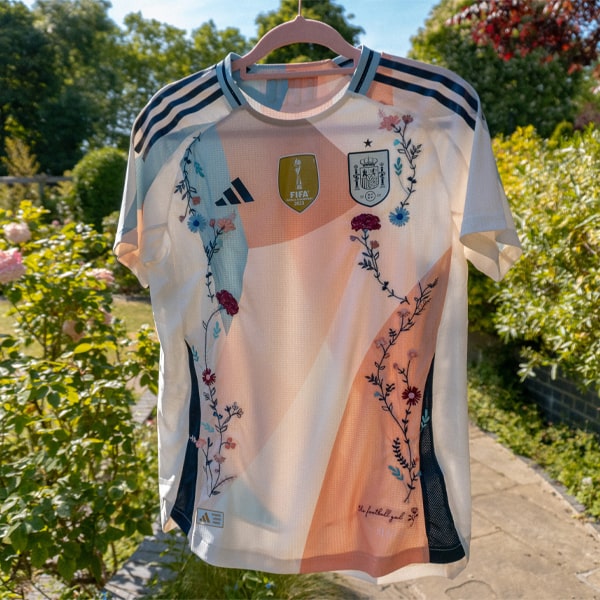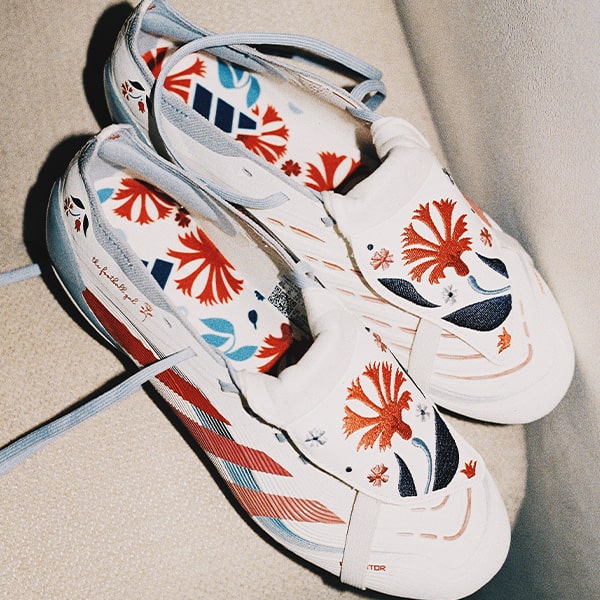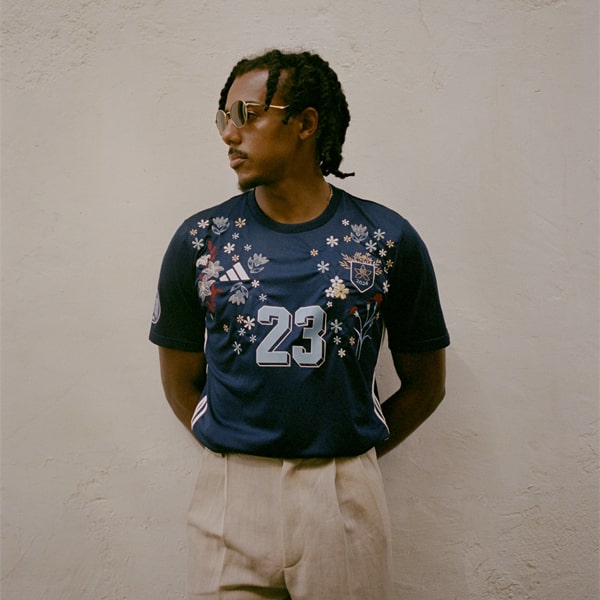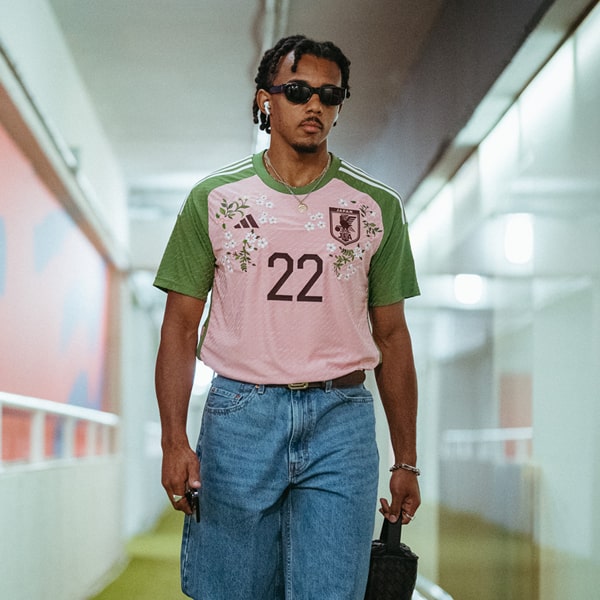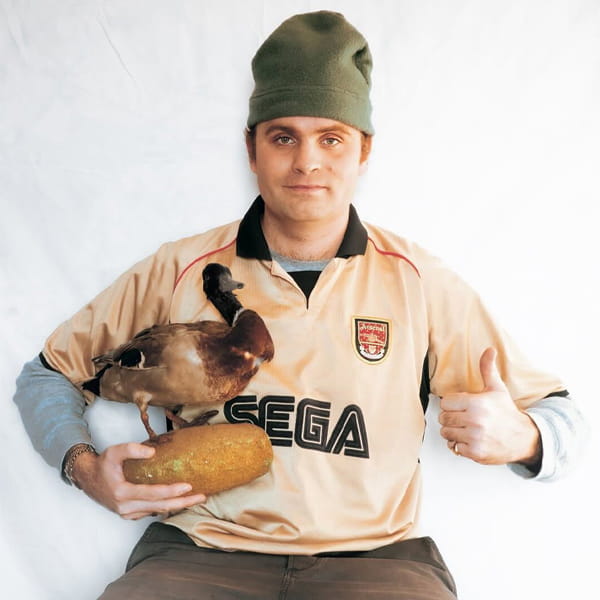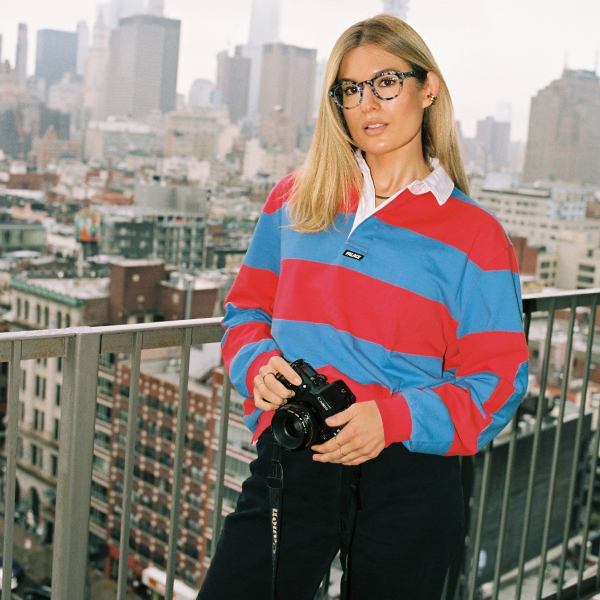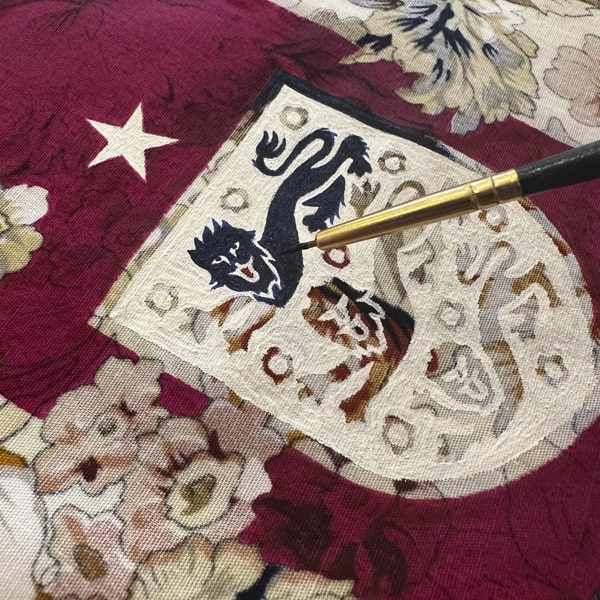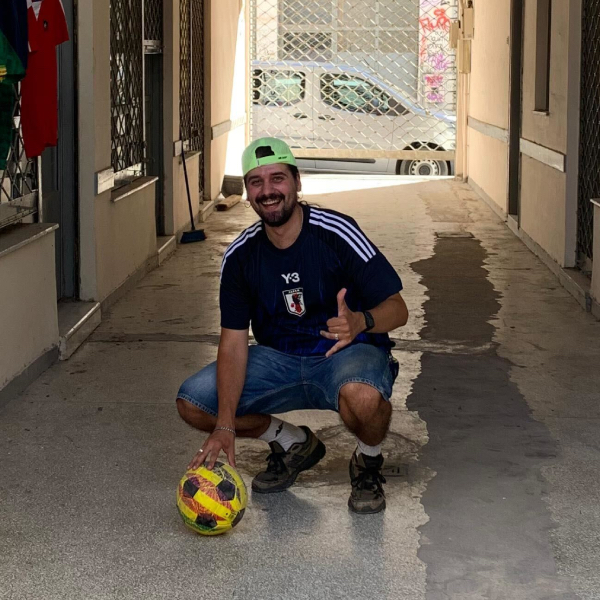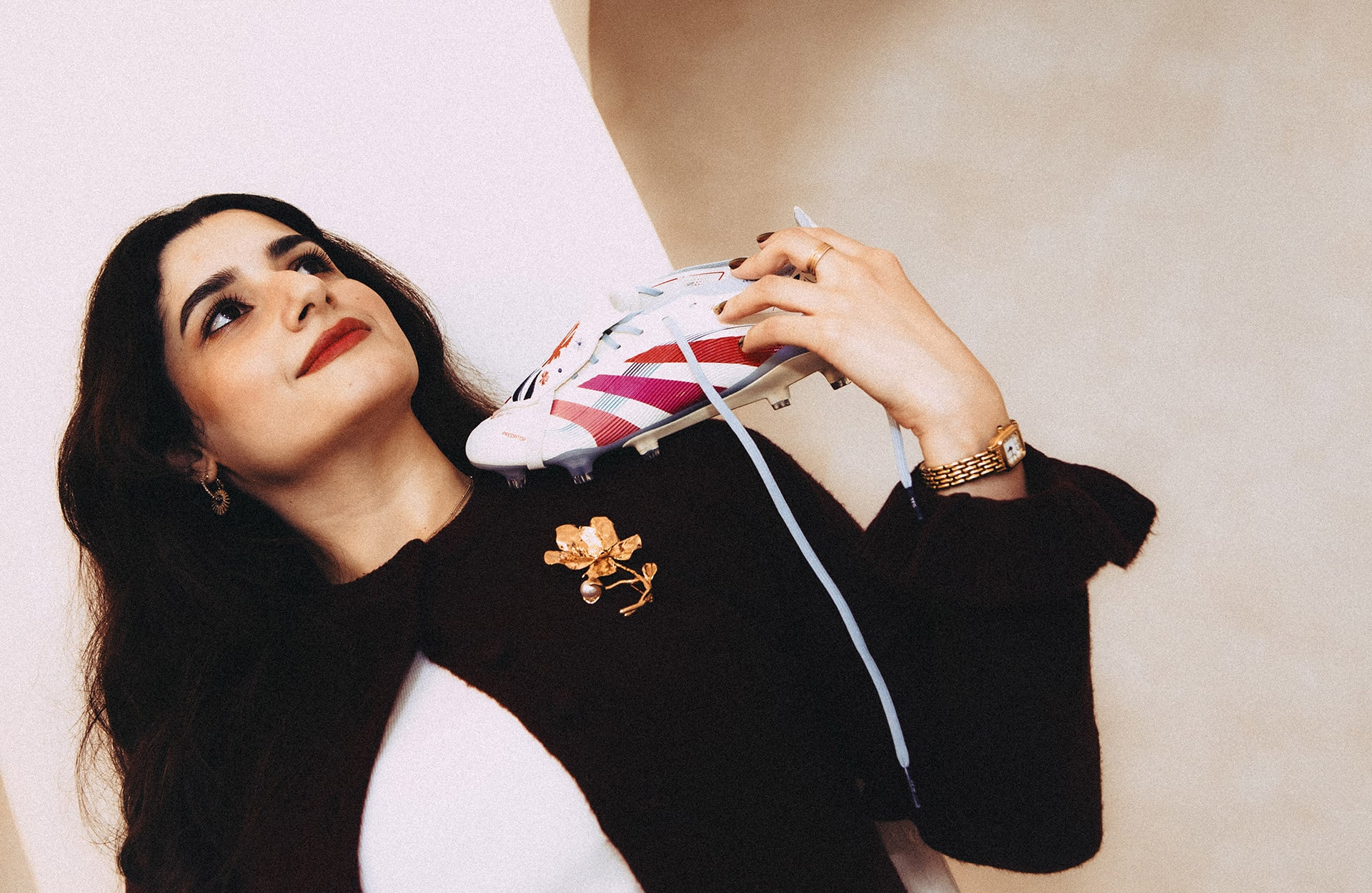
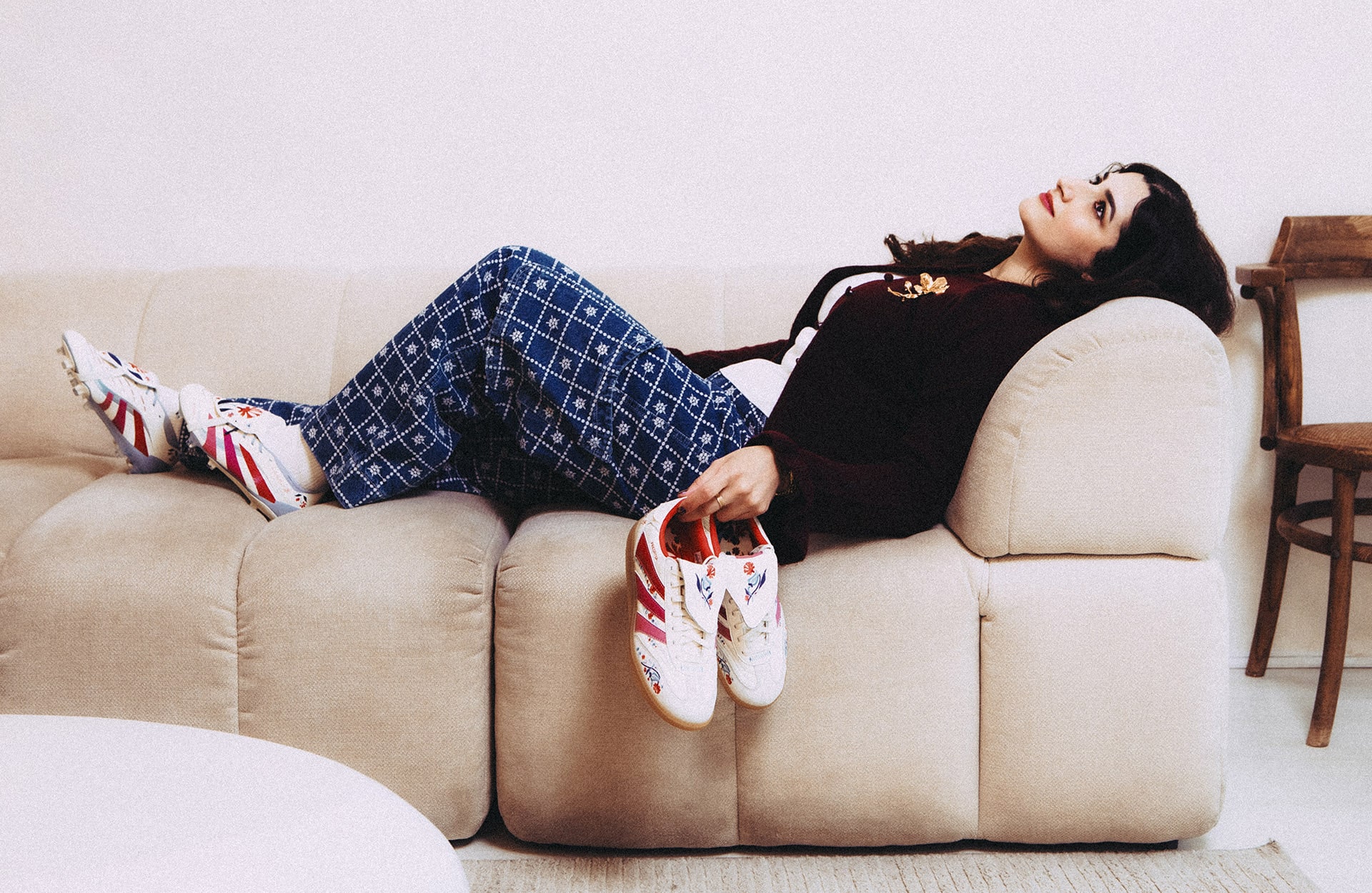
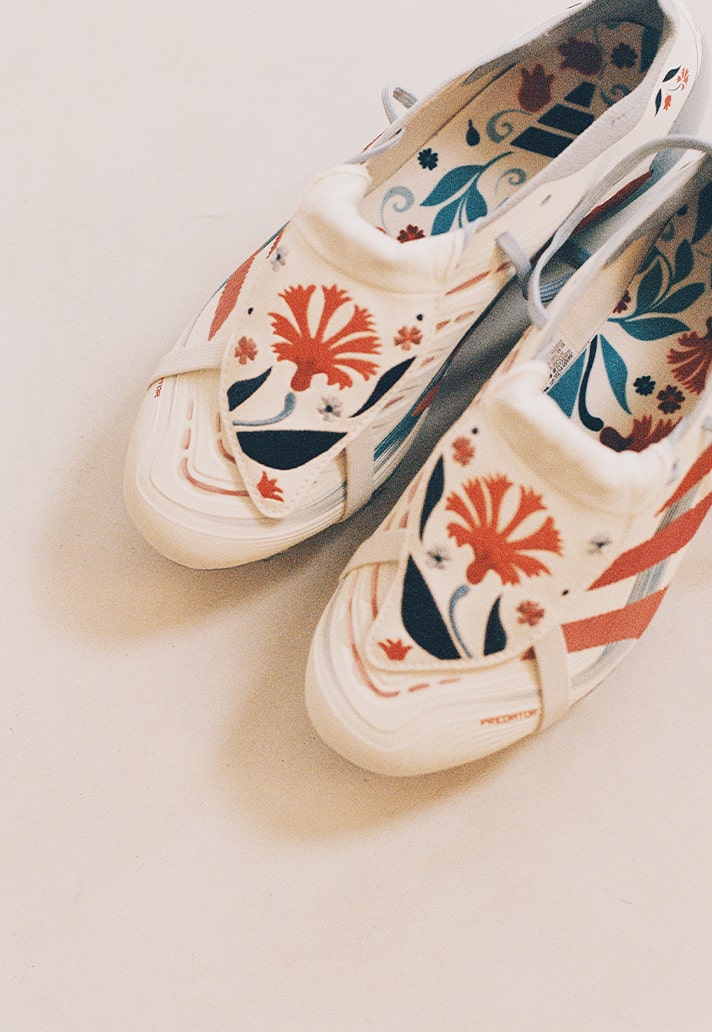
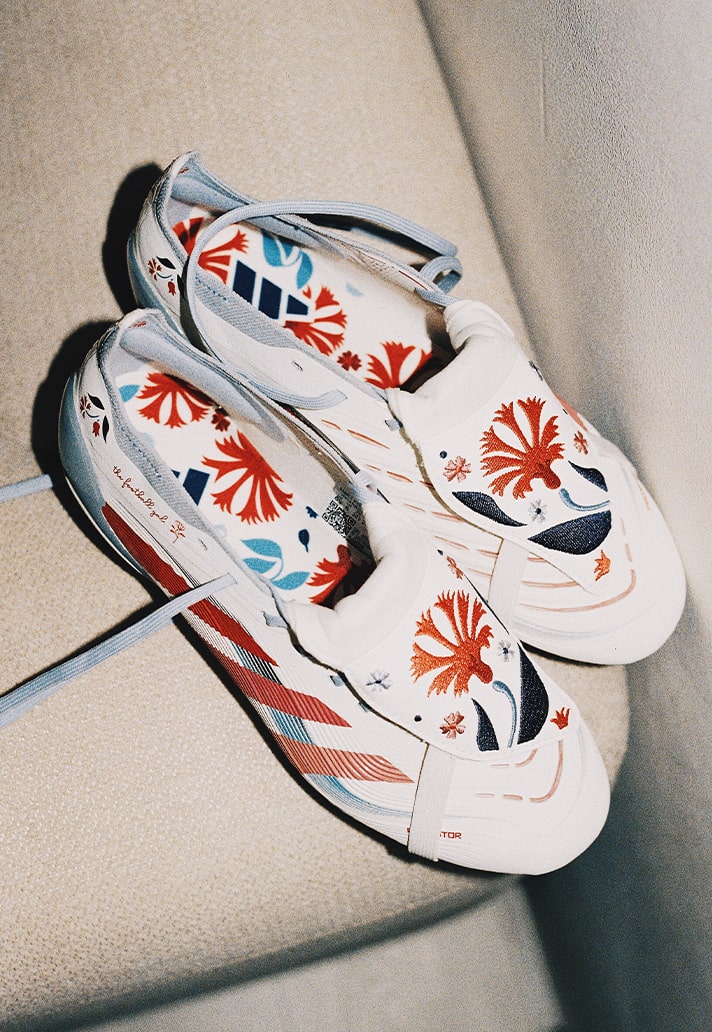
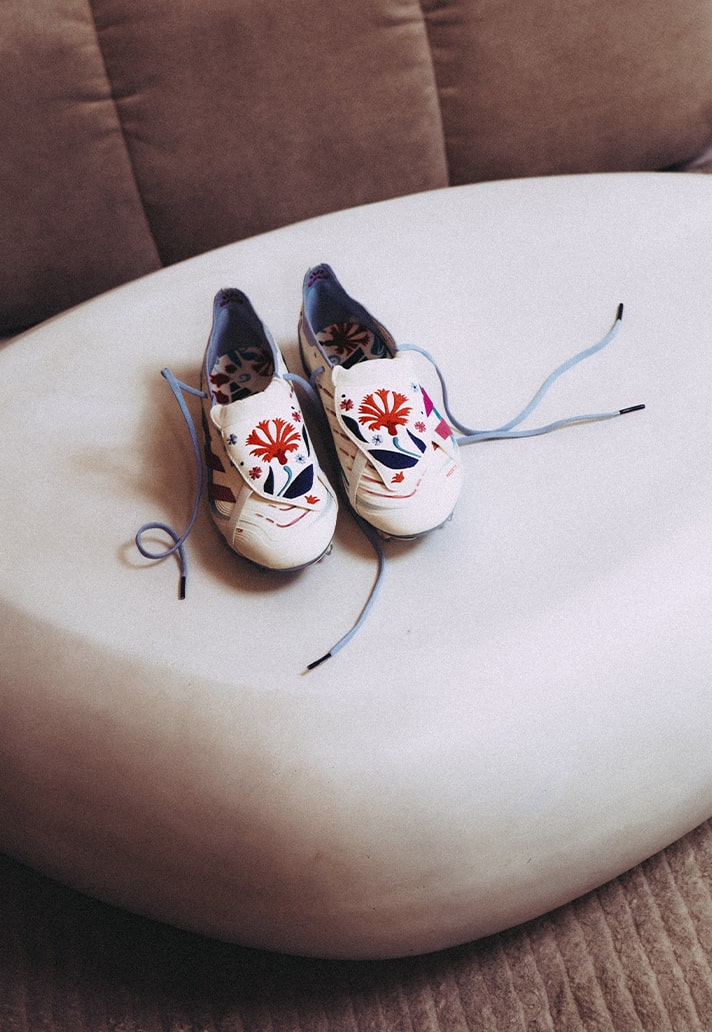
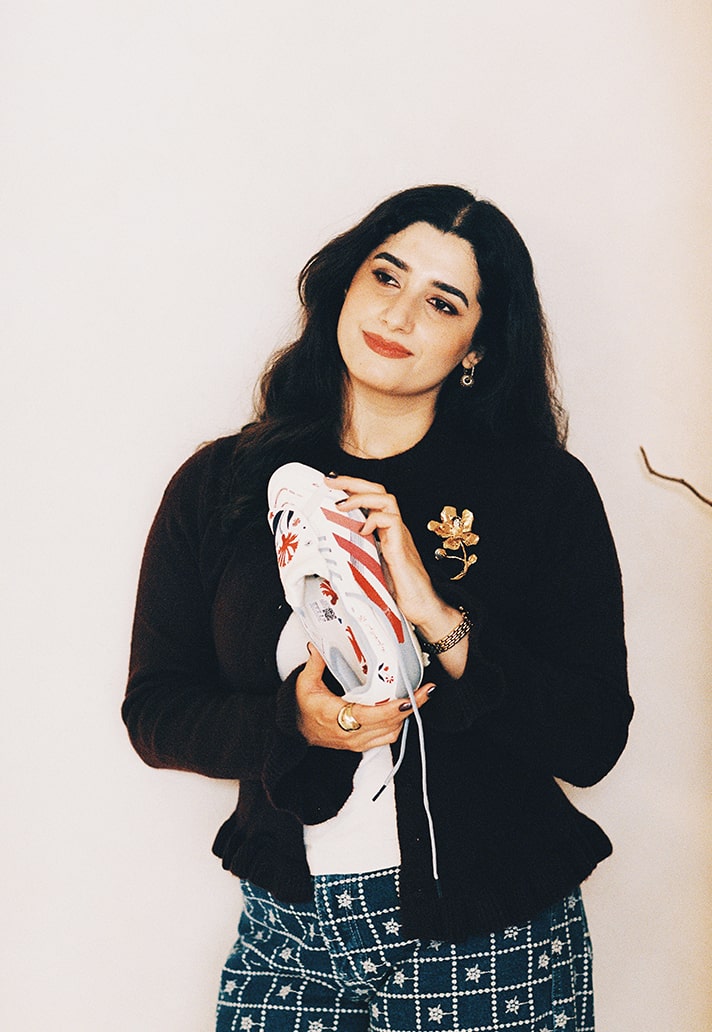
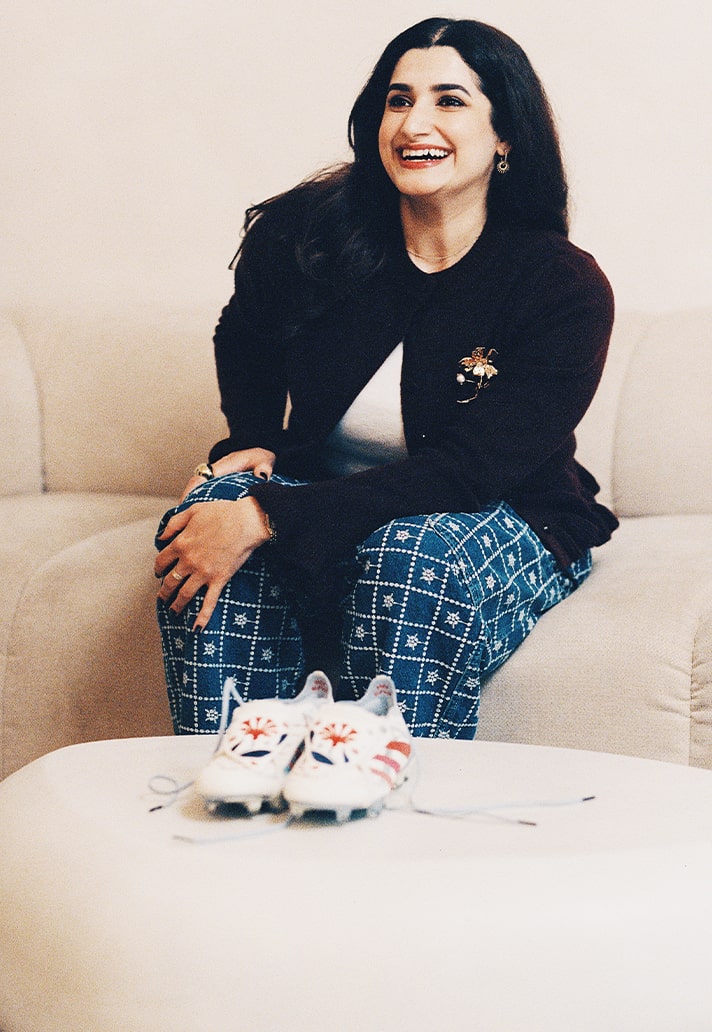
Not content with flipping the script in the shirt game through the art of embroidery Diana Al Shammari, better known as The Football Gal, is now tackling the world of boots with the reveal of the adidas Predator x Football Gal. Only right that she is featured as a member of the SoccerBible ‘Vanguard’.
Some stories feel predestined — threads that travel continents, survive upheaval, and somehow find their way back to the heart of football. Diana Al Shammari’s is one of them. Known globally as The Football Gal, the Iraqi-born creative has built a universe where craft and culture collide; where embroidery becomes language and nostalgia meets the modern game. Her work hums with intimacy — hand-stitched emotion on vintage shirts that carry memory, migration, and meaning in every thread.
Now, that same storytelling sits on football’s most iconic canvas: the adidas Predator. For her, this collaboration isn’t just a design project; it’s a full-circle moment — from discovering football through a TV screen during the war in Iraq to redefining one of the sport’s most storied silhouettes.
Part of SoccerBible’s Vanguard series — our celebration of those reshaping the seams of creative soccer culture — this conversation dives into how Al Shammari turned displacement into direction, art into activism, and passion into legacy. It’s about reimagining heritage, redefining what creativity in football looks like, and proving that the game’s truest artistry often begins far from the pitch.
Here, Diana Al Shammari opens up about her journey from Baghdad to the Predator boot — and the power of stitching your own story into football’s fabric.
Let’s start at the beginning. Where did your journey with football begin, and how important was it growing up
Hugely important. I’m from Iraq, and I grew up during the war so there’s a before and an after. Before the war, under dictatorship, there wasn’t much in the way of freedom or entertainment. And as a girl in the early 2000s, football wasn’t considered something for me. After the war began, it became dangerous even to go outside, my parents warned us about landmines, so football came to me through the TV.
I fell in love watching Captain Tsubasa, a Japanese anime about a boy who dreams of winning the World Cup. It opened my eyes to football as something far larger than a game - an idea, a culture, a community. I used to sneak out and beg my older brother to let me play with his friends, or I’d steal his shirts and wear them around the house. Even then, I wanted to be part of that world.
Your family had to flee Iraq. How did that upheaval shape your connection to football?
It made football a constant. My dad’s colleague was murdered, my brother went missing for a few hours, and my mum said, “We have to go.” We drove from Iraq to Jordan, took a ferry to Egypt, and lived in Cairo for five years as refugees—no clarity, no plan.
Football became a coping mechanism. I played with other girls at school, watched highlights obsessively, and used it as an anchor amid chaos. When we eventually moved to California, I didn’t speak a word of English. I learned through football, through TV, through the rhythm of commentary. In 2010, football wasn’t big there, but I didn’t care—I’d wake up at 5 a.m. to watch the Premier League while everyone thought I’d lost it. But it grounded me.
When did creativity enter the picture and when did it merge with football?
From the start. Even as a kid in Iraq, I was drawing everything - comics, characters, doodles. Art was my escape. As I grew older, I realised I could merge it with my obsession: football. Every art project became football-themed. When I studied journalism, I wrote every article about the game until professors begged me to change topics. I couldn’t. People started calling me “the football girl”, which later became The Football Gal.
I built a blog and YouTube channel to express myself, started writing for COPA90 around 2013, and did Snapchat takeovers at football events. It was my way of building a seat at the table I didn’t see represented.
Moving to London was a big step for you, right?
Huge. I’d always dreamt of living in London—the heart of football. I applied for a master’s program in 2019, moved there, and eventually got a job in football. Suddenly I was pitching creative ideas, working with players and brands by day, and building The Football Gal by night—embroidering shirts, designing concepts, connecting with fans. I was on both sides of the industry: behind the camera and in front of it.
Tell me about the embroidery. Where did that come from?
Pure accident. I didn’t set out to merge traditional craft with football, it just happened. I’ve always loved the magic of making an idea tangible. My aunt is a seamstress, and as a child I’d watch her turn scraps of fabric into dresses. It felt like witchcraft.
I taught myself embroidery online - YouTube, Skillshare etc and started practicing on old football shirts, especially ones that were damaged. There was something poetic about giving a shirt new life; reimagining it rather than discarding it. That act of repair became a kind of language for me. It was never about business, it was about emotion and identity. The business followed later.
When you pour so much into each piece, is it hard to let them go?
Every time. Each shirt holds part of my story. When I finished the Colombia piece recently, I’d invested so much into it that handing it over felt like giving away a piece of myself. But when you know it’s going somewhere meaningful, you let it go with love.
Before this adidas partnership, what moments made you feel things were shifting?
The Paris collaboration with adidas last year. People queuing for hours, in the rain, just to buy something I’d made it was surreal. Usually I just post shirts off and never meet the buyer, but that day I met the community face-to-face. It was a beautiful moment of connection.
Then came the Jules Koundé moment the viral tunnel photo. How did that happen?
Completely by chance. He ordered a shirt through my site under another name. It got returned once because of a wrong address; I re-sent it without realising who it was. A month later, my DMs blew up with a Barcelona tunnel clip - he’s walking out in my shirt. I had no idea until that moment. He could’ve easily DM’d me for a free one, but instead, he supported the work properly. That meant the world. That kind of authenticity is rare.
Then the knock-ons—the counterfeits, AI rip-offs. What has that been like to handle?
Yeah, that part’s rough. After that tunnel moment, fake versions of my designs started popping up everywhere - AI remixes, Etsy sellers, counterfeit jerseys in markets. It’s infuriating because my work is handmade, intimate. Seeing it reprinted without care hurts. But you focus on what’s real. You protect your craft and keep evolving.
Speaking of evolving - let’s talk about the adidas Predator collaboration…
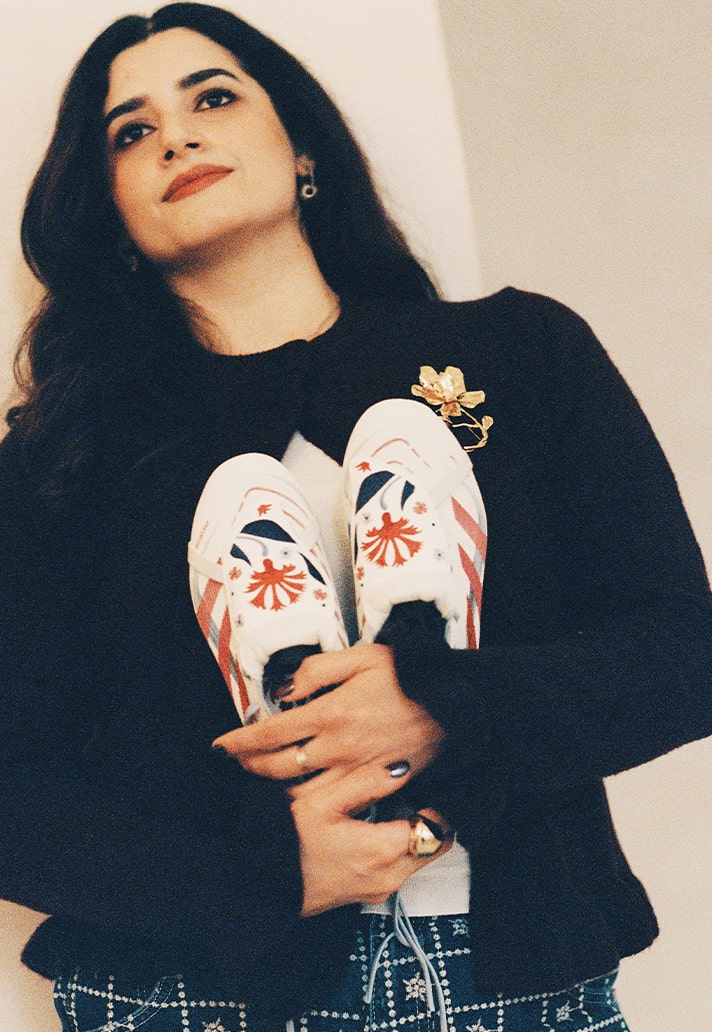
Yes…the Predator. When adidas first reached out about a project, it was meant to be a one-off design exercise. Over time, it evolved into something far greater: reimagining the most iconic boot in the adidas archive.
The Predator isn’t just a product…it’s mythology. It’s Beckham bending free-kicks, Zidane in the final, Gerrard driving through rain. For decades it has symbolised control, power, and creativity. To be entrusted with that silhouette as a designer - especially as a woman from Iraq who fell in love with football through a TV screen is overwhelming.
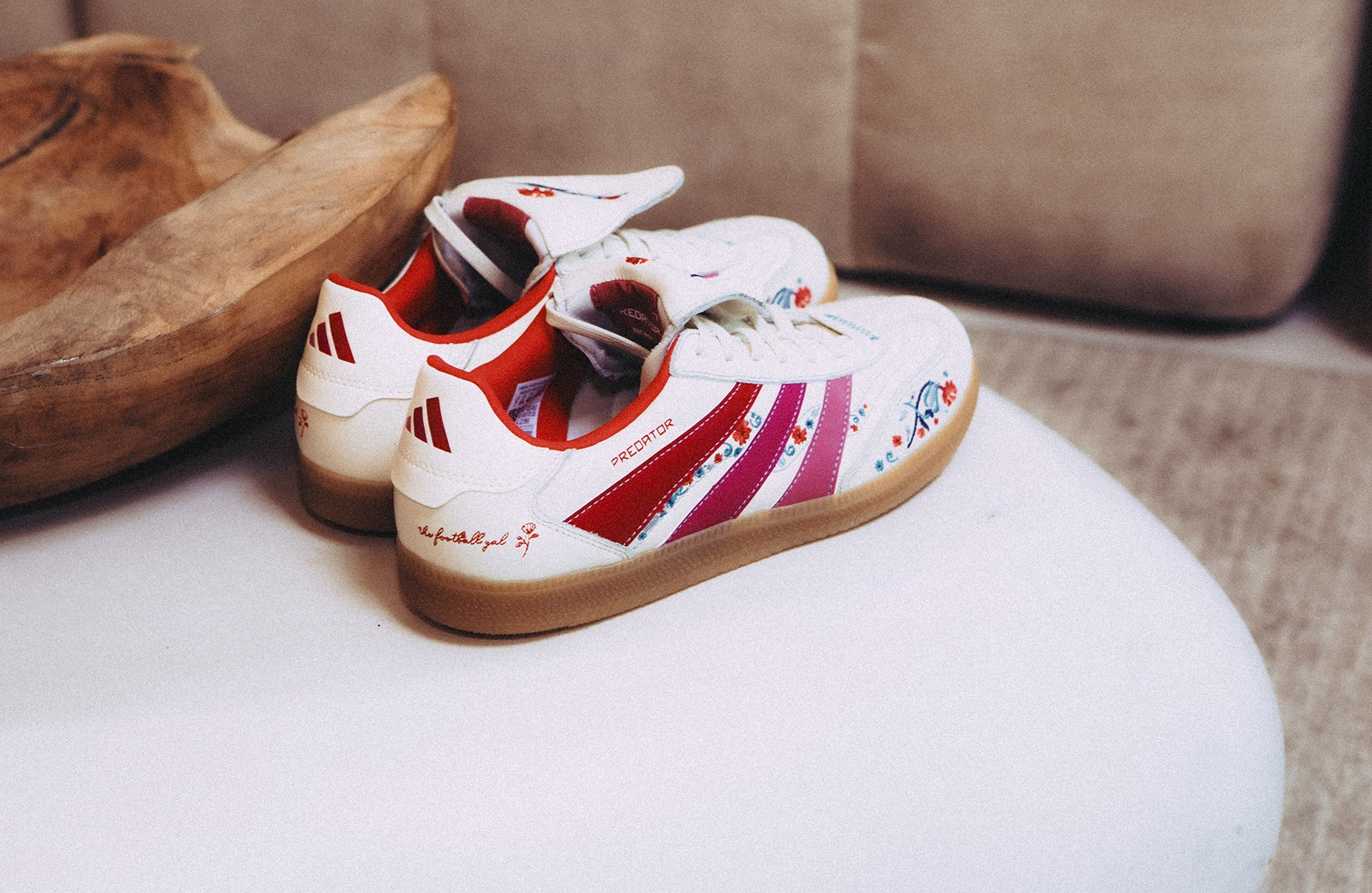
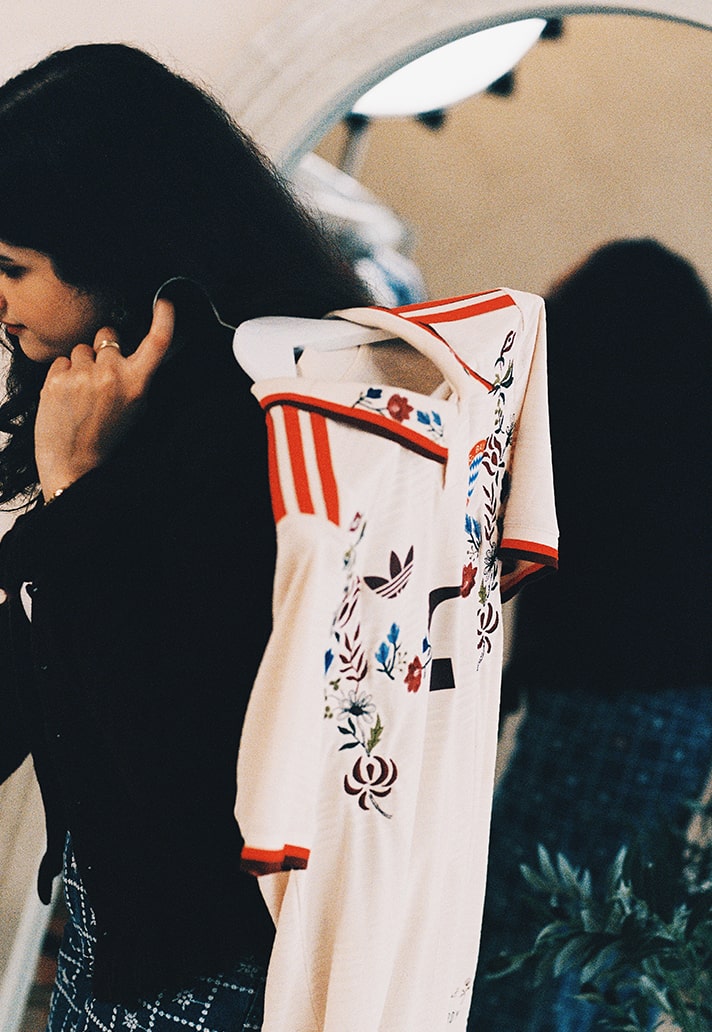
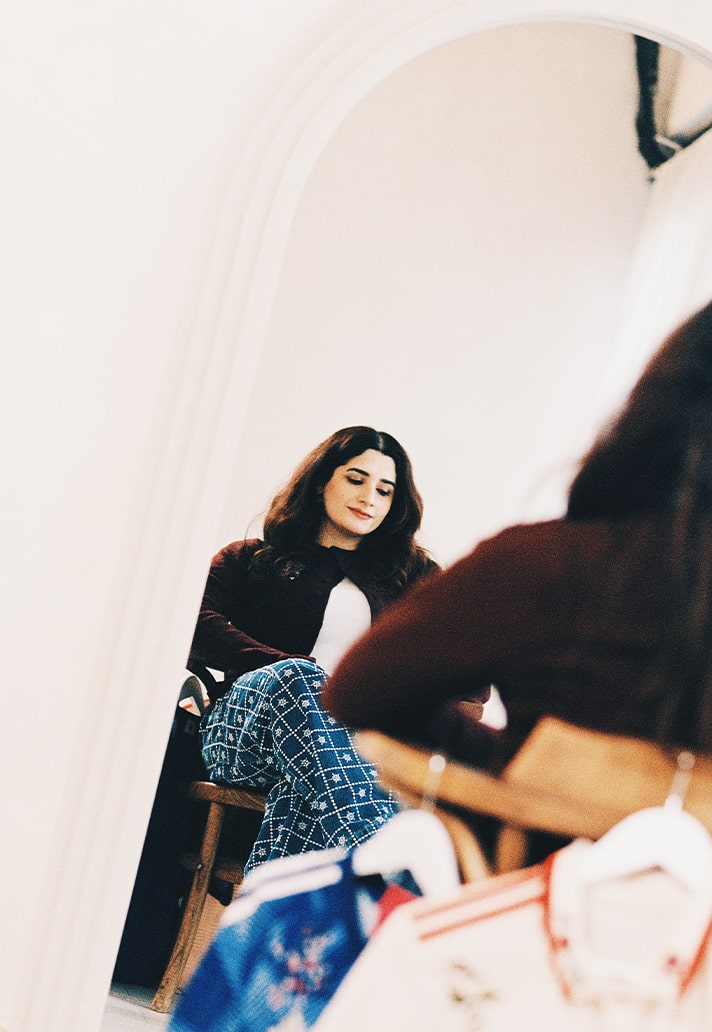
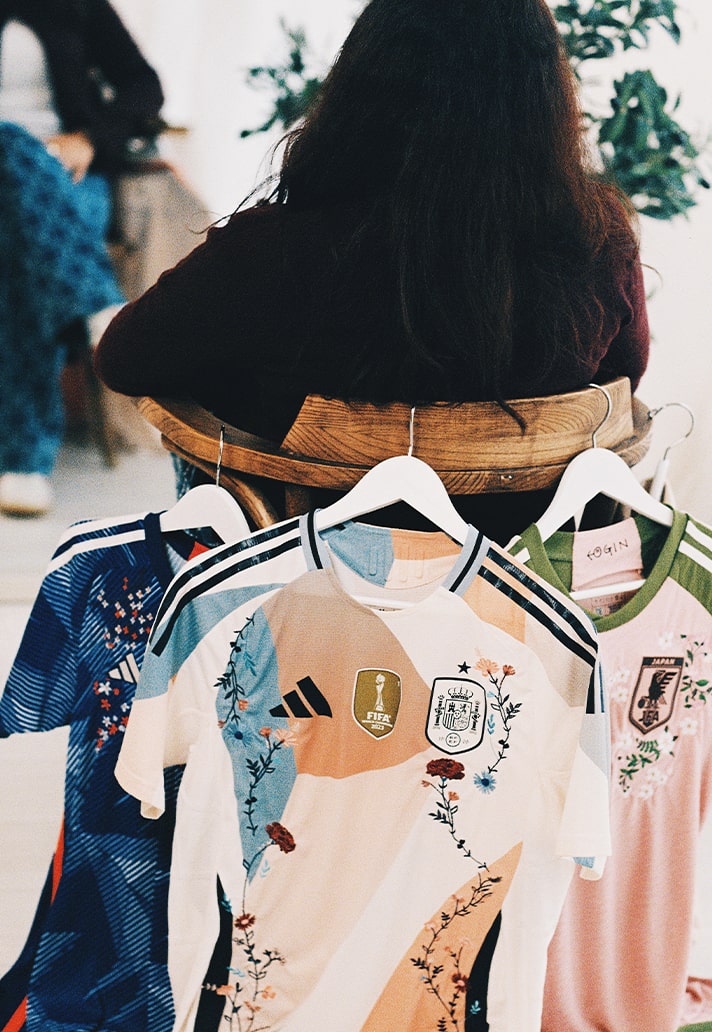
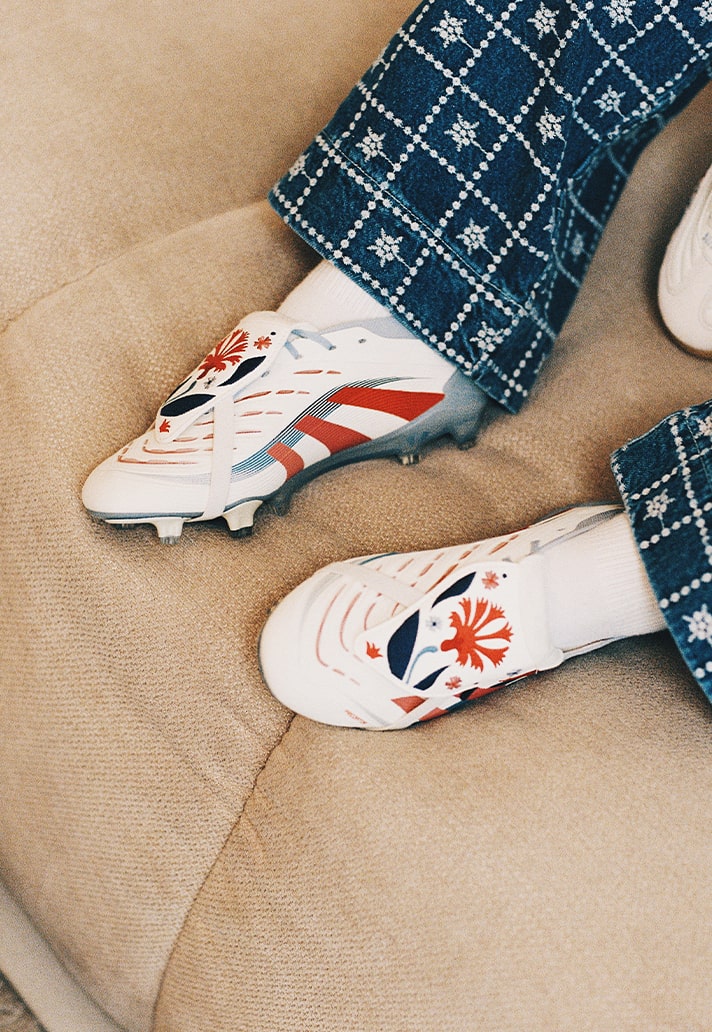
We worked on it for over a year. What began as sketches became a full ecosystem: the Predator boot, a lifestyle version, and the Spain women’s national team jersey from the summer all united through visual storytelling. I wanted to create something that felt alive, tactile, floral, rooted in heritage but reborn for now.
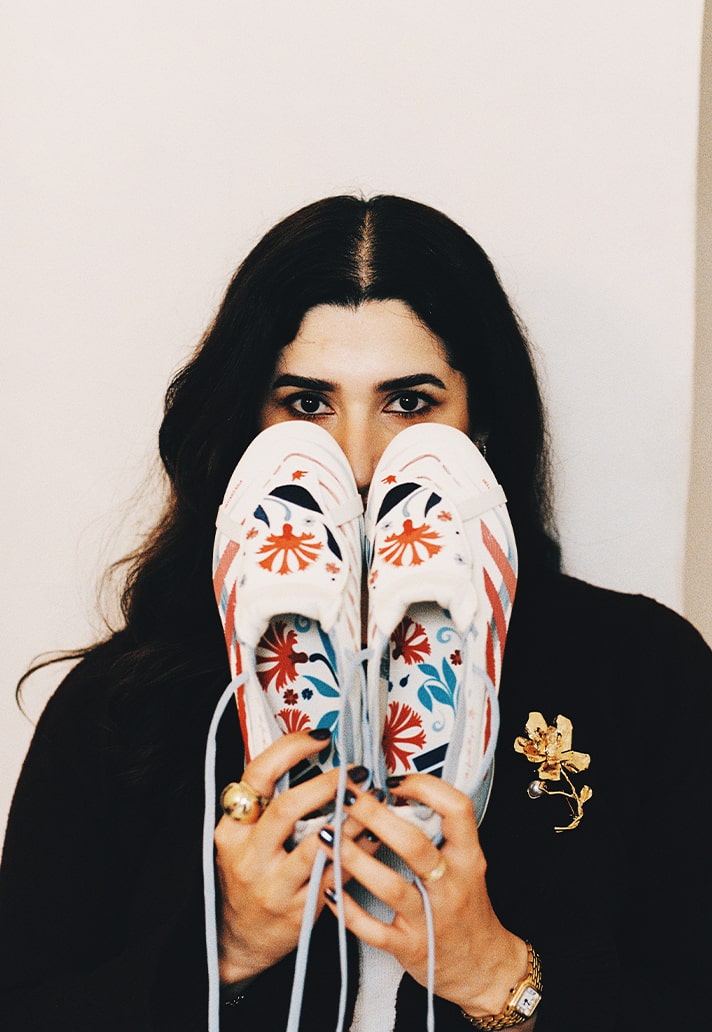
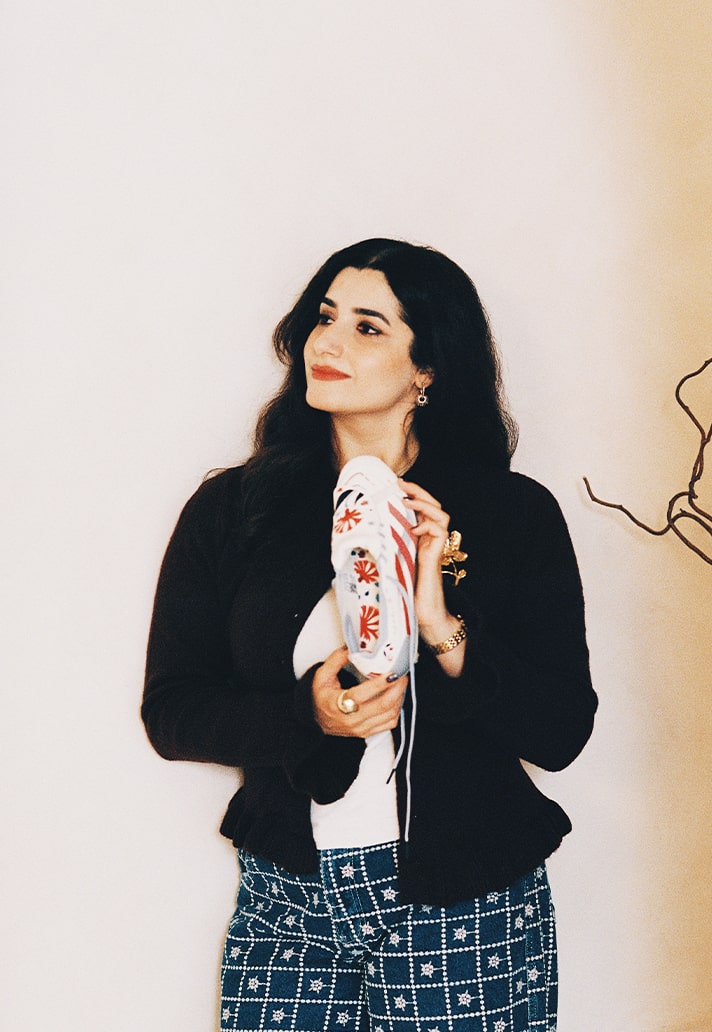
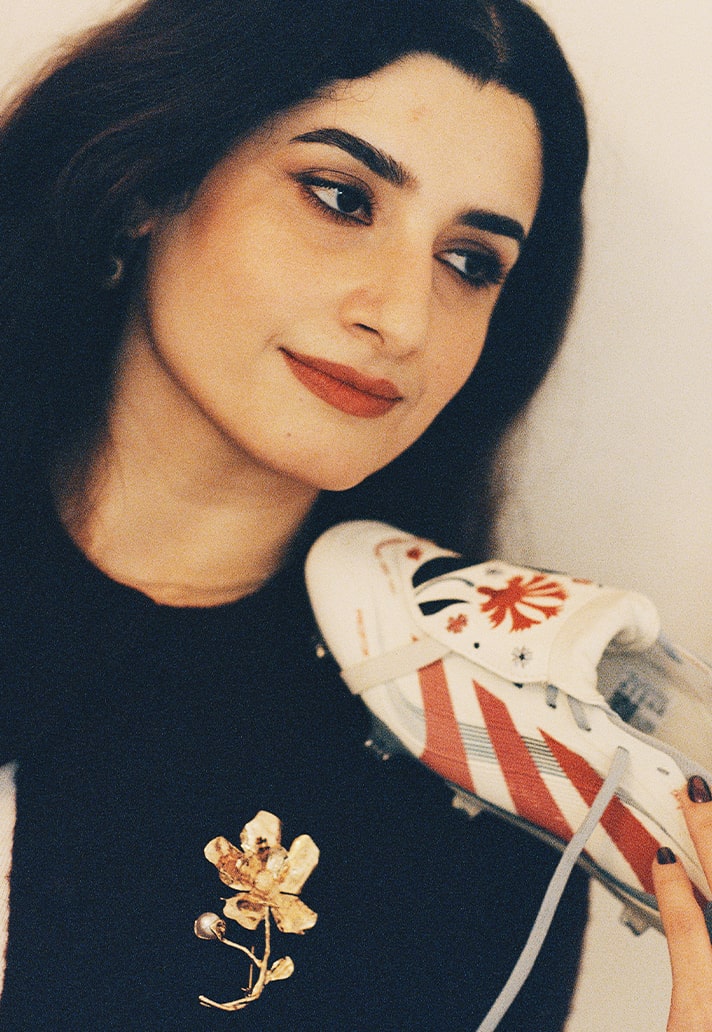
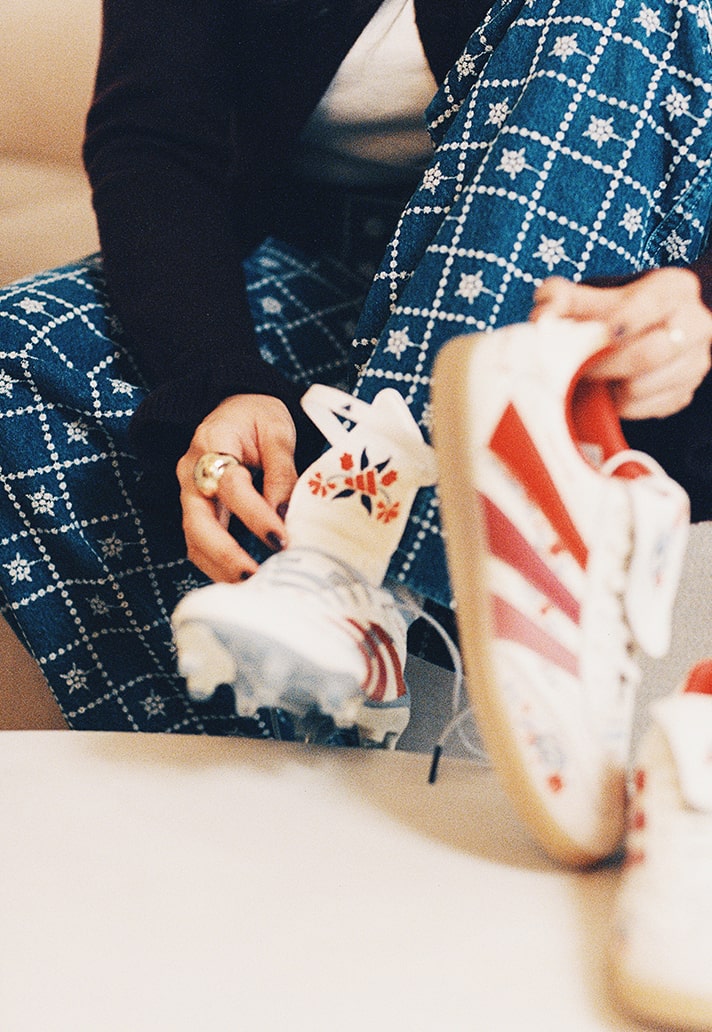
The flower embroidered into the boot is a carnation, Spain’s national flower, symbolising passion and resilience. It ties everything together—the jersey, the lifestyle shoe, and the boot itself. When I finally held the finished pair in my hands, I cried. It felt like the journey from my aunt’s sewing machine in Baghdad had somehow arrived in the heart of adidas’ history.
That’s incredible. Where does it sit among your achievements?
It’s the pinnacle. Nothing compares. The Predator is football’s most prestigious canvas—no other boot carries its weight. To have my story stitched into that legacy feels like rewriting history from the margins. Knowing that professional players will wear something I helped design is surreal. I still can’t fully process it.
What did the creative process actually look like?
I approached it like a research project. I gathered visual references around Spain - architecture, patterns, traditional embroidery, nature—and built huge mood boards. Then came colour palettes, swatches, and sketches. I digitised the patterns, tested different stitches and densities, then travelled to adidas HQ in Herzogenaurach to review samples.
Colour is everything. On a screen, it glows one way; on fabric, it transforms. The first prototype looked too bright, so we physically compared threads until we found the perfect tone: rich, earthy, modern. Every detail was calibrated. The final boot carries both tradition and freshness: the Predator’s aggressive lines balanced with delicate craft.
You’ve spoken before about authenticity in creative football work. What’s your view of how the game’s culture is shifting?
I love that football now celebrates creativity…it’s what connects people from different worlds. But authenticity is key. Some brands genuinely invest in culture; others imitate it. You can feel the difference immediately.
Players themselves are redefining the space. They’re no longer just athletes, they’re creative beings. Some want to stay in their lane, which is fine. But others, like Jules or Alessia, are expressing themselves through tattoos, fashion, or art. That’s exciting. It humanises them. It shows young fans that football and creativity can coexist.
Your family must be so proud of everything you’ve built.
They are. Considering where we started…escaping a war, living as refugees, to now designing for adidas, it’s surreal. I didn’t grow up believing dreams like this were possible. I just hope some girl somewhere, watching football on a screen, sees my story and realises her own potential.
And what’s next?
So many ideas. I’d love to keep expanding with adidas…different silhouettes, off-pitch projects, lifestyle pieces. I want to explore design as storytelling, not just fashion. And with the World Cup approaching, it feels like another creative universe is opening. I haven’t mapped it yet, but I will. Right now, I’m just grateful to be part of this moment.
You’ve come full circle from a child dreaming in front of a TV in Iraq to designing the Predator boot itself. That’s the stuff of legend.
I still wake up some mornings and can’t believe it’s real.
Shop the adidas Predator x The Football Gal from 4 November at prodirectsport.com/soccer