In Madrid, sometime in the early 2010s, four school friends decided that starting a fashion brand felt less impossible than it once had. Crazy, right?
Instagram was beginning to flatten hierarchies and allow smaller labels to look more credible and gatekeepers, while still present, were no longer immovable. What followed wasn’t a masterplan of any sort, but a group of ambitious 19-to-21-year-olds building something of their own to see where it might lead. That brand? POMPEII.
They began with footwear, partly instinct, partly strategy. “We felt there was less competition at an entry level,” POMPEII’s Creative Director, Cosme Bergareche, tells me. “Doing footwear could give us an edge in terms of rarity.”
Long before football became the visible pillar in the brand that it is today, POMPEII stood for something quieter: an expression of Madrid and its tone filtered through design decisions and communication. “Being yourself is the easiest way to be unique,” Bergareche continued. “Nobody can do you better than you.”
Since then, the brand has matured alongside its founders, resisting the temptation to chase an ever-younger demographic with urgency. “We’ve never been afraid of change,” he explains, “but we always remind ourselves that we’re building something slowly, with a long-term vision.”
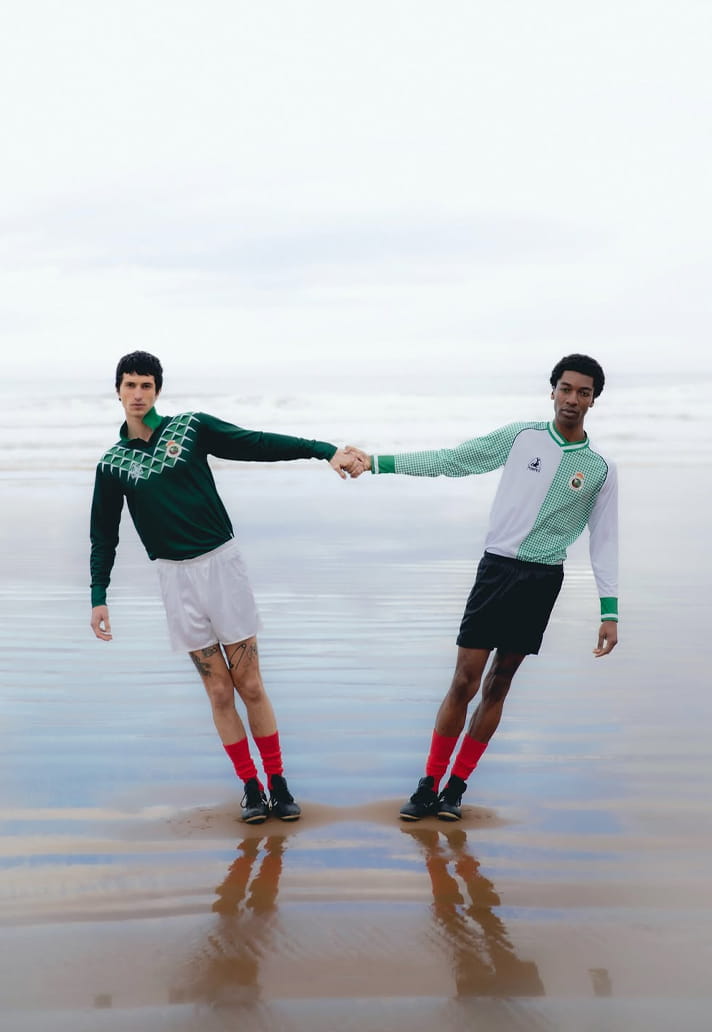
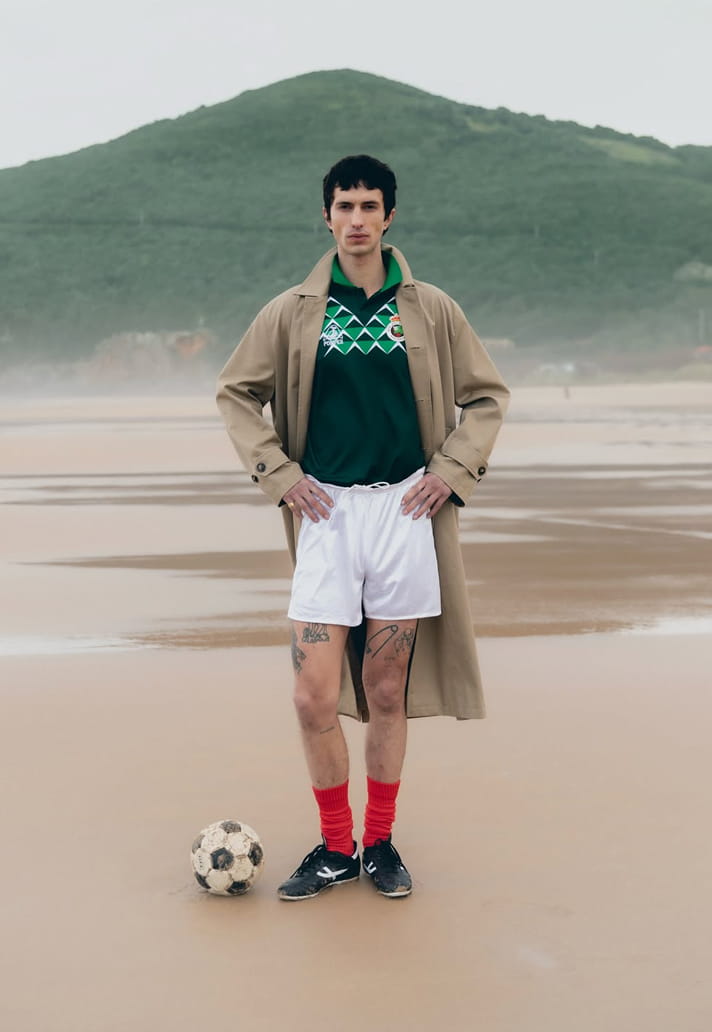
Football, when it entered the frame, felt like a return to their foundational principles. Remember, these are men who grew up in the 1990s, designing imaginary kits on video games. Therefore, nostalgia, inevitably, is part of the equation.
“We’ve been designing kits since the PES days,” Bergareche laughs. “Like every generation, we feel kits were better back then – even though we know, rationally, they probably weren’t.”
“As fans today, it feels like money drives everything,” he continues. Nowadays sponsors are negotiated to the highest bidder and suppliers selected on scale. It’s an economic reality they don’t dispute. “Football needs to be financially viable.”
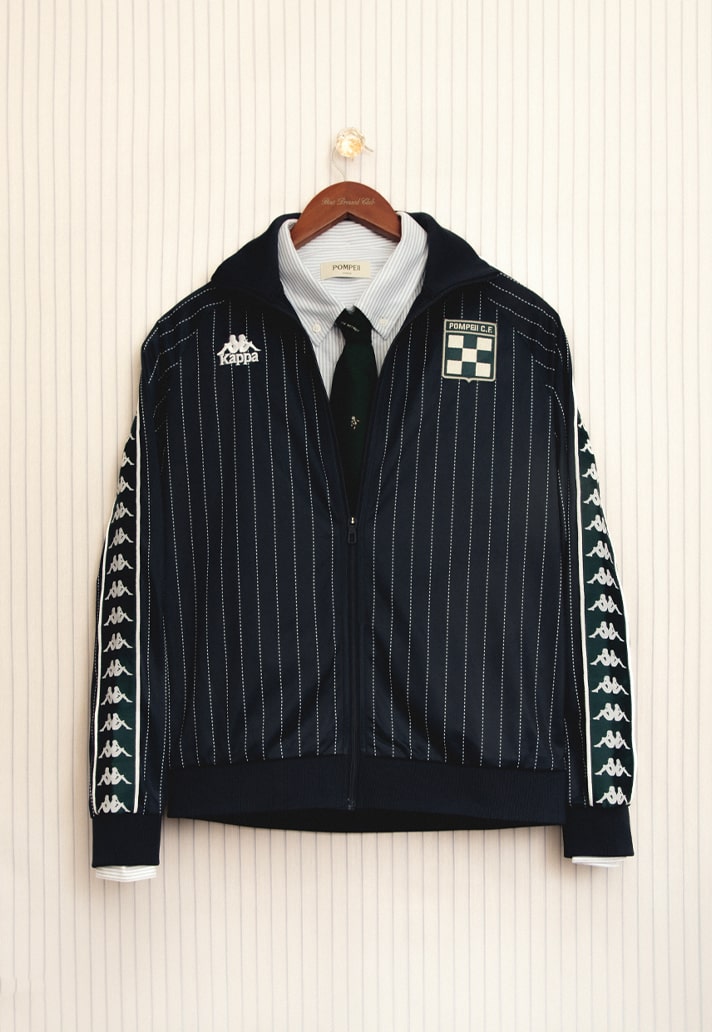
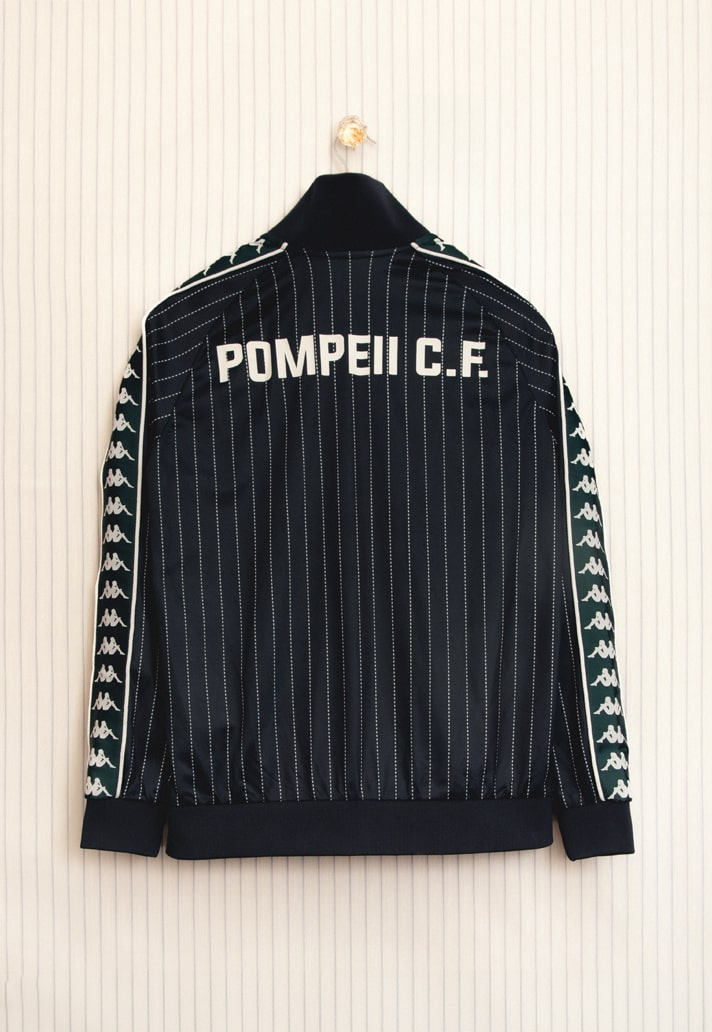
But when global sportswear brands are servicing dozens of clubs, something else slips. “They focus on three or four flagship teams. The rest often receive something much more generic.”
Pompeii’s alternative is depth over breadth. Rather than approach clubs as accounts, they approach them as environments, with stadium visits standard, long walks through the city, conversations with locals.
That immersion shapes POMPEII’s philosophy. The industry, he argues, often centres the athlete: 23 players in a squad. Yet those players represent a fraction of the ecosystem. “Meanwhile, you have 20,000 fans in a stadium every two weeks. Those fans want something they can wear to the match and on their Sunday walk.”
It is a subtle but important shift, from performance to participation. The structural implications are significant. “I think most clubs will eventually have both a kit supplier and a lifestyle supplier,” he says.
In that model, technical performance remains with the global giants, while independent labels shape the cultural layer. Even where formal partnerships don’t exist, smaller fashion collaborations are likely to multiply. For clubs, the value lies not only in aesthetics but in access and reaching demographics that might otherwise remain peripheral.
When asked what the major manufacturers get wrong, Bergareche said: “Working with 50, 60 or 70 clubs inevitably makes it harder for projects to feel personal. Often the people involved aren’t specialists in product or design.”
His proposed remedy is straightforward: creative direction embedded within clubs themselves. A figure capable of aligning kits, campaigns and identity under a coherent, long-term vision.

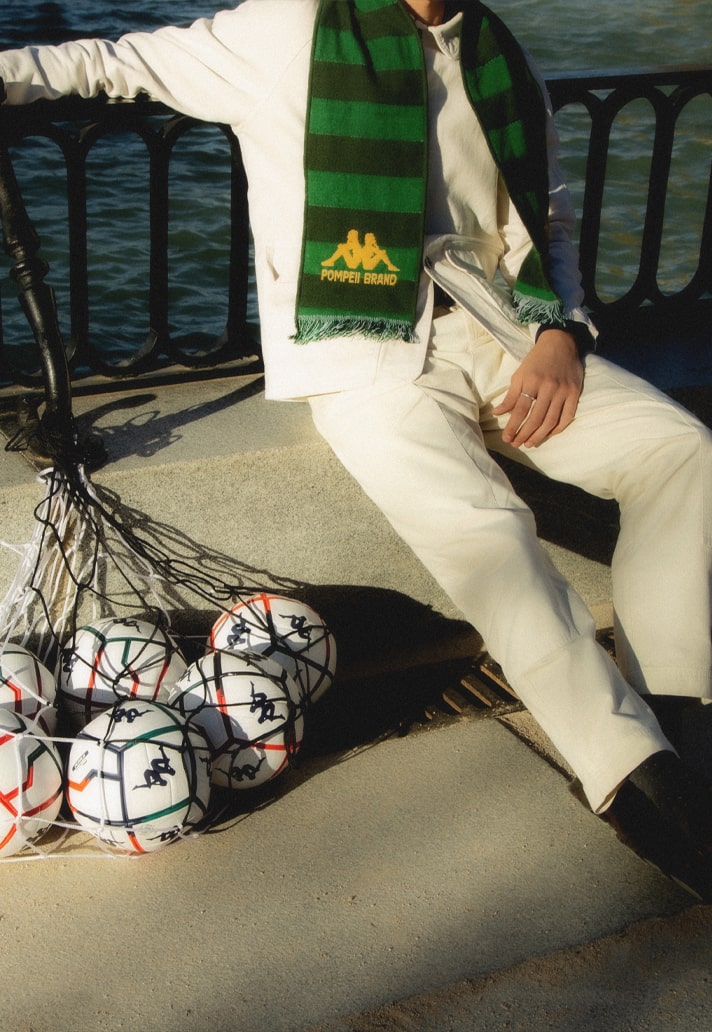
“We [POMPEII] visit the city, the stadium, the training grounds. We go through their books and revisit every previous kit.” From there, direction emerges organically. If a club has exhausted its civic history, perhaps supporter subculture offers new ground. If terrace aesthetics dominate, maybe typography or overlooked graphic details provide space to move.
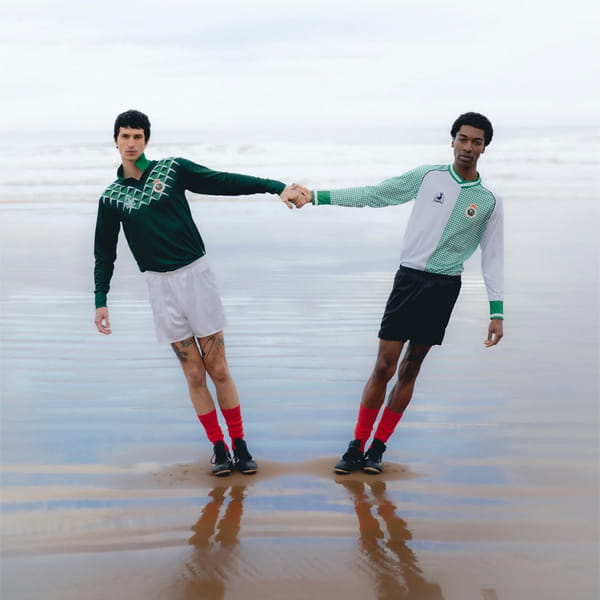
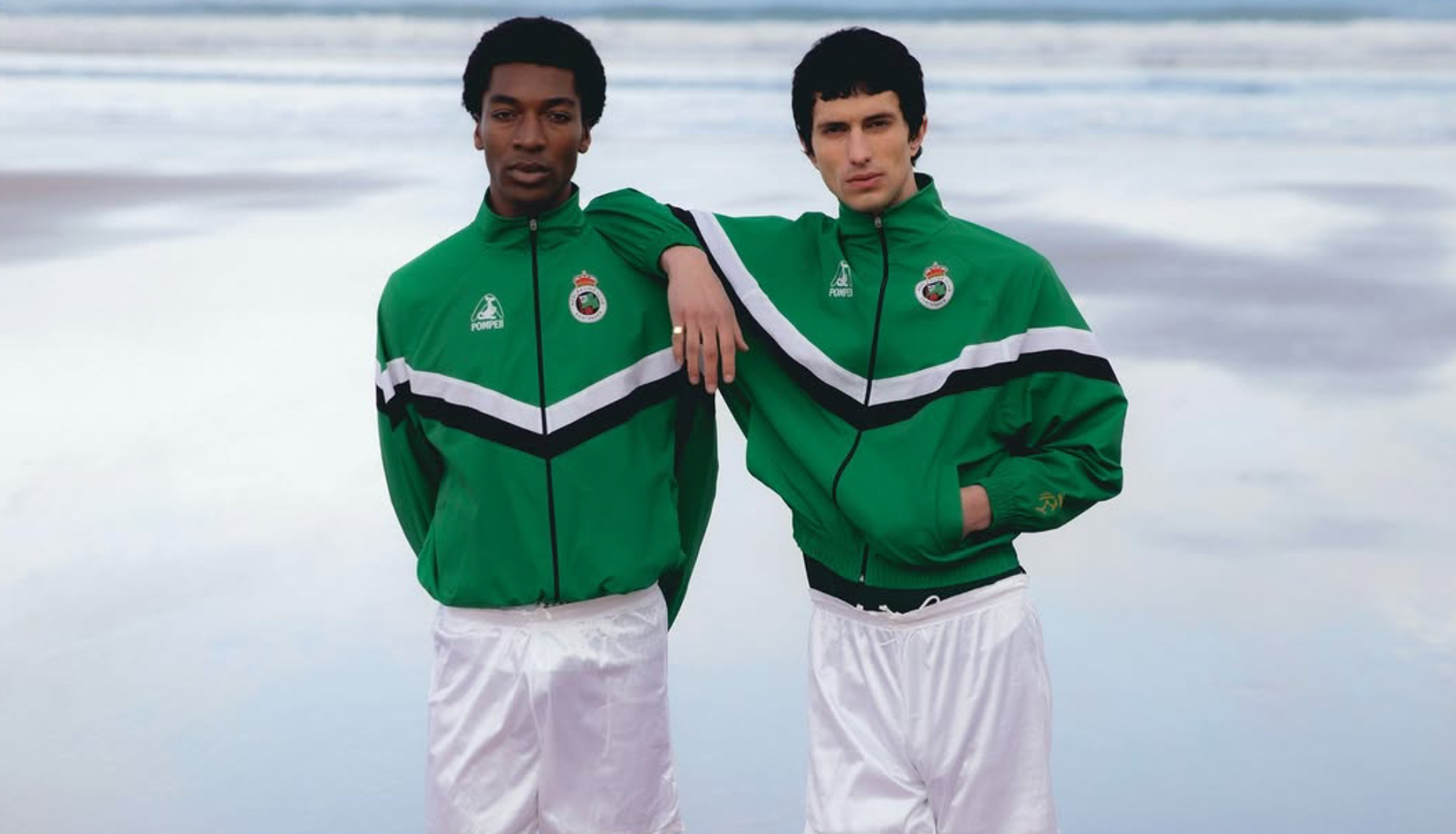
POMPEII’s latest release with Real Racing Club (their second with the second tier Spanish side) certainly cements this outlook.
“We’re interested in identity,” he says, “but politics can instantly exclude a large part of the fan base.” Football’s rare gift is its capacity to gather people from opposing ideologies under one roof and that sense of collective experience is not something they want to fracture.
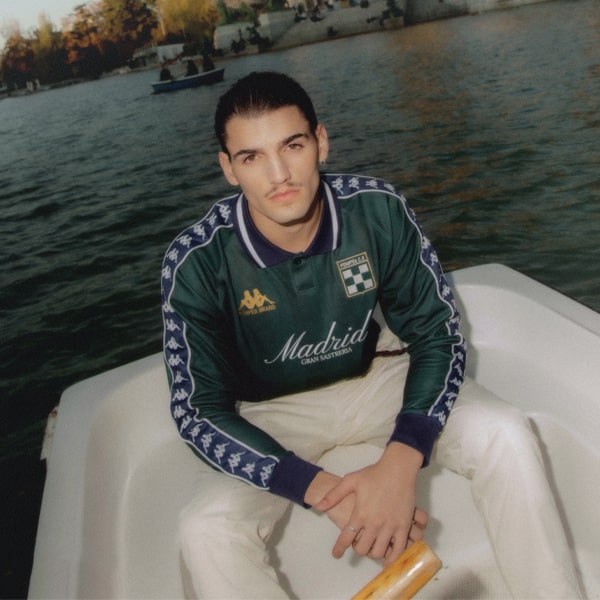
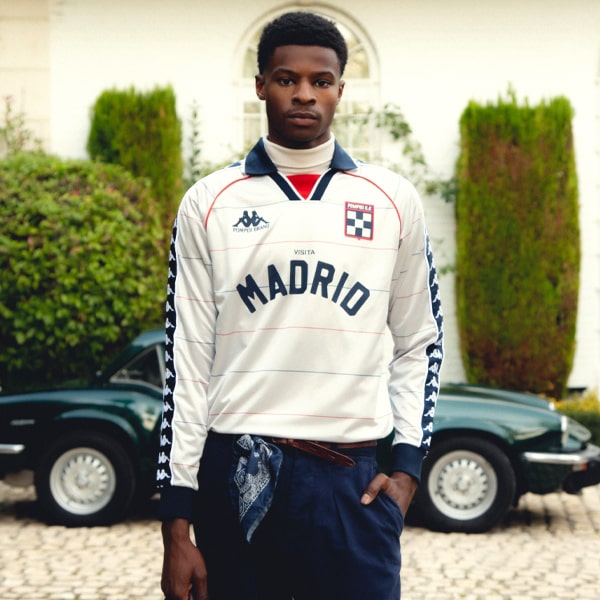
As for references, the mood board tilts heavily towards late-90s and early-2000s European football, though rarely in a literal way. Collars are treated almost like those on a polo shirt and the word “refined” surfaces again.
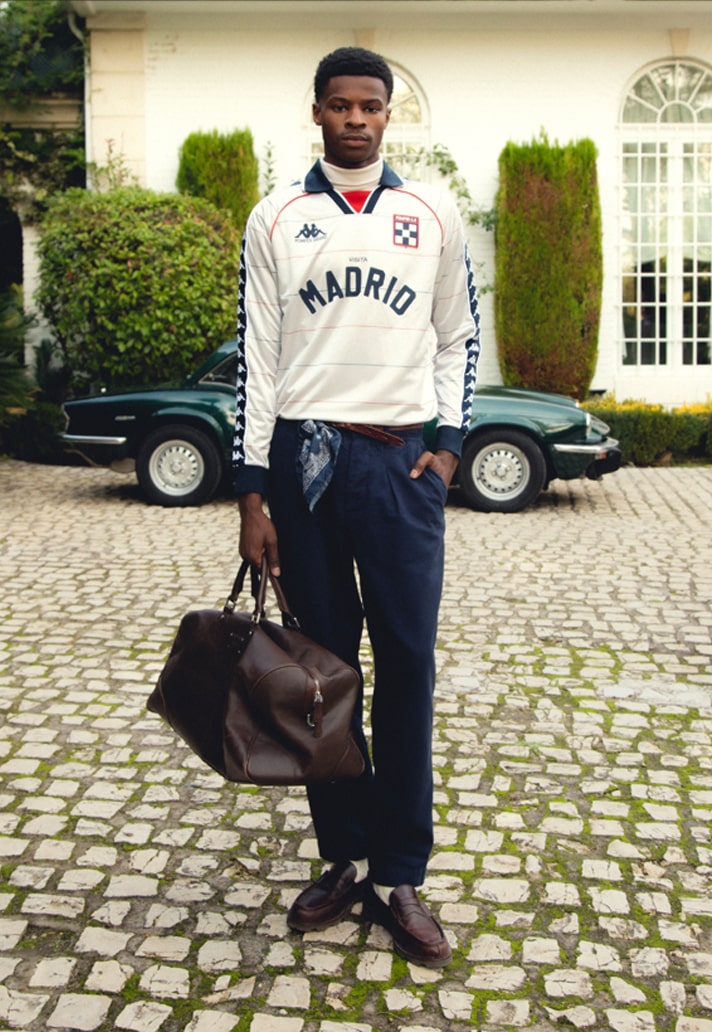
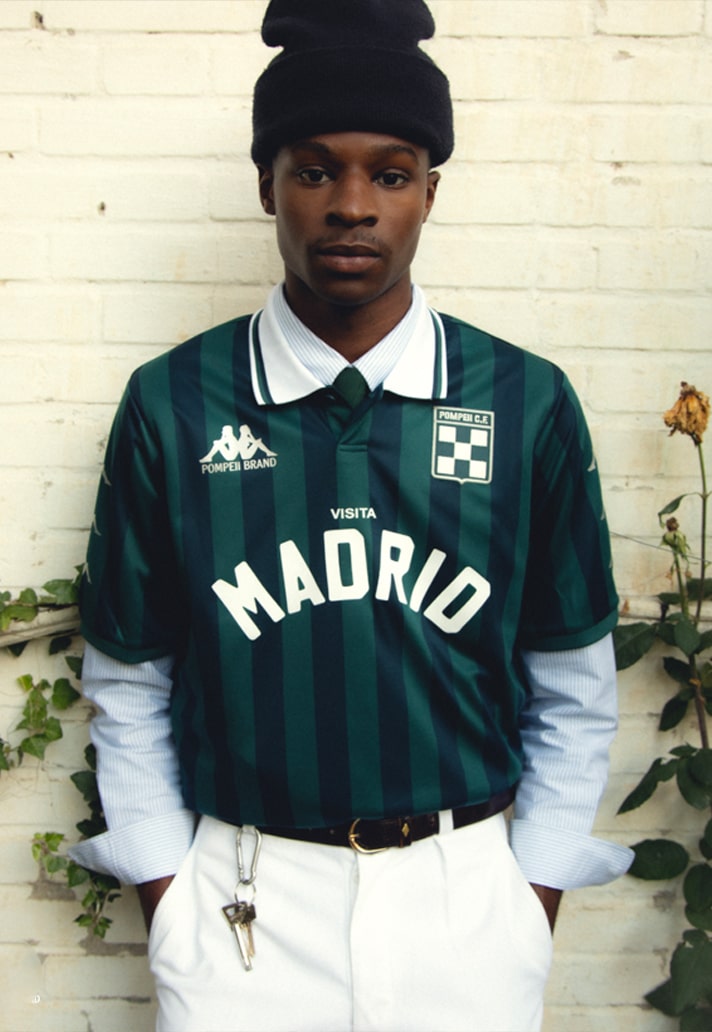
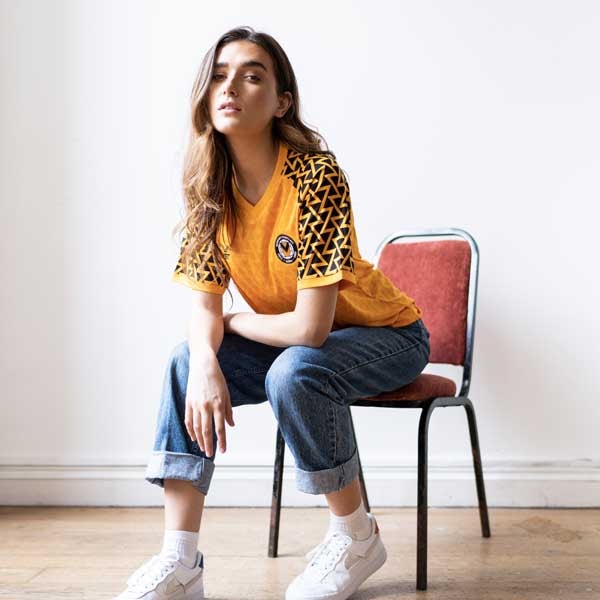
“We design [kits] to be worn off the pitch too,” he says. Sponsors are also treated as integral components. He recalls supporting different teams in different countries as a child, choosing Italy’s Fiorentina purely because of the Nintendo logo across the chest. “That shirt is iconic,” he says. “It wouldn’t be the same with a different sponsor.”
The detail matters. Sometimes more than people realise. “We’re part of a wider movement,” he says, one that suggests football can be presented differently. “We look back a lot, but not out of nostalgia alone. We’re using that past as a foundation to open new doors.”
In that sense, POMPEII isn’t trying to drag football backwards. Nor is it attempting to bulldoze tradition in the name of novelty. Instead, it occupies the space in between: attentive to history, alert to culture, and convinced that what happens in the stands and on the streets matters just as much as what happens on the pitch.
You can check out everything going down at POMPEII via the brand's website