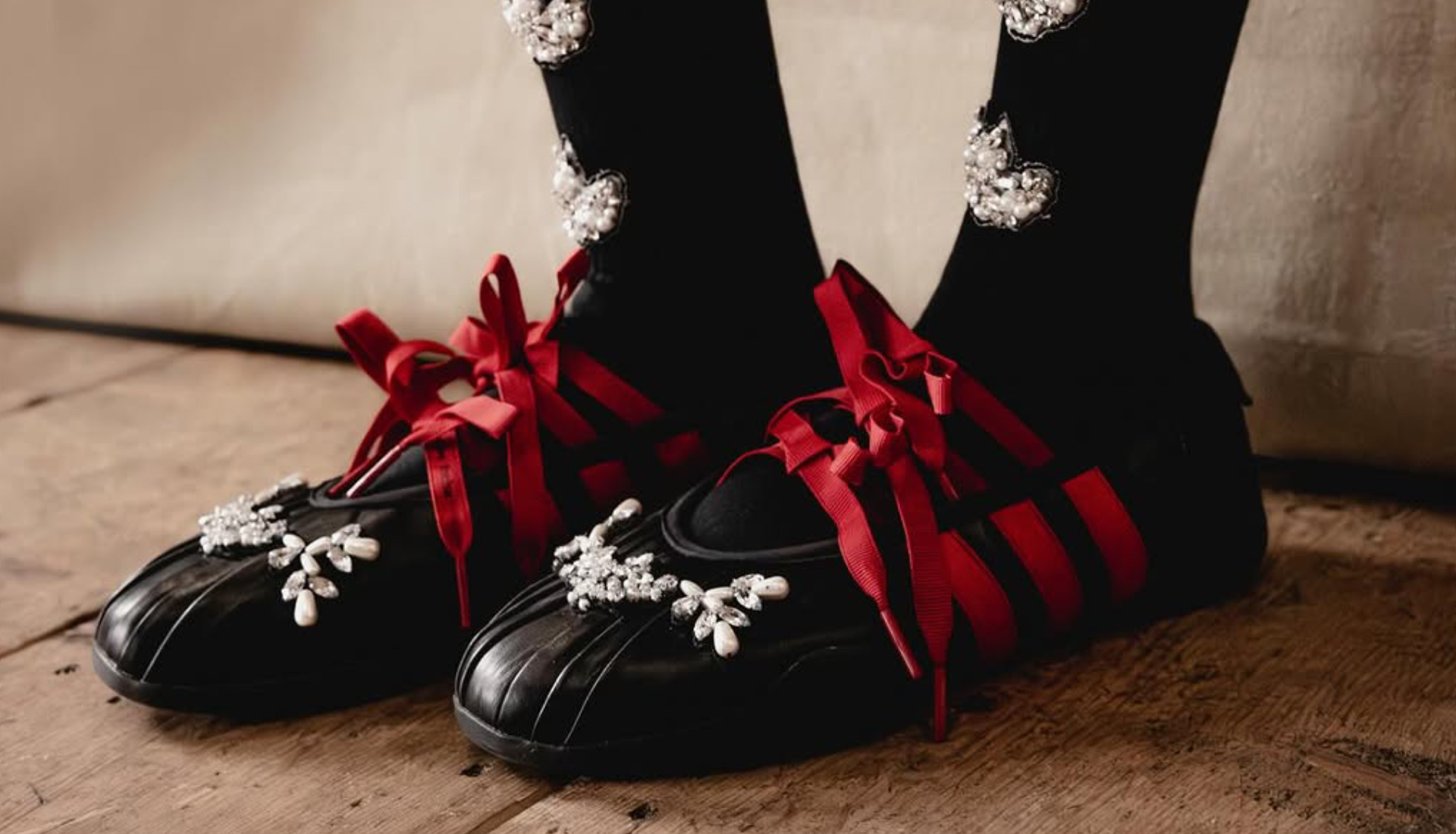
At London Fashion Week, Simone Rocha showcased her debut adidas collaboration, serving as a timely reminder that football is still on the mood boards of luxury fashion.
If you haven’t seen it, the Irish designer sent her first collaboration with adidas down the runway and, in doing so, gently reminded everyone that football culture is very much still on luxury fashion’s mood board – if just a little more subtly. It wasn’t gimmicky or the over-the-top nostalgia play we tend to see nowadays, it’s just Rocha doing what she does best: taking something utilitarian and loaded with meaning and reframing it through her own romantic lens.
Track tops were sliced with sheer panels and threaded with ribbon lacing, polo shirts carried the posture of classic match-day silhouettes, but were softened with lace trims and sculptural volume, while classic adidas footwear silhouettes received the statement Rocha treatment.
What struck me most, though, was the lack of irony. Football can often be mistaken for costume when it visits the world of luxury fashion – take the Y2K era, for instance – but this felt foundational from Rocha.
The track top remains one of the most potent garments in modern dress: graphic, tribal and sometimes emotionally charged. Rocha treated it with the kind of care usually reserved for couture.
As I say, this is merely a reminder that football is still a part of the luxury conversation as opposed to something new. Designers like Grace Wales Bonner and Martine Rose, for example, have been building in this space for years.
The former’s ongoing partnership with adidas has consistently explored terrace style and diasporic football histories, creating pieces that often feel like artefacts from a parallel football archive.
Martine Rose, meanwhile, has long understood that British football culture is social fabric. Oversized jerseys, referee shirts, awkwardly brilliant silhouettes that echo Sunday league touchlines and 90s warm-up kits, not to mention her collaborations with Nike.
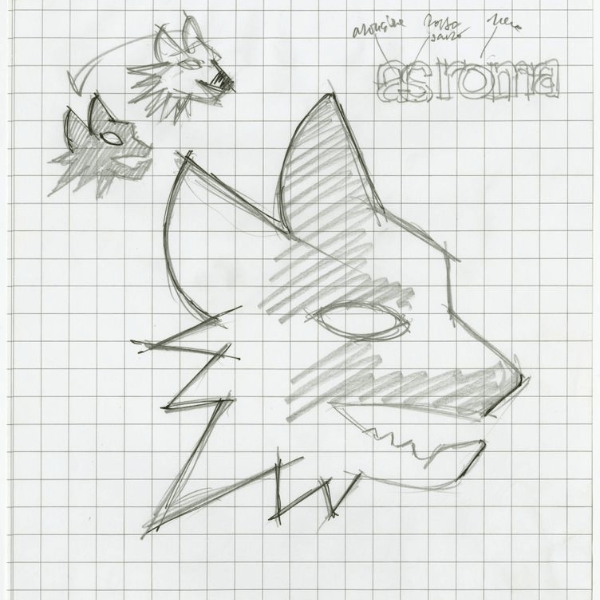
Collabs between clubs and high-end fashion houses have redefined what merchandise even means too. Louis Vuitton and Off-White have both stepped into football-adjacent territory. Moncler linked with Inter. Patta with Barcelona. Aries and New Balance reworked AS Roma. Balenciaga turned its attention to Stade Rennais.
Then on the world stage, NIGO, in the midst of his tenure at KENZO and his work with Human Made, took time out to design Japan’s national team jerseys for the 2022 World Cup which, at the time, felt pretty symbolic. I mean, it was one of streetwear’s most influential figures shaping how a country presents itself through football.
Even clubs themselves are evolving. Remember when Crystal Palace made history as the first Premier League side to appoint an in-house creative director to oversee off-field collections and future fashion partnerships? That’s more than merch strategy.
You can trace the lineage even further back to Stella McCartney’s work with adidas around Arsenal, or the late Virgil Abloh’s one of many football-inflected collections, or the way Stone Island and CP Company moved from terrace staples to luxury mainstays without shedding their football DNA (not to mention the latter's partnership with Manchester City).
In short, everything still points to the same thing: that football is more than a seasonal reference – it’s more like a cultural anchor. Sure, for those of us operating in this overlap daily, none of this is surprising. But seeing Simone Rocha put it front and centre at London Fashion Week felt like a timely reminder to the wider industry – whether they wanted it or not.