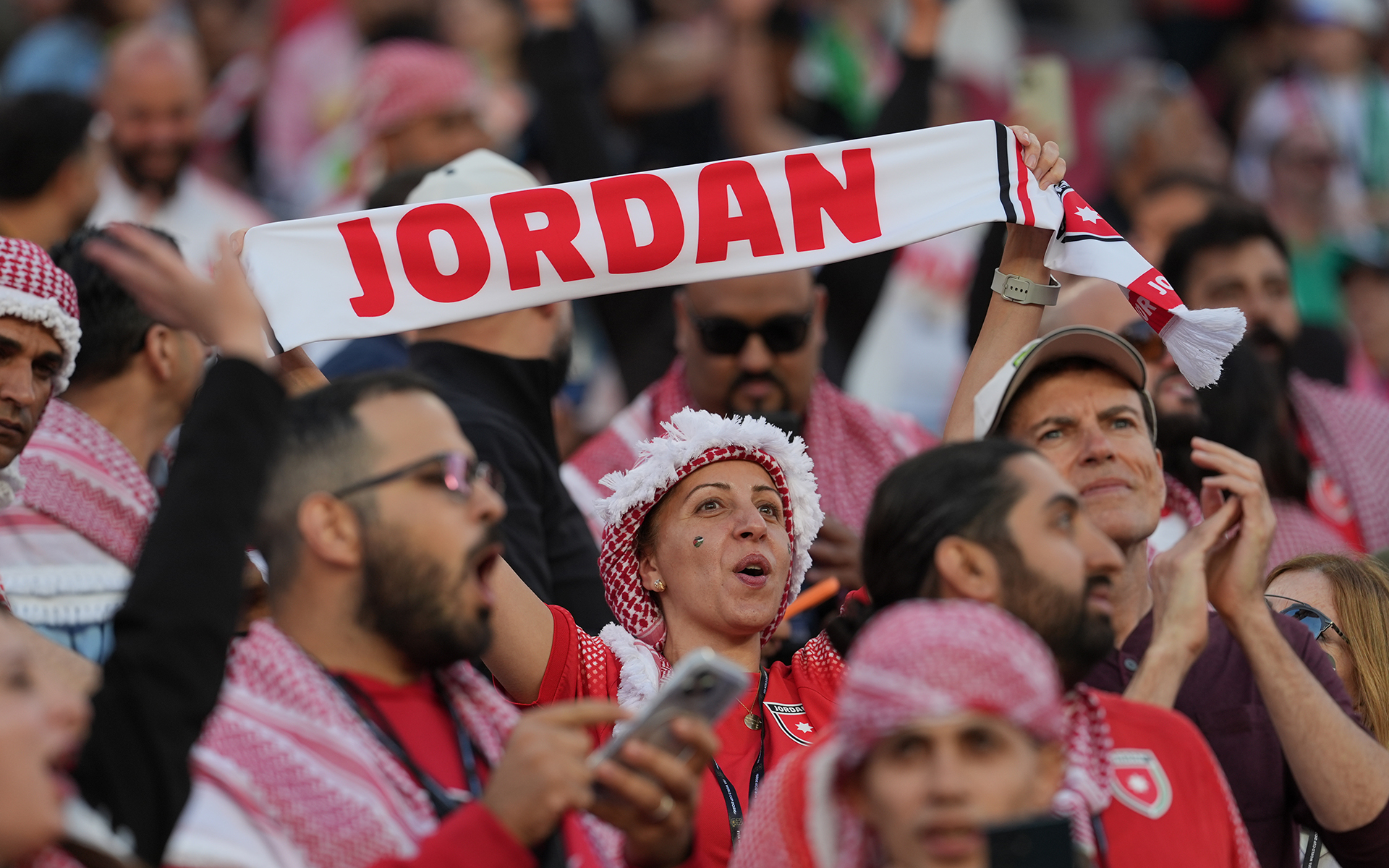
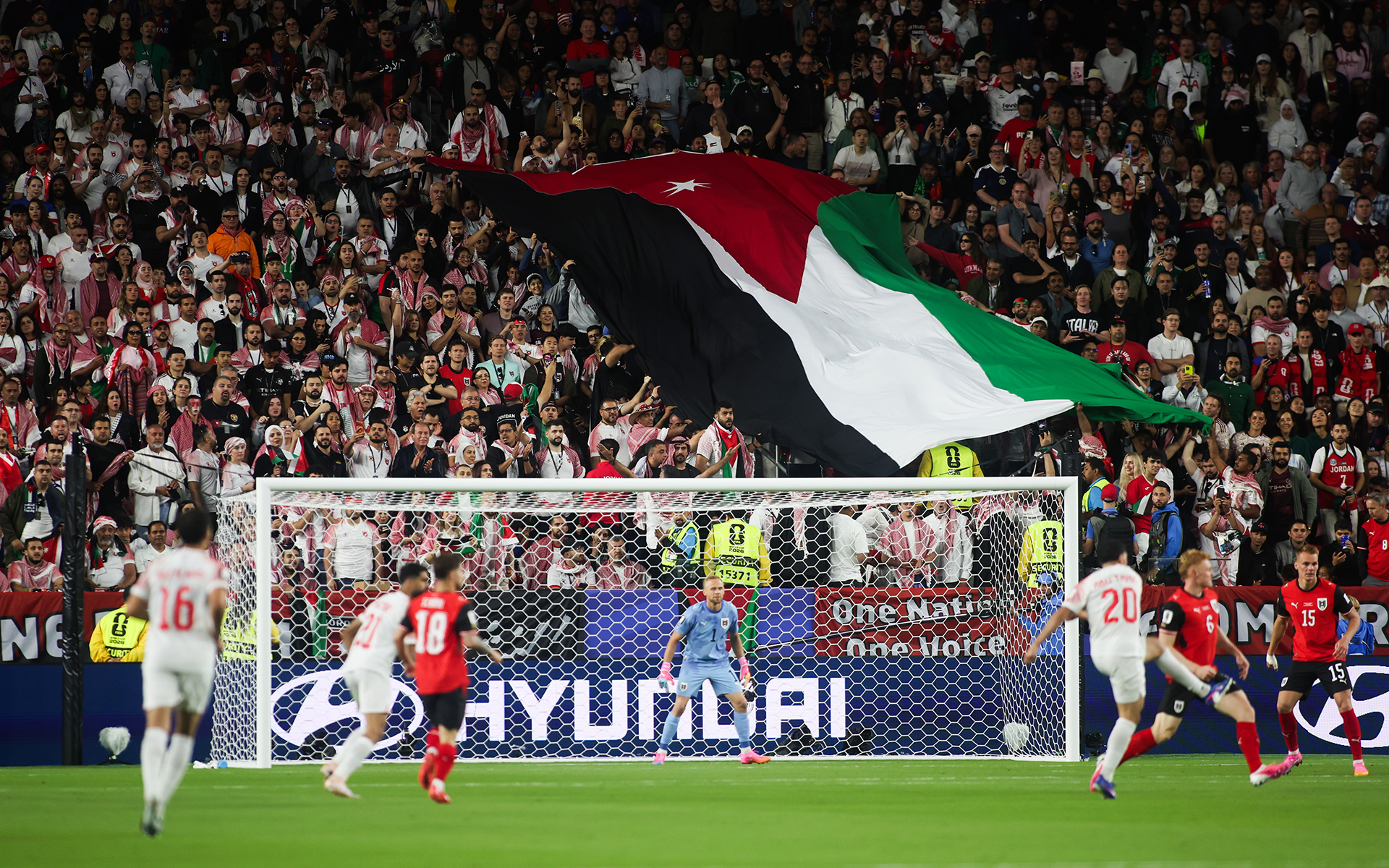
For a few minutes in Santa Clara, Jordan were ahead at a World Cup. Nizar Al-Rashdan had put them in front against Algeria, giving the country its first lead at football’s biggest tournament.
Around him, a team that had spent its entire history looking towards this stage from a distance was suddenly living inside it. The eventual result – a 2–1 defeat that ended Jordan’s hopes of progressing from the group – mattered, but it did not shrink the feeling.
For Omar Momani, a renowned Jordanian cartoonist and animator whose football illustrations have travelled around the world, that still sounds slightly unreal.
“For most of my life, I drew World Cups as a Jordanian watching from afar,” he tells me. “As a cartoonist, I spent decades drawing other nations’ football heroes. Now, for the first time, I get to draw my own.”
It is a line that captures the peculiar beauty of a World Cup debut. Qualification is not simply a sporting achievement, it changes the geography of imagination. A country moves from the margins of football’s grandest story to its centre, from spectator to participant.
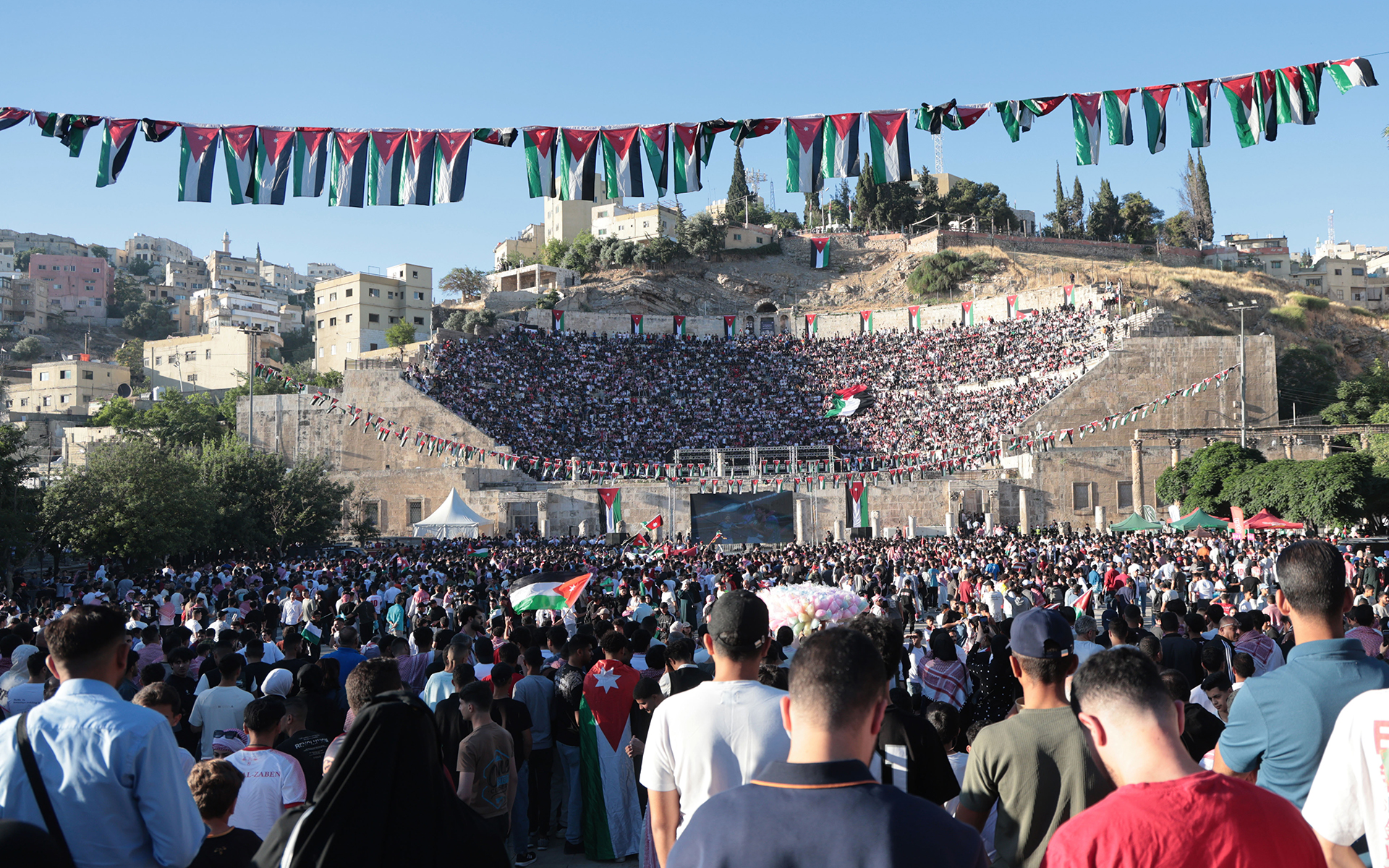
Jordan had never reached a World Cup before this summer. Its route to North America was secured last June with a 3-0 win away to Oman, Ali Olwan scoring all three goals as the country waited on news from Iraq’s match with South Korea. When confirmation came, the celebrations began almost immediately.
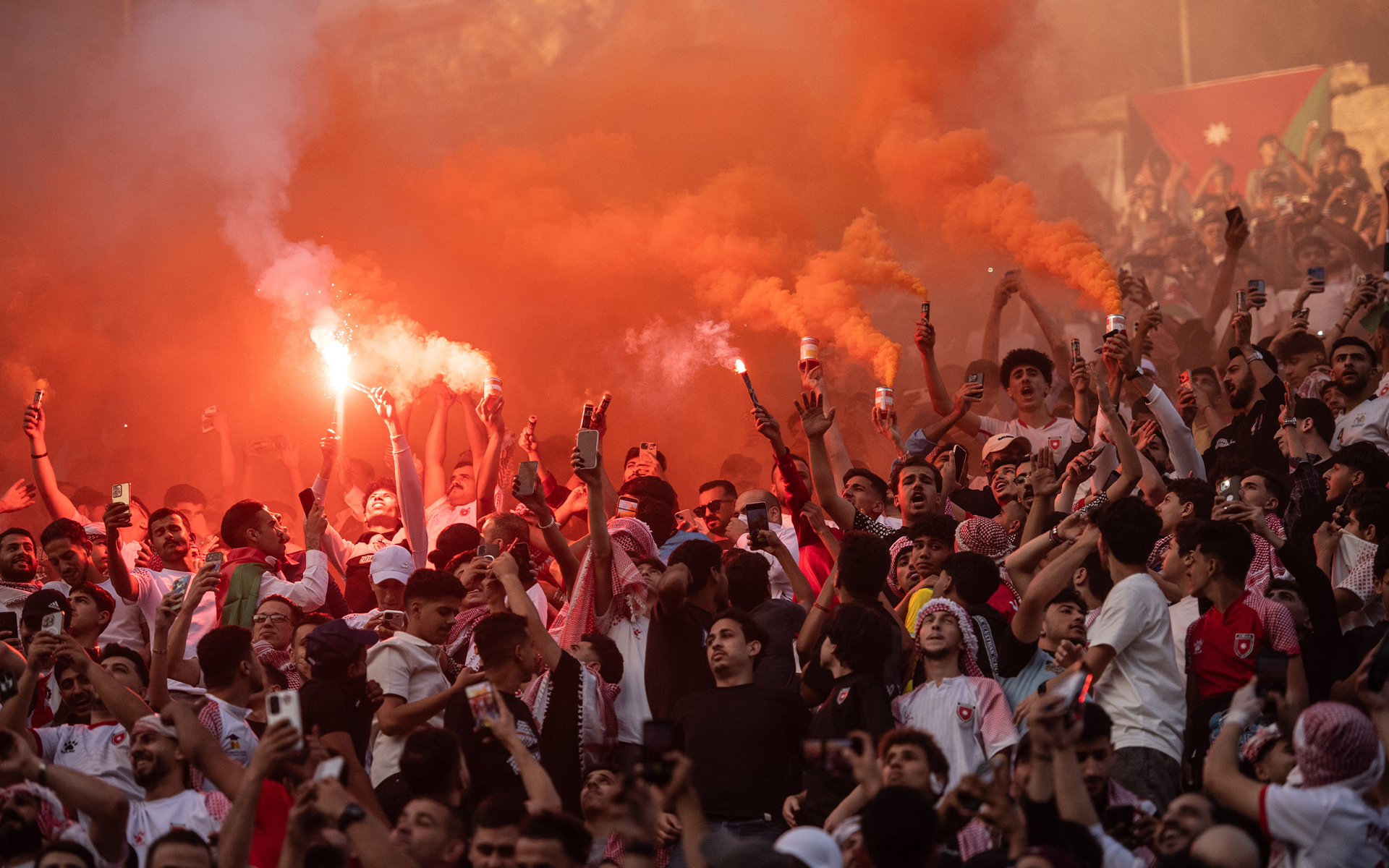
Momani was at home in Amman with his wife and two daughters. “There was shouting, singing, celebrating, and a lot of emotion,” he recalls. “Almost immediately, we could hear car horns and celebrations outside. People poured into the streets waving flags, singing, and celebrating together.”
The sound of a country celebrating itself is difficult to mistake. It comes through car horns, late-night cafés and phone calls to family abroad, and reaches the children first, perhaps. For generations, Jordanian kids have played football while announcing themselves as Maradona, Messi or Ronaldo. Now, Momani says, they are choosing names closer to home.
“Many Jordanian children say, ‘I’m Mousa’ or ‘I’m Yazan,’” he says, referring to Mousa Al-Tamari and Yazan Al-Naimat. “That is a powerful change.”
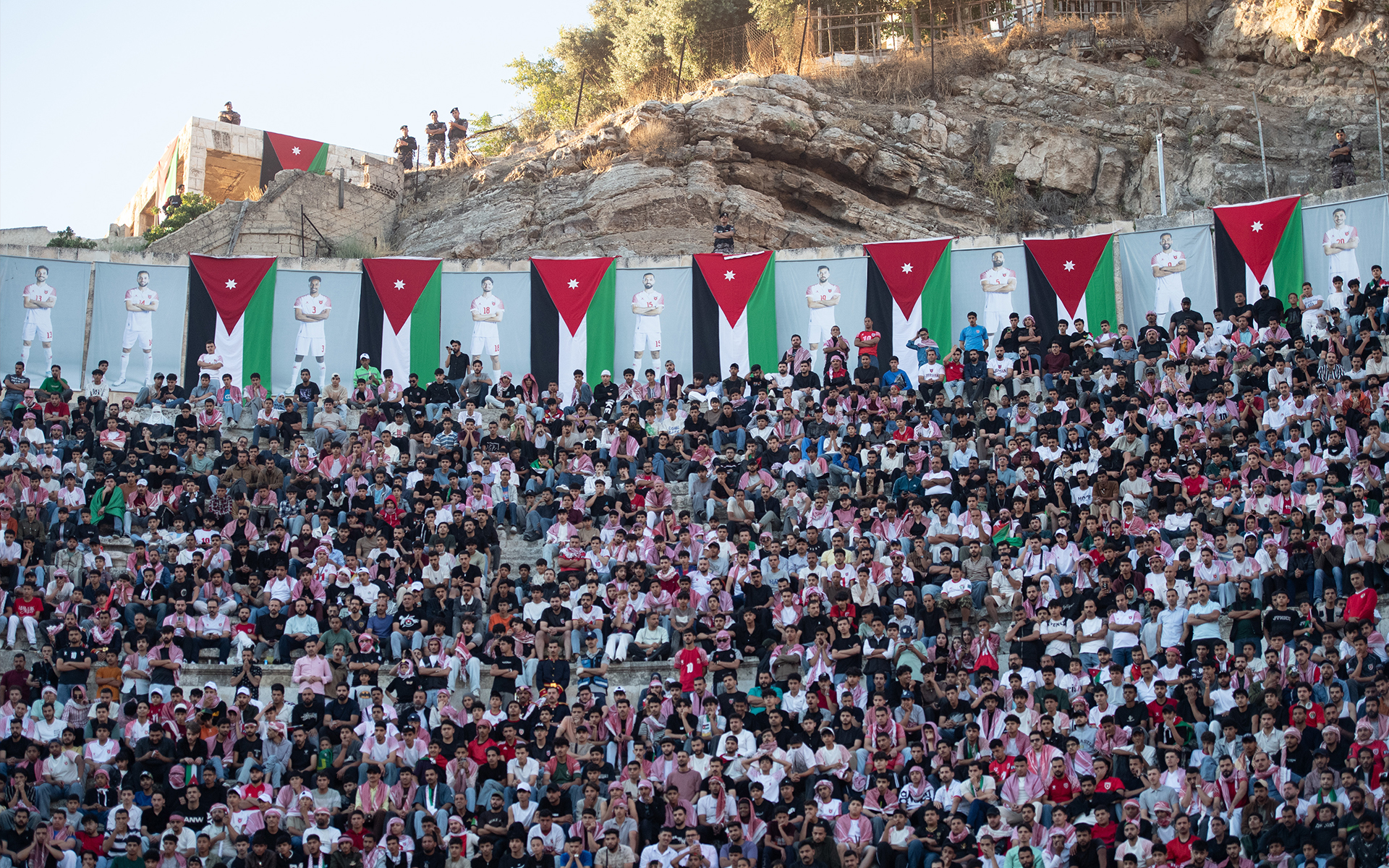
Despite this being the country’s first ever World Cup, football has always occupied a central place in Jordanian life. It is in the streets, in packed cafés, in homes gathered around the television long after bedtime.
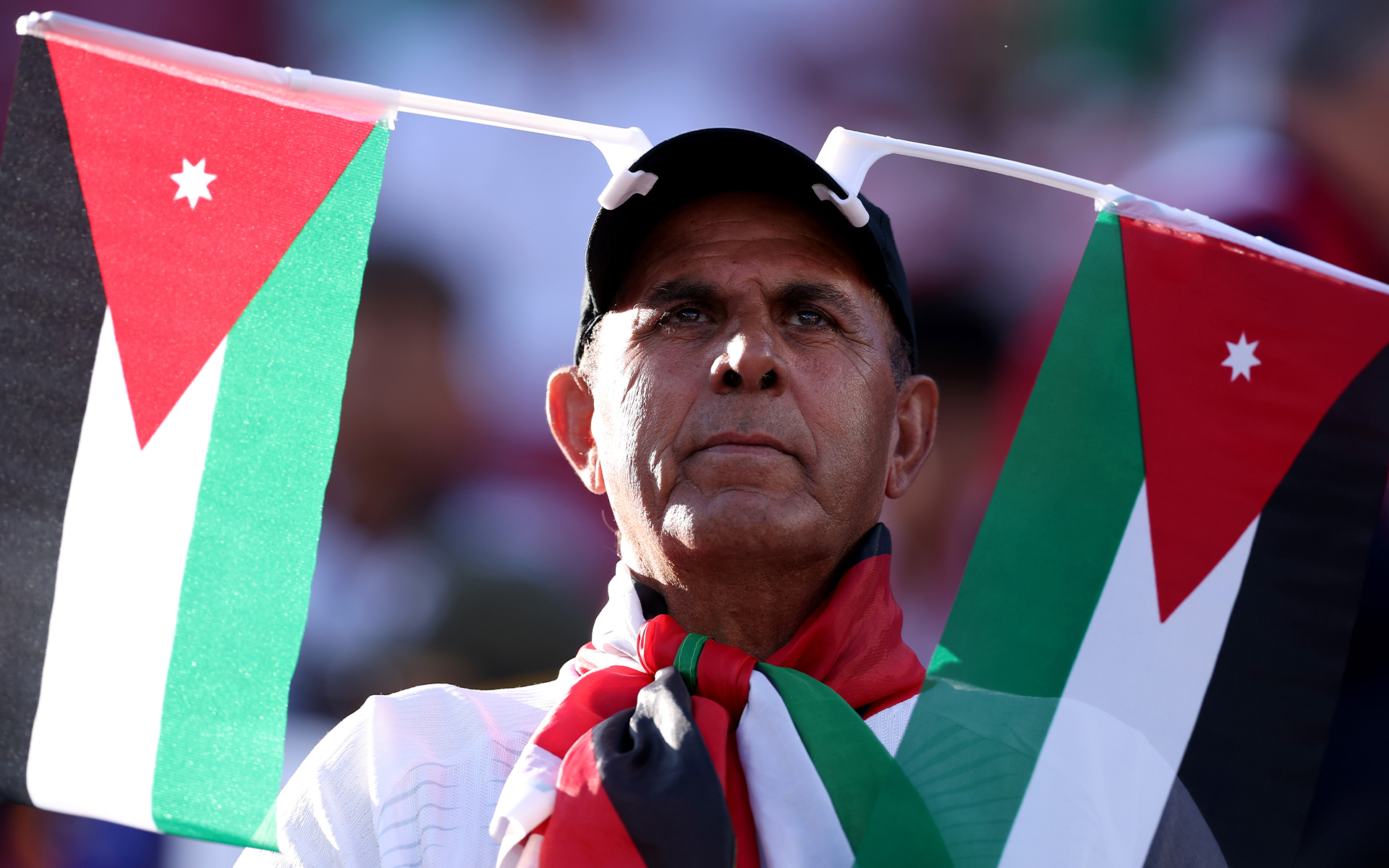
European club football has its own loyalties, particularly the Premier League and La Liga, but the national team has the rare ability to flatten them all. When Jordan play, there is one shirt.
“What impressed me most during the World Cup qualification campaign was how football brought people together,” Momani says. “People from different backgrounds, generations, and opinions stood side by side supporting the same team. Football gave people confidence and reminded them that big dreams are possible.”
Momani’s own relationship with the game began at Italia ’90, watching Cameroon beat Maradona’s Argentina in the opening match. He was nine. His first shirt was Germany’s World Cup winner from that same summer.
Soon afterwards, football became a street game, a television obsession and eventually the subject matter for a creative career built around the sport’s biggest characters and moments.
For him, football is not merely a series of results. It is a form of collective storytelling: “Maradona’s goals, Baggio’s missed penalty, Zidane’s headbutt, Suárez’s controversies — they become part of football’s collective memory,” he says. “As a cartoonist, I feel compelled to document those moments.”
Now Jordan has entered that shared archive. Not as a romantic footnote or a qualification statistic, but as a real World Cup nation with its own memories already forming.
Asked to picture the feeling of Jordan’s first World Cup in a single image, Momani imagines a young child in a red-and-white shemagh and the national team shirt, holding a football beneath a giant World Cup sign.
“For decades, the World Cup felt like something distant that belonged to other nations. Today, though, that child can look at the tournament and genuinely feel that he belongs there too.”
That is the enduring thing. Results will move on and the tournament will eventually close. But somewhere in Amman, in a café, on a five-a-side pitch or in the margin of a schoolbook, a child will draw Jordan at a World Cup and understand it not as fantasy, but as fact.