I’ve spent a lot of time writing about various “cores”. From Gorpcore and Goblincore (you should Google that one), to Normcore and various types of Fairycore (you should probably Google that one, too), cores have been a fashion thing for a few years now.
Thanks to the ever-growing fusion of fashion and football, I find myself writing about another one. But bear with me, because this one looks rather good.
Football has spent the past few years getting very good at dressing. Think vintage shirts, Sambas, track jackets, stonewashed denim and scarves tied wherever a scarf can conceivably be tied. Ultimately, Blokecore gave a name – slightly irritatingly, perhaps – to an aesthetic that had existed in British football for decades.
In 2026, though, something slightly different is happening: football is getting floral. It’s wearing velvet and pearl buttons. Suddenly, designers are looking at wallpaper, old front rooms and gardens. What I’m trying to say is: football has entered its Cottagecore era.
For those not au fait with Cottagecore, it’s an aesthetic and subculture that romanticises a simple, rural lifestyle inspired by traditional pastoral life. Beyond the floral dresses and photogenic sourdough, it concerns itself with craft, domesticity and a slower, tactile kind of nostalgia.
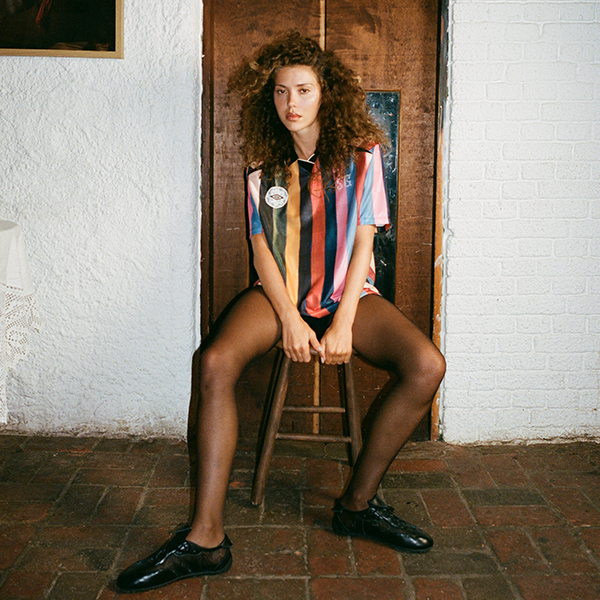
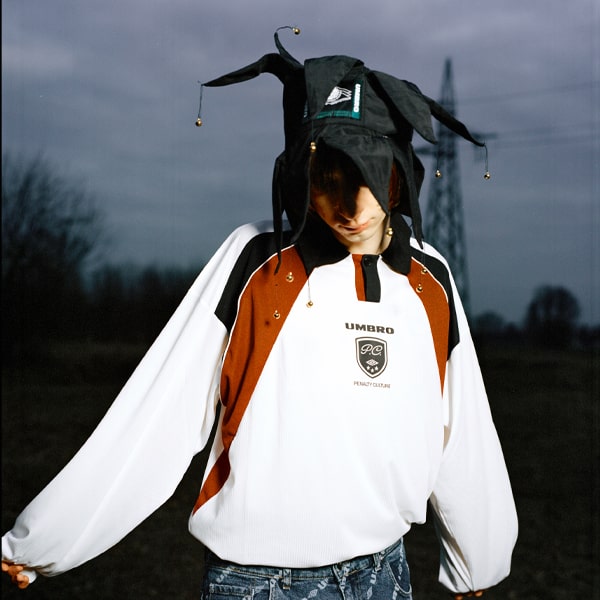
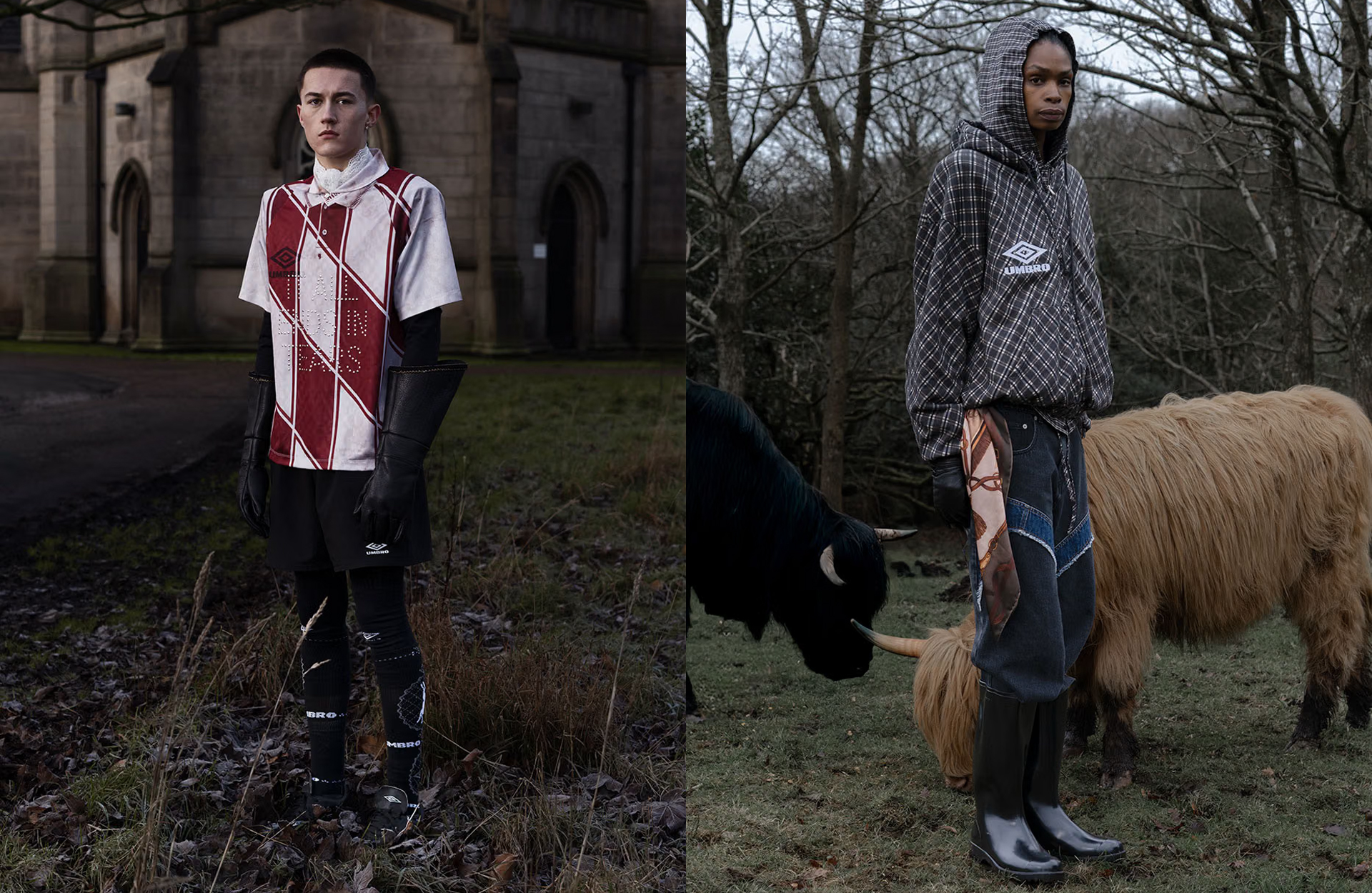
Take Slam Jam and Umbro, for instance. Their Fall/Winter 2026 collection explores the space between the “front room and the football pitch”, filling it with wallpaper-inspired prints, traditional knits and velvet tracksuits. Umbro explicitly cites British domestic interiors, folk references and “cottagecore sensibilities” as its starting point. Which, sure, sounds faintly ridiculous, but looks kinda brilliant.
For Carlo Tinelli, Brand Director at Slam Jam, those surroundings offer another way into a culture whose most familiar references have been thoroughly explored. “There’s a whole alternative universe connected to football that we are interested in,” he explains. “We always try to shed light on flipped narratives.”
That universe is less straightforward than the clothes might initially suggest. Tinelli points out that an away day can become a sweet memory after an important win, while a house party can go horribly wrong. A floral front room has its own capacity for chaos.
“In this very collection [FW26], domestic and rough landscapes are very connected,” he says. Bringing traditionally contrasting elements into dialogue is an explicit choice, reflecting how they coexist in reality.
Slam Jam’s collection might look at home beside patterned curtains, but there’s still some roughness underneath the upholstery. The domestic references expand the story, taking in the places and experiences surrounding the match.
“The meaning of football culture is extremely wide and can’t be limited to pitch and terrace,” Tinelli says. Both remain crucial, he adds, but exist within “a broad universe of stories, emotions and visuals worth to be told”.
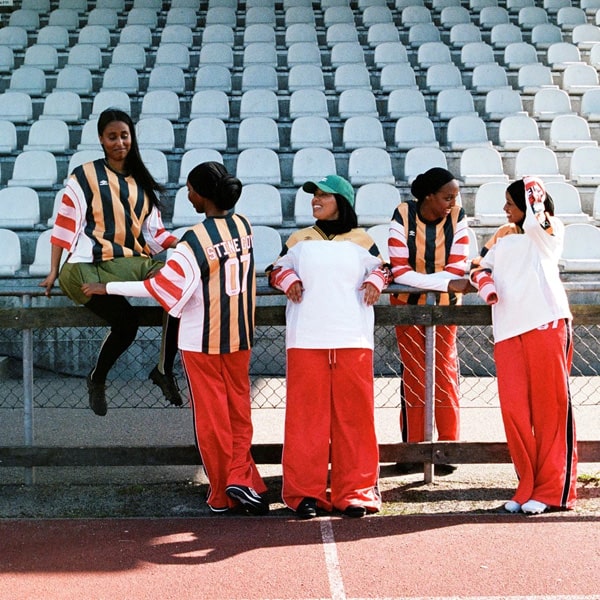
Of course, Slam Jam isn’t alone in wandering into said universe. Stine Goya’s second Umbro collaboration, “Where We Meet”, landed just weeks earlier with romantic florals, lace crests and hand-painted graphics. Its references are still unmistakably British – cafés, pubs, tiled loos – interpreted through a considerably softer lens.
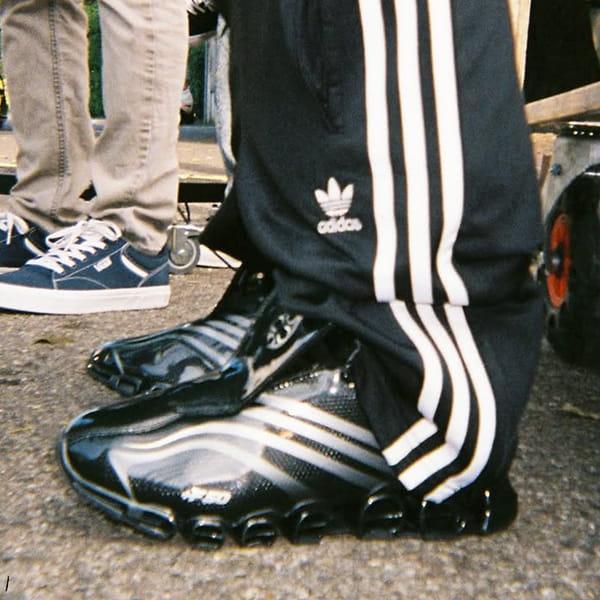
Then there’s Wales Bonner, who has been making a similar argument, albeit in her own language, for some time. Her Spring/Summer 2026 adidas collaboration covers a recognisable sporting silhouette in an abstract hibiscus print, then finishes the Three Stripes in crochet. Polyester and handicraft, seemingly incompatible on paper, look the nuts IRL.
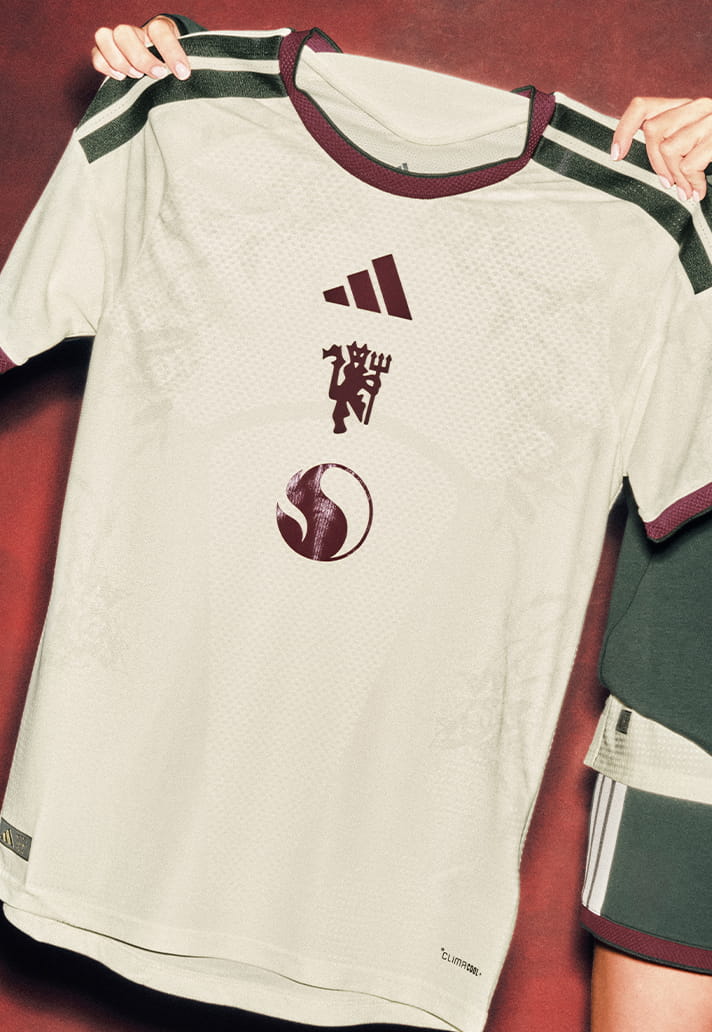
Manchester United’s 2026/27 third shirt, meanwhile, features hand-drawn roses, borrowing its palette and visual cues from Manchester’s cultural institutions and community spaces. None of this means the terrace has suddenly swapped pints for elderflower cordial. Nor should Cottagecore become another internet label applied to anything containing a daisy. What’s interesting is the broader permission it represents in football fashion.
“We certainly see a deeper attention to what football means today,” Tinelli says. Working with Umbro has allowed Slam Jam to study Britishness alongside more than a century of sporting heritage, providing a substantial source of inspiration. That history contains plenty beyond the obvious terrace uniform. As football’s cultural audience has grown, so has the vocabulary available to designers working around it. The shirt can be romantic, handmade, decorative or deliberately pretty.
Perhaps this was inevitable. Once fashion properly embraced football, the relationship was never going to stop at putting an old nineties jersey beneath a vintage Prada jacket. Designers were eventually going to pull the sport into their own universes – and those universes contain flowers, embroidery, interiors and craft.
Ultimately, Blokecore helped take football out of the stadium and put it on the runway. Cottagecore might be doing something altogether nicer and, finally, bringing it home. Who knew?