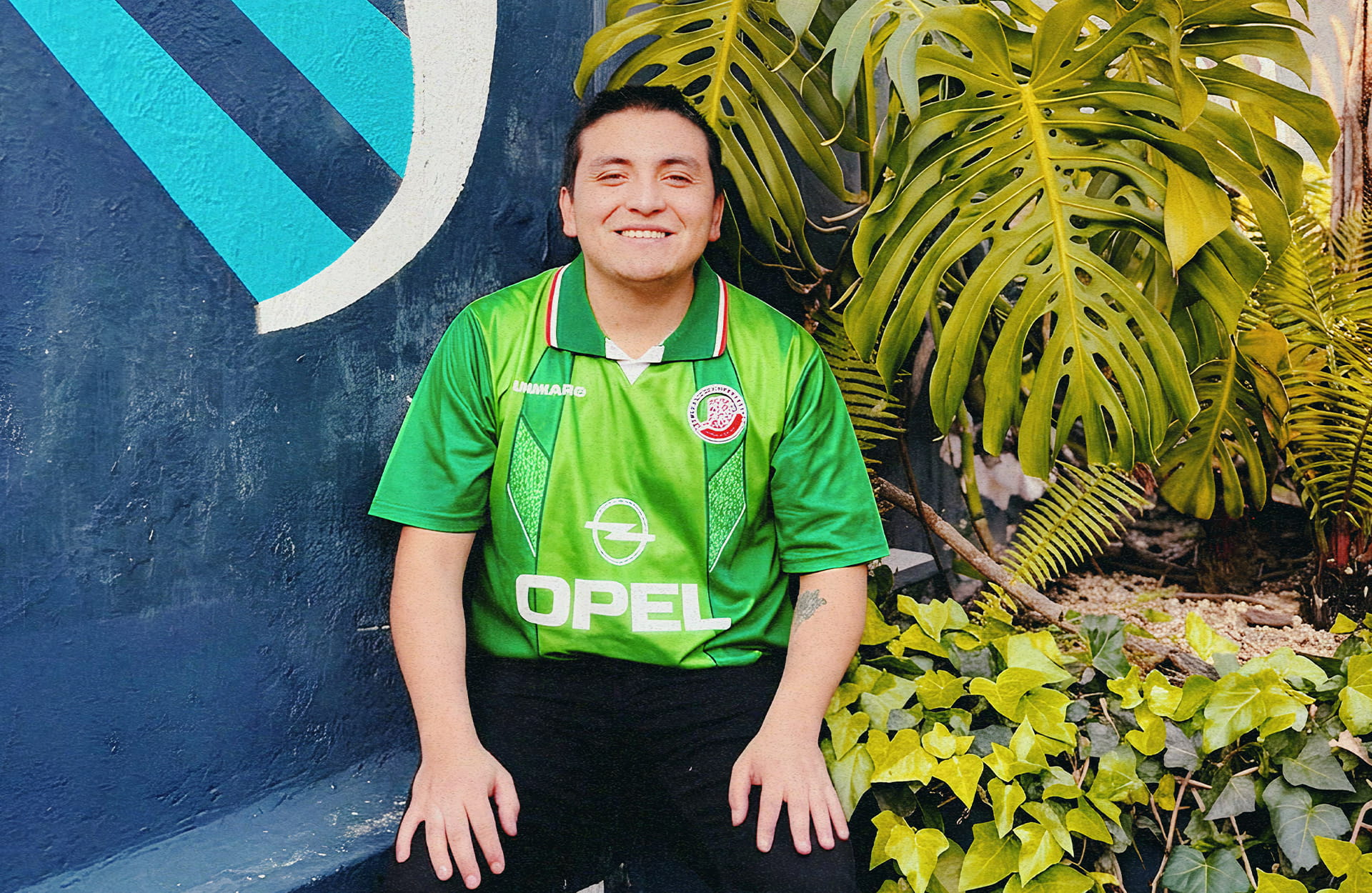
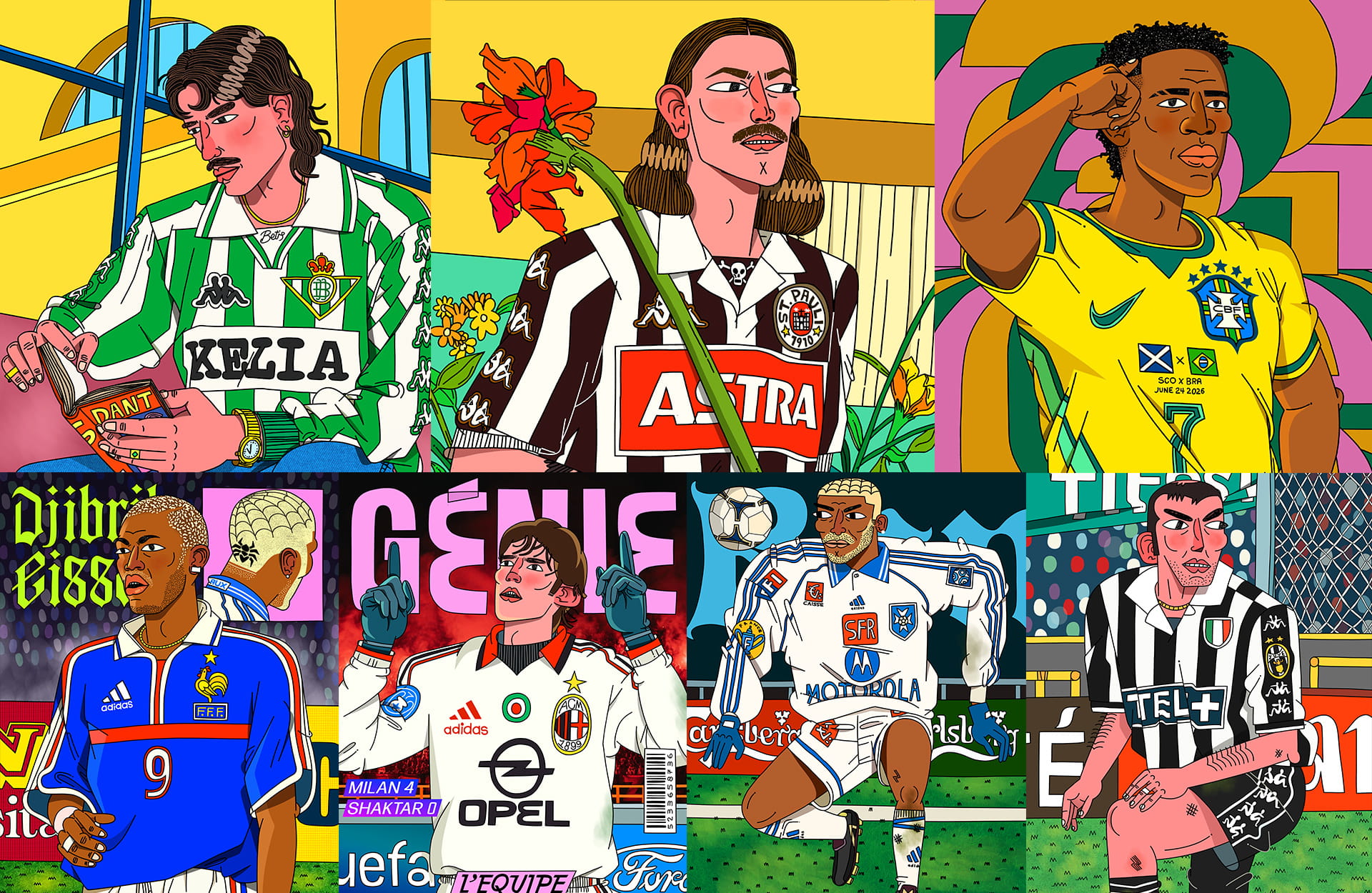
For VANGUARD, we sit down with Eddy Rosas, aka B1ckle, to talk the magic of early-2000s football, his journey into illustration, and why sometimes the most personal work is simply about drawing what you love.
For Eddy Rosas, football and art have always existed in parallel. Long before the Colombian illustrator found a growing audience within football’s creative community, there was simply a kid with a pen in his hand, filling the backs of school notebooks with whatever his imagination could conjure. Drawing was instinctive. Football arrived a little later. Eventually, the two would meet.
Better known creatively as Bickle, Rosas has spent the last decade working as an illustrator, initially finding his way through work inspired by film and pop culture. Over the past year and a half, however, his practice has increasingly turned towards football, and more specifically, the memories, characters and visual language that surround it.
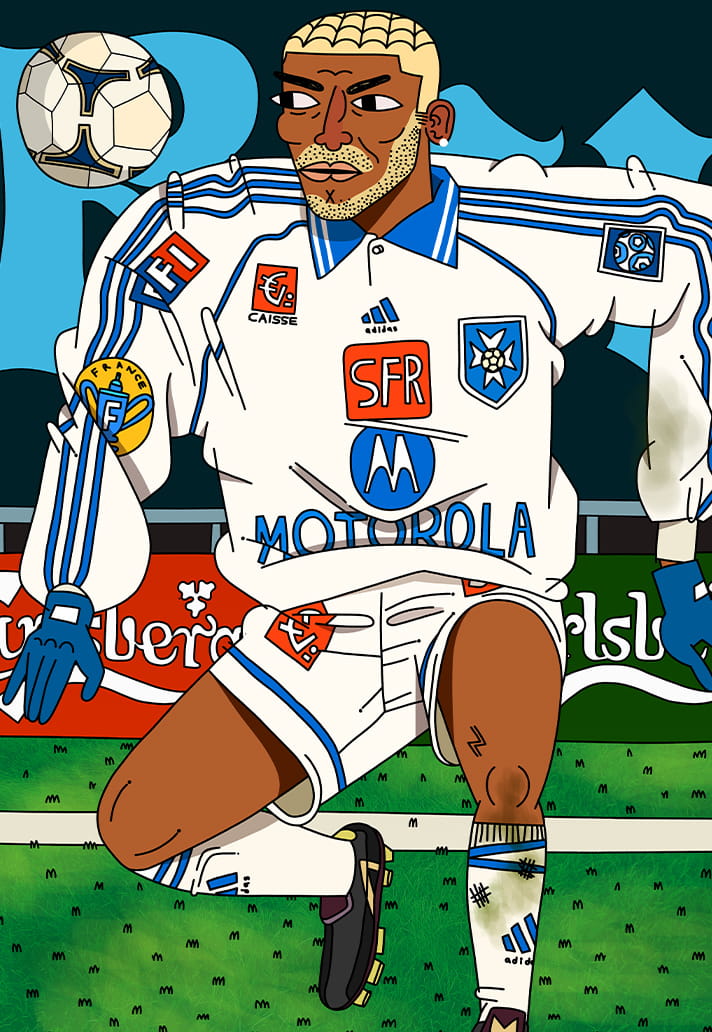
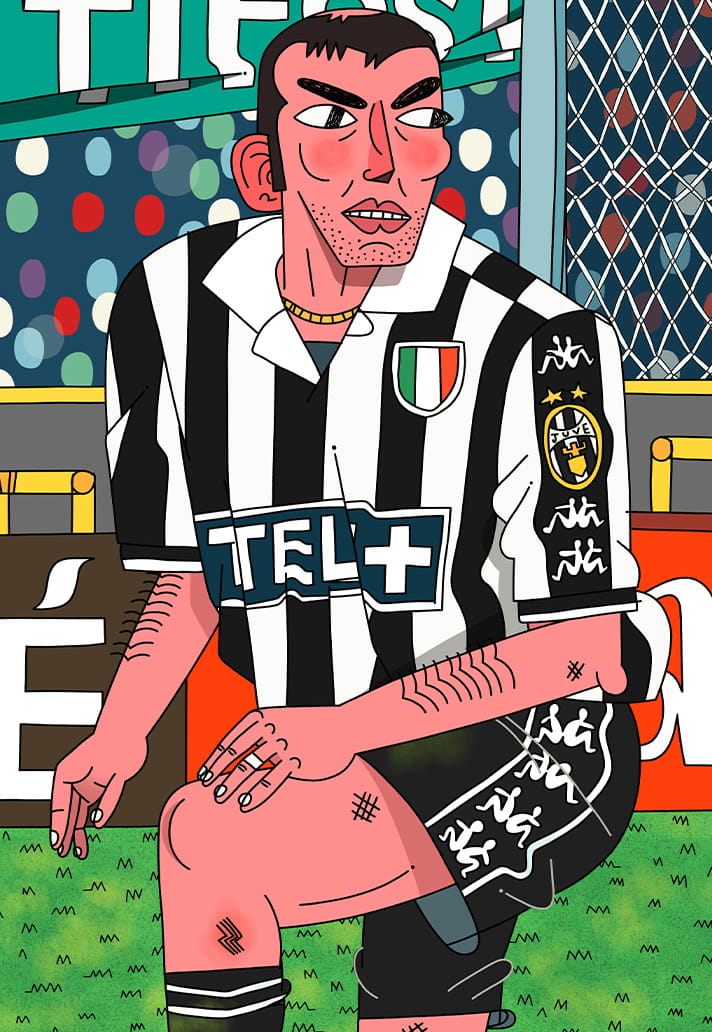
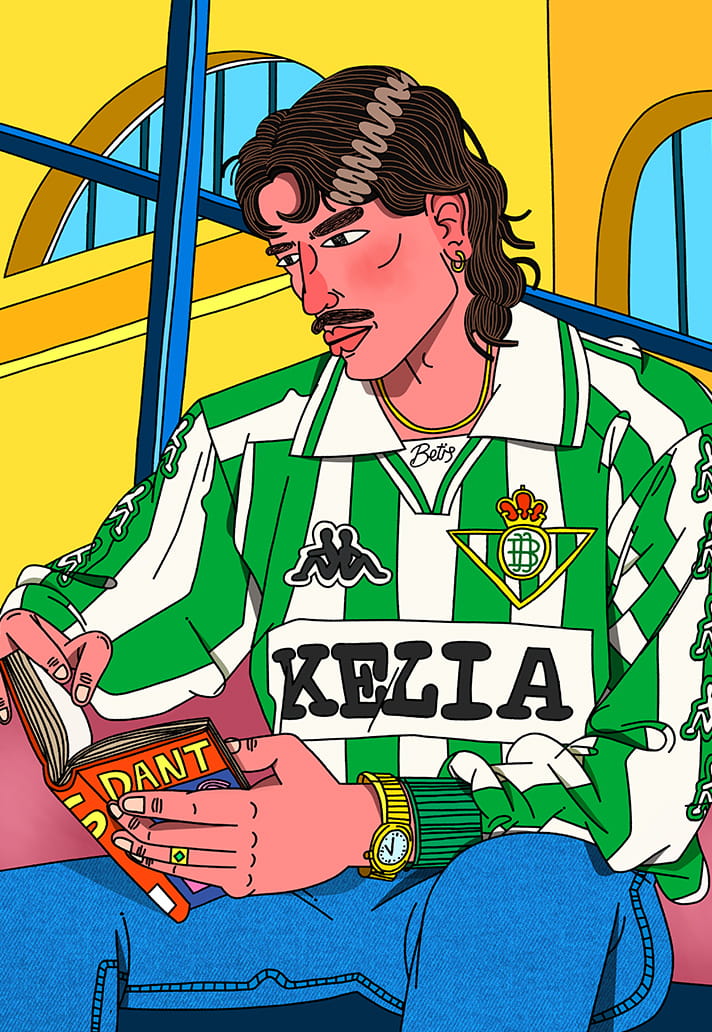
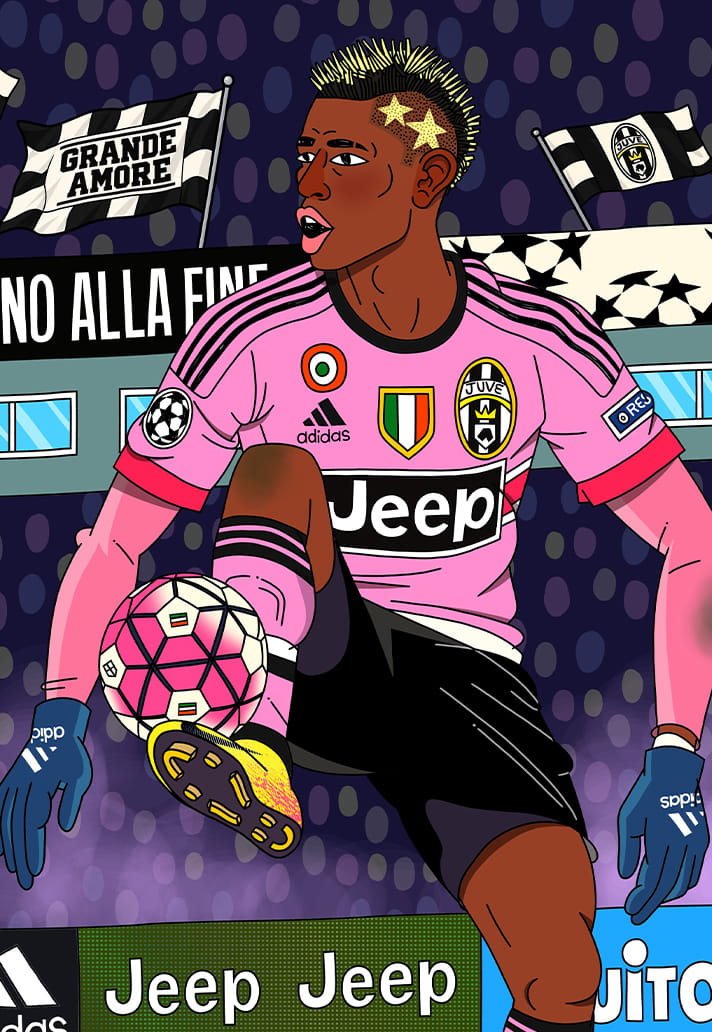
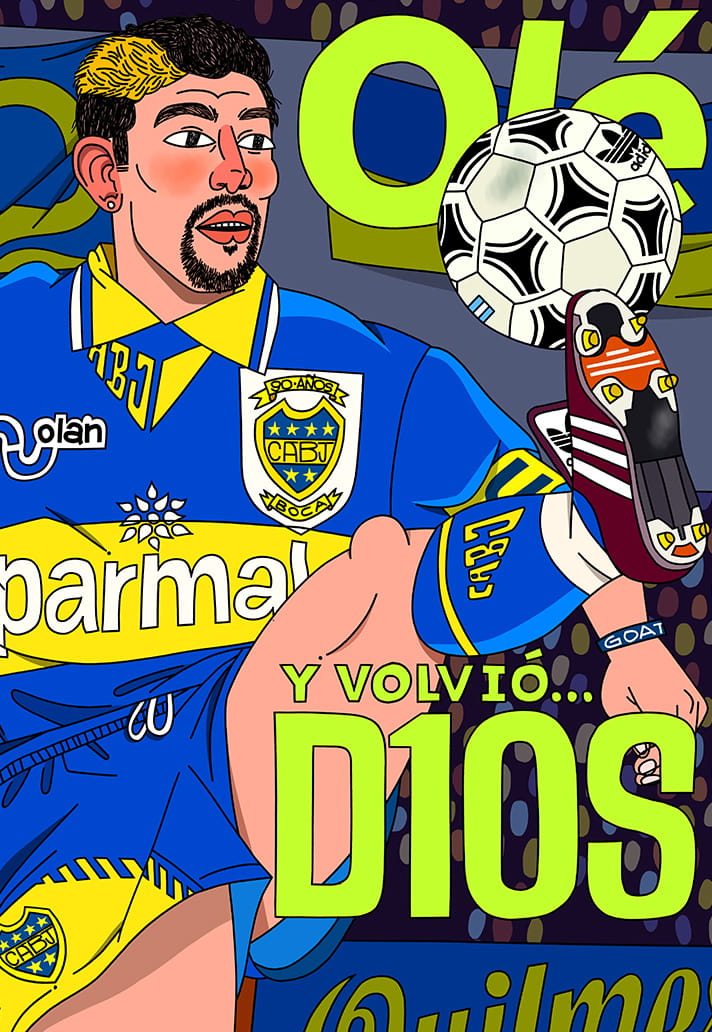
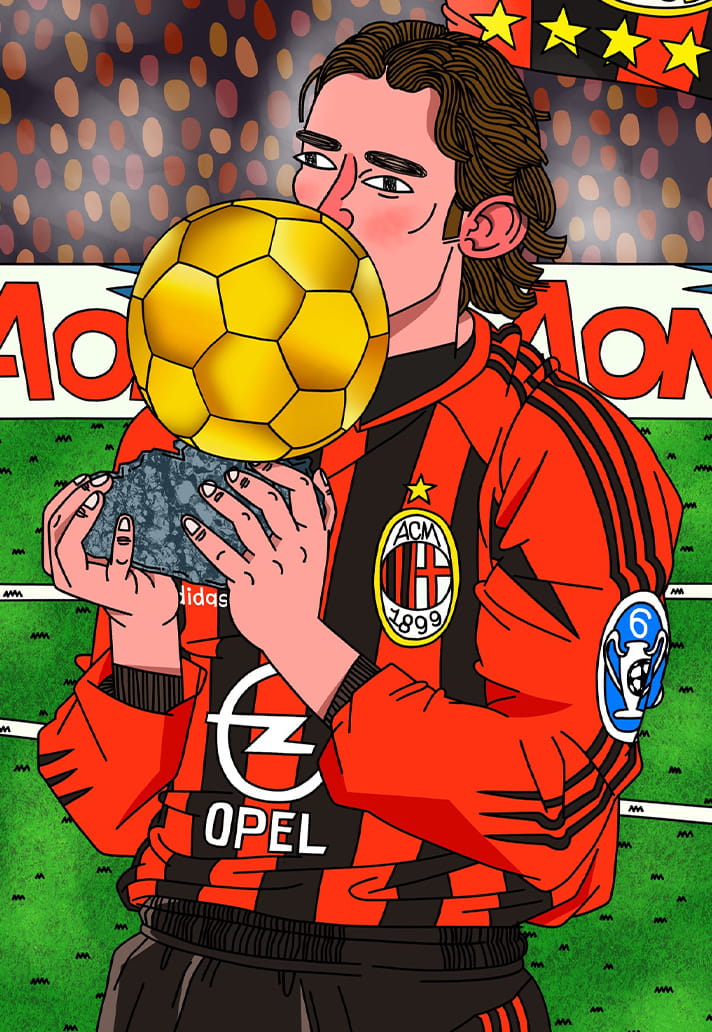
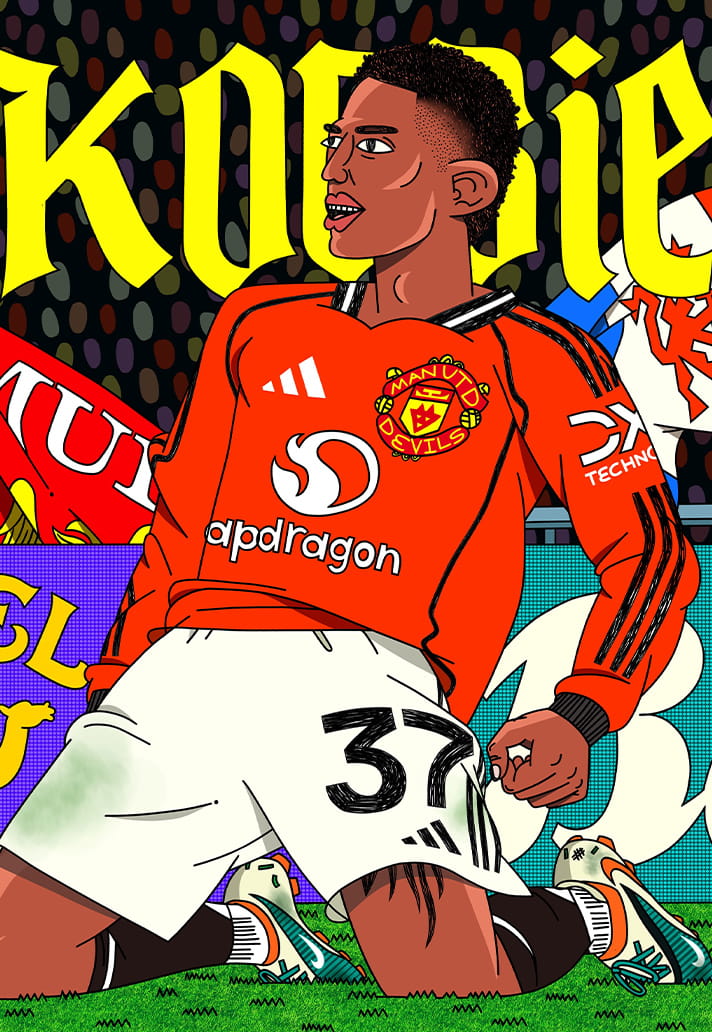
His work doesn't simply recreate the beautiful game’s past. It feels more like a reimagining of it. Shirts become canvases, oversized crests and iconic sponsors become visual anchors, while familiar faces from football's recent history are stripped back into expressive illustrations. The result is a body of work that feels immediately nostalgic without ever becoming trapped in nostalgia.
Growing up in Colombia, football was always close by. His father and brother were both fans, while his own relationship with the game began through his hometown team before expanding into the rituals that define football fandom: video games, television, seasons, shirts and heroes. Euro 2004, watching the Netherlands, and eventually following every Manchester United season became part of the soundtrack of his childhood.
It makes sense, then, that football would eventually find its way into his work. Yet Rosas didn't force the transition. After years spent illustrating other subjects, football simply became a space that felt natural. A place where his own memories could meet those shared by thousands of other fans.
And while football continues to evolve, becoming increasingly intertwined with fashion, music, art and wider popular culture, Rosas is interested in what comes next without losing sight of what came before. With more than a century of football history to explore, he sees an almost endless archive of players, moments, magazines, video games and cultural artefacts waiting to be revisited.
For VANGUARD, we sit down with Eddy Rosas, aka B1ckle, to talk about growing up in Colombia, discovering football, the magic of early-2000s football, his journey into illustration, and why sometimes the most personal work is simply about drawing what you love.
Take us back to the beginning. What was life like for you growing up?
I grew up in Colombia and had a very peaceful childhood, surrounded by my family. I've always been drawn to the arts from a very young age. Drawing, painting, and creating things. My love for football came a little later, when I was around 10 or 12 years old.
What did creativity look like for you as a kid? Were you always drawing, or did that come a little later?
I've always, always been drawing since I was a kid. I was definitely that child who would doodle all over the back of his notebooks. And even now, as an adult, I'm still constantly drawing. I'm a bit restless by nature, and I think drawing helps me feel calm. I consider myself a very creative person, and creating things has always come quite naturally to me.
Growing up in Colombia, football is so deeply woven into everyday life. What did the game mean to you when you were young?
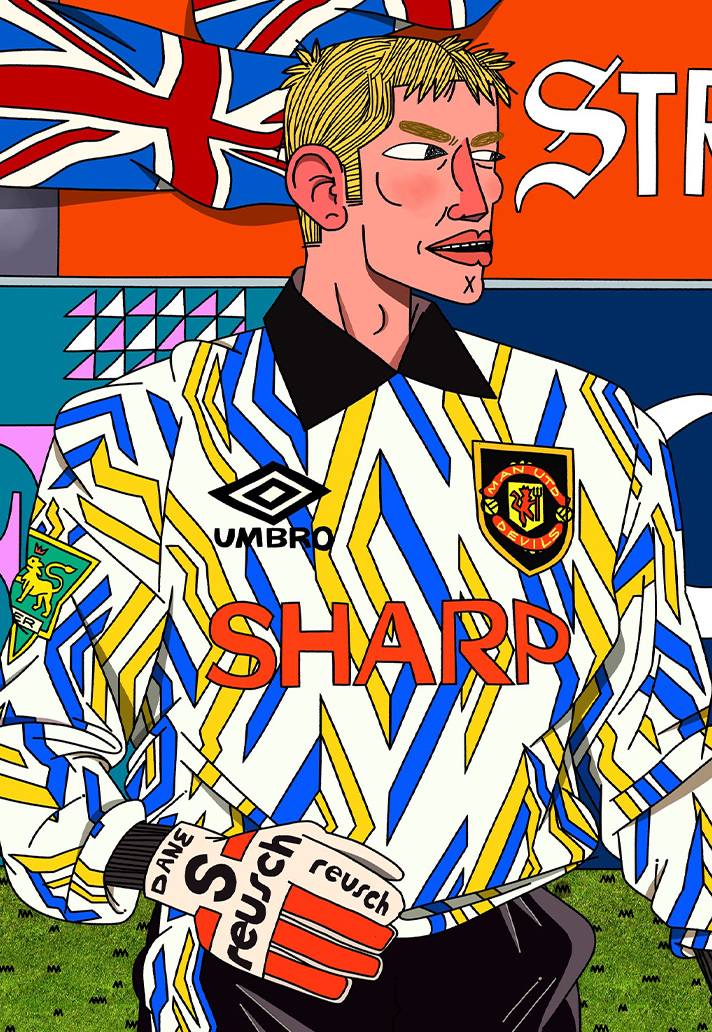
I grew up in a very football-loving environment. My dad and my brother have always been into football, and I started by following the team from my hometown. Football has always been a part of my life. I loved playing when I was younger, I don't play as much anymore though, but I like to think I was pretty good. Everything was football: video games, watching it on TV, following the seasons. I remember my first tournament being Euro 2004, supporting the Netherlands, and since that year I have followed every Manchester United season. So for me, football means connection, something very familiar and, above all, passion.
Was there a particular team, player, shirt or football memory from your childhood that really stayed with you?
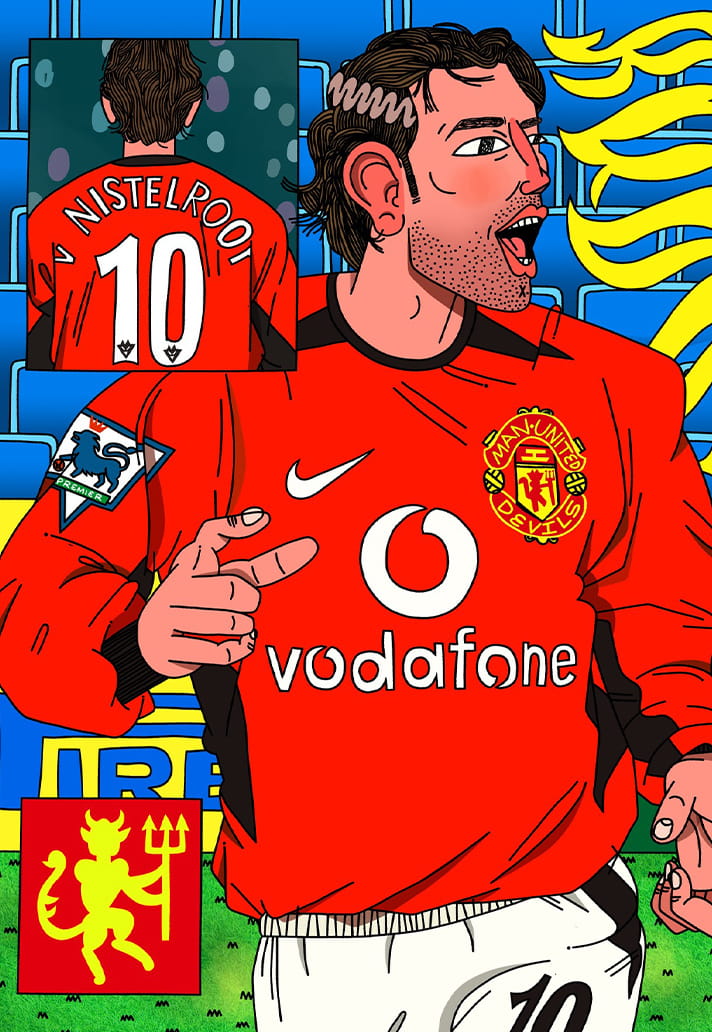
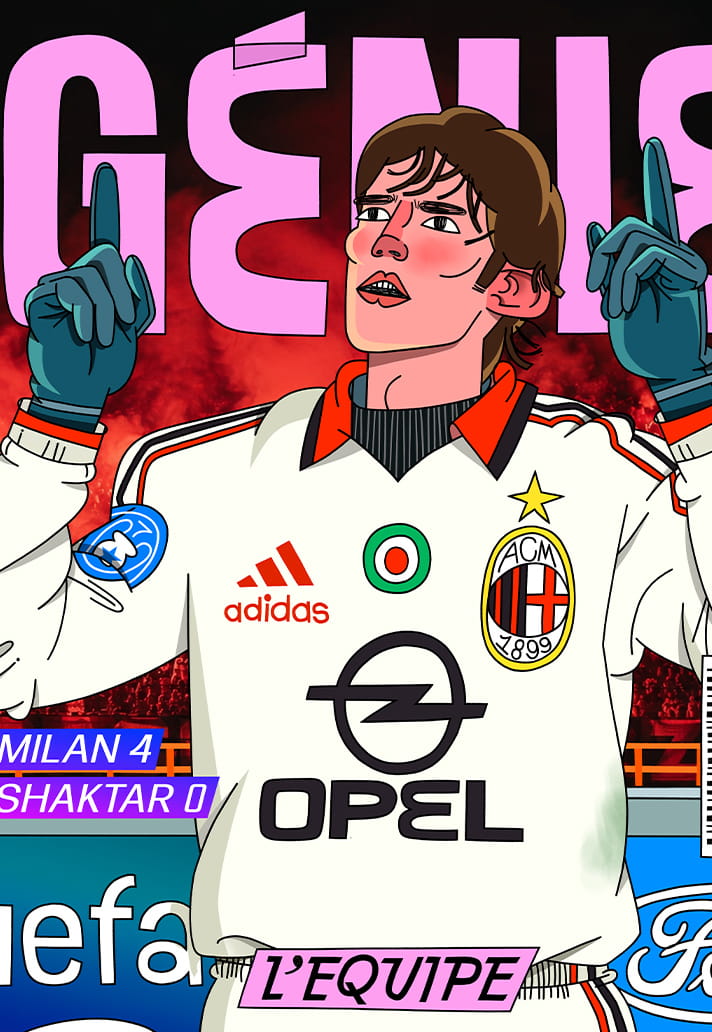
There are so many football shirts that, even as an adult, bring back a lot of nostalgia for me. I could mention Liverpool with Carlsberg, Inter Milan with Pirelli, or that great early-2000s Milan side with Opel. But I think the shirt that really stayed with me from childhood, and the one I remember most fondly, is the 2003 Manchester United shirt with Vodafone as the sponsor. I have a very clear image of seeing Ruud van Nistelrooy wearing it. He was my first football hero, and I still remember him with a lot of affection. I thought he was an incredible player, and he also had this really stylish presence about him.
When do you remember football becoming more than just a game for you?
I think it was that way from the very beginning. Football meant much more than just a game because it was a way for me to connect with my family and friends. Maybe that feeling became even stronger over time, but football has always meant a lot to me.
And how did you make that transition from simply loving football to actually using it as a subject within your work?
Honestly, I'd say it took quite a while. I've been working as an illustrator for around ten years, and I used to illustrate a lot about films. I feel like it's only been in the last year and a half that I've found a space and a community within football art. It feels like a very natural and comfortable place for me because I love football, I feel like I know the game well, and I really enjoy portraying things that bring me nostalgia, like players who were legends to me growing up.
It's a comfortable and happy space for me, so the transition felt very natural.
Your illustrations feel nostalgic without just being recreations of old football imagery. How did you develop that visual language?
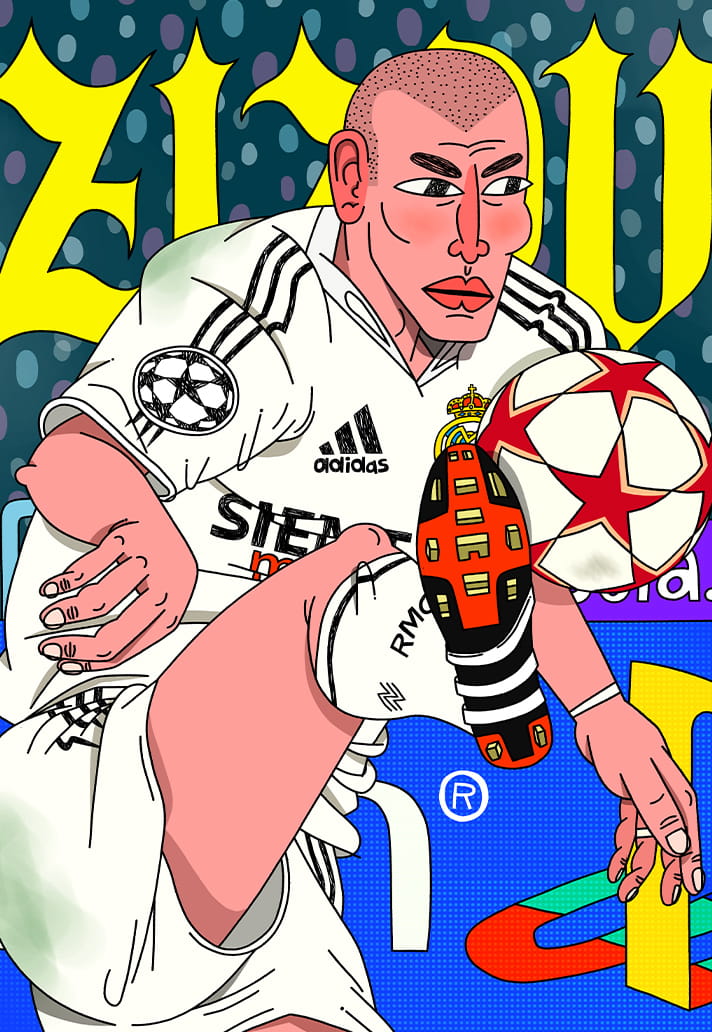
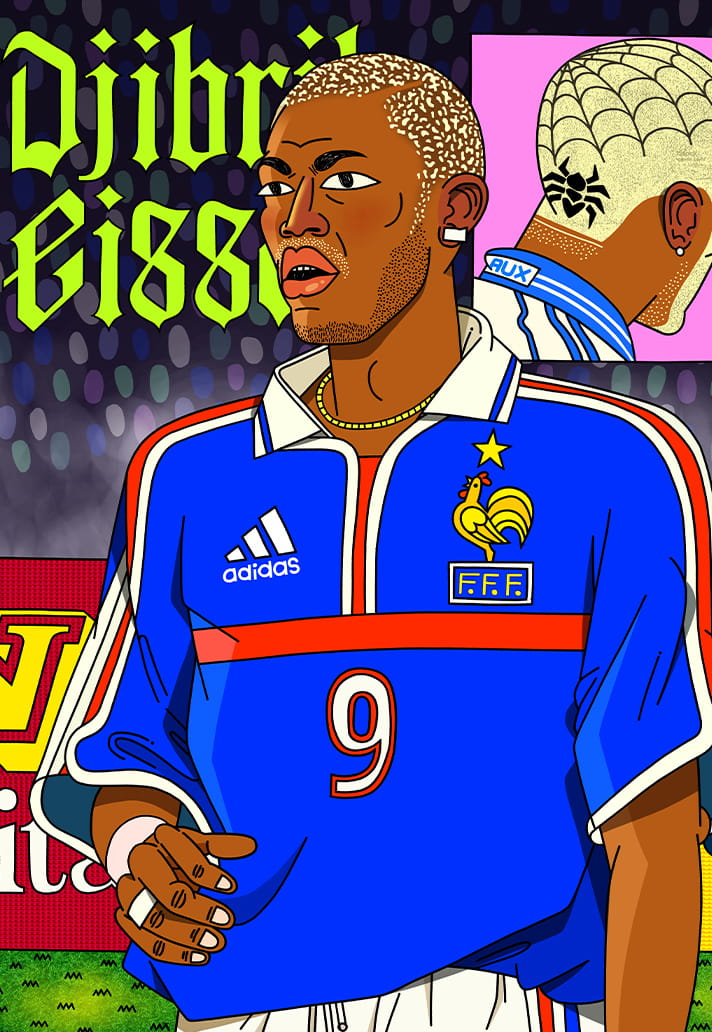
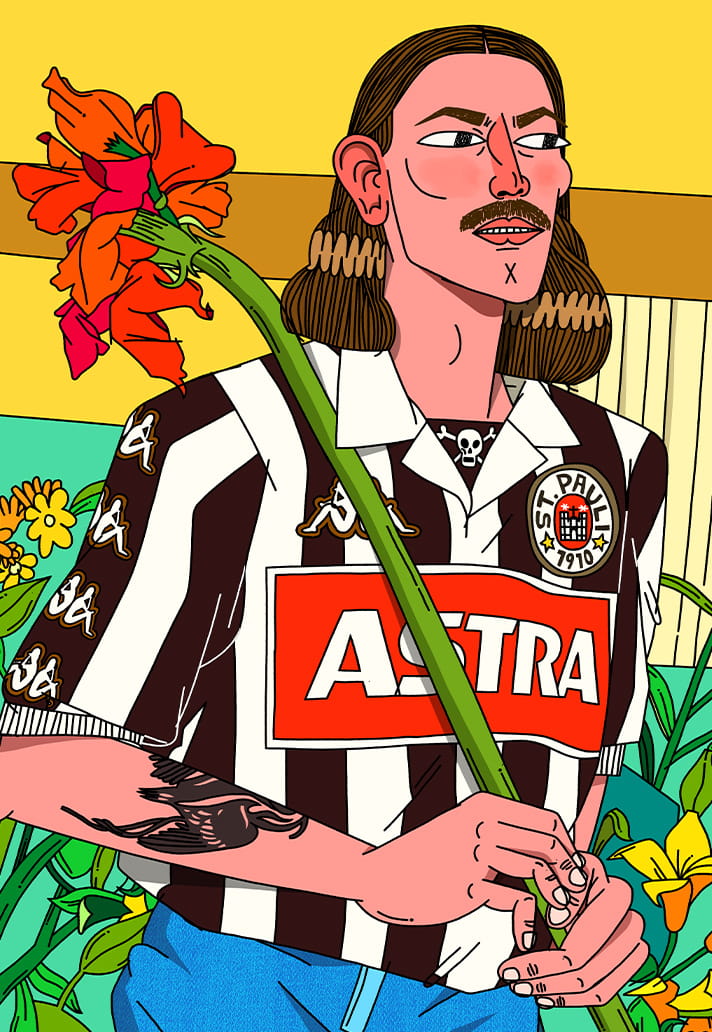
Honestly, I think a lot of it comes down to putting a lot of heart into what I do. For me, football illustration is never a formula. I think each piece develops in its own way. But if there were any rules within my visual universe, I'd say they would revolve heavily around the shirts, big crests and big iconic sponsors as main elements. I think those details are what really connect with people. Beyond the player wearing them, there's a visual connection to the nostalgia that certain kits bring back.
Is there a particular football era you feel especially connected to?
This is actually a question I love, because it's something I often talk about with my friends. I feel like I'm a little harsh on modern football because I think it has lost some of that grit, that rawness, that essence it had in the early 2000s. There was this incredible combination of really, really good players and big teams at their peak, and the world itself also felt different. Football was less polished for television and, in a way, more authentic. The gritty pitches, chaotic stands lit by flares, everything felt more real and less artificial back then.
It's by far my favourite era of football, by far.
What does your creative process actually look like, from finding an idea to seeing the final illustration?
I think the process starts with feeding myself visually, looking for images that I feel have potential within the format I usually work with. From there, I start thinking about colour and line, trying to bring out the best in the reference image and gradually building a picture of what the final illustration is going to look like. Once I'm in Photoshop, where I do most of my work, I have a pretty well-refined system. I have my brushes, opacity, line weights, and little tricks very well defined by now, and I tend to follow that process consistently because I know it works for me.
What are you trying to capture when you illustrate a player or a moment? The person, the emotion, the memory, or something else?
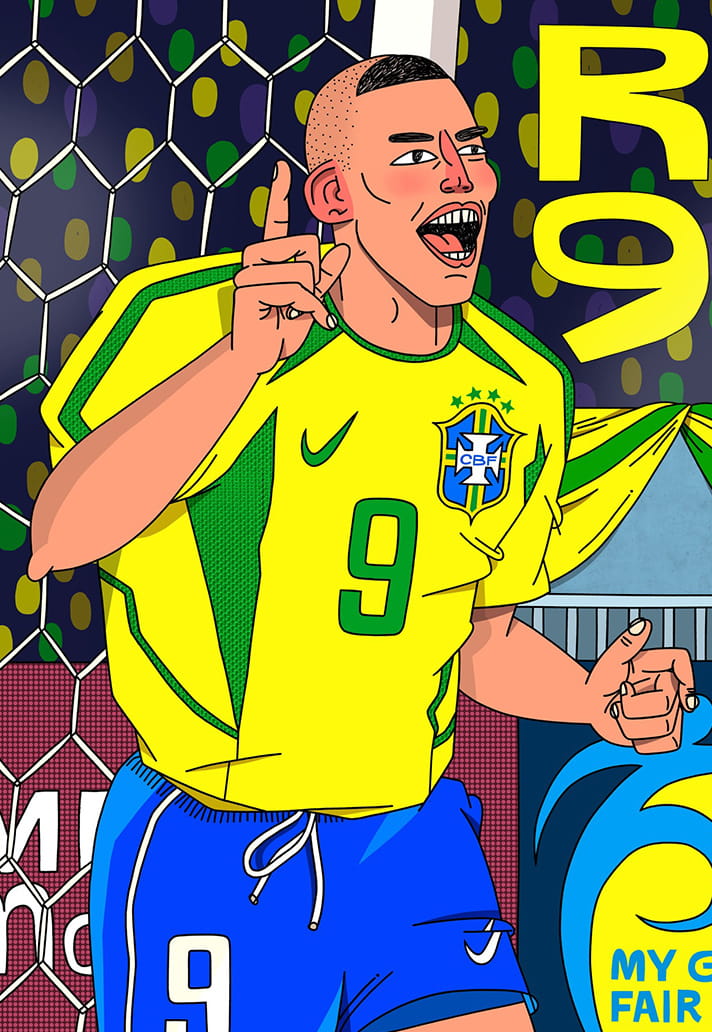
I'd say it's really the moment itself. The memory and nostalgia that a particular moment or player can evoke for football fans. I want to capture the nostalgia it creates in me, as well as the iconic nature of that moment or player, what it means to football fans, and ultimately make it a tribute to that.
Why do you think we become so emotionally attached to football imagery from the past?
Just because football is so beautiful, hahaha. But beyond that, I think people are deeply attached to nostalgia. We like remembering who we were, or what the world felt like at a certain point in our lives, and football imagery has a unique ability to bring those memories back instantly.
Football is also incredibly aesthetic to me. There's a natural beauty in the flow of the game, the movement of the players, and the visual composition of everything happening on a pitch. From a photographic perspective, it often feels perfectly balanced. It's a sport that is visually powerful, and I think that's a big part of why those images stay with us for so long.
Football has become such a huge part of fashion, music, and art now. Where do you think there's still room for artists to do something genuinely different with the game?
And I really love how football has found its place within those art forms, and to me it makes perfect sense. It almost feels obvious that football would be represented through visual art, painting, music and fashion, because it has so many expressive and visually rich elements to explore.
As for where it could go next, honestly, I don't know. I'm curious to see where the world takes it; I mean, we're already creating art with AI, so I really have no idea what surprises the future might bring. I would love to see more, and better, football films, though. I don't think that side of football has been explored enough.
What's been the biggest challenge of trying to build something that feels completely your own?
Honestly, I don't think about it too much. If you're constantly worried about having to create something unique or something that's never been done before, I don't think that's the right approach. I just let myself be guided by what I feel, and naturally, over time, I've developed a style that tends to look a certain way. So now I focus more on feeding and developing that visual language of my own, and simply enjoying it.
Your work has already brought together football, art, nostalgia and cinema. Where do you want to take that world next?
Football has more than 100 years of history, with so many heroes, historic moments and iconic legends that I can keep exploring. And that nostalgia is still being created every day. I want to keep paying tribute to more players, more moments, and even more of the things around football: video games, magazines, and different elements of popular culture where football exists. I feel like there's still so much to explore, and that's what I'd love to keep doing from here on.
Finally, when you look back at the kid in Colombia who was drawing and watching football, how different does his dream look from the reality you're living now?
It might sound a little unambitious, but honestly, I think I have exactly the same dream I had as that kid who was always drawing: to express my emotions, enjoy myself, and draw freely and happily. Not much more. As an adult, I guess the difference is that I'd like it to become my main way of making a living. But I always try to remind myself to enjoy it as much as possible, and not lose that naturalness or the deep, genuine meaning it had for me when I first started drawing as a kid.
Check out more of Eddy's work @B1ckle_