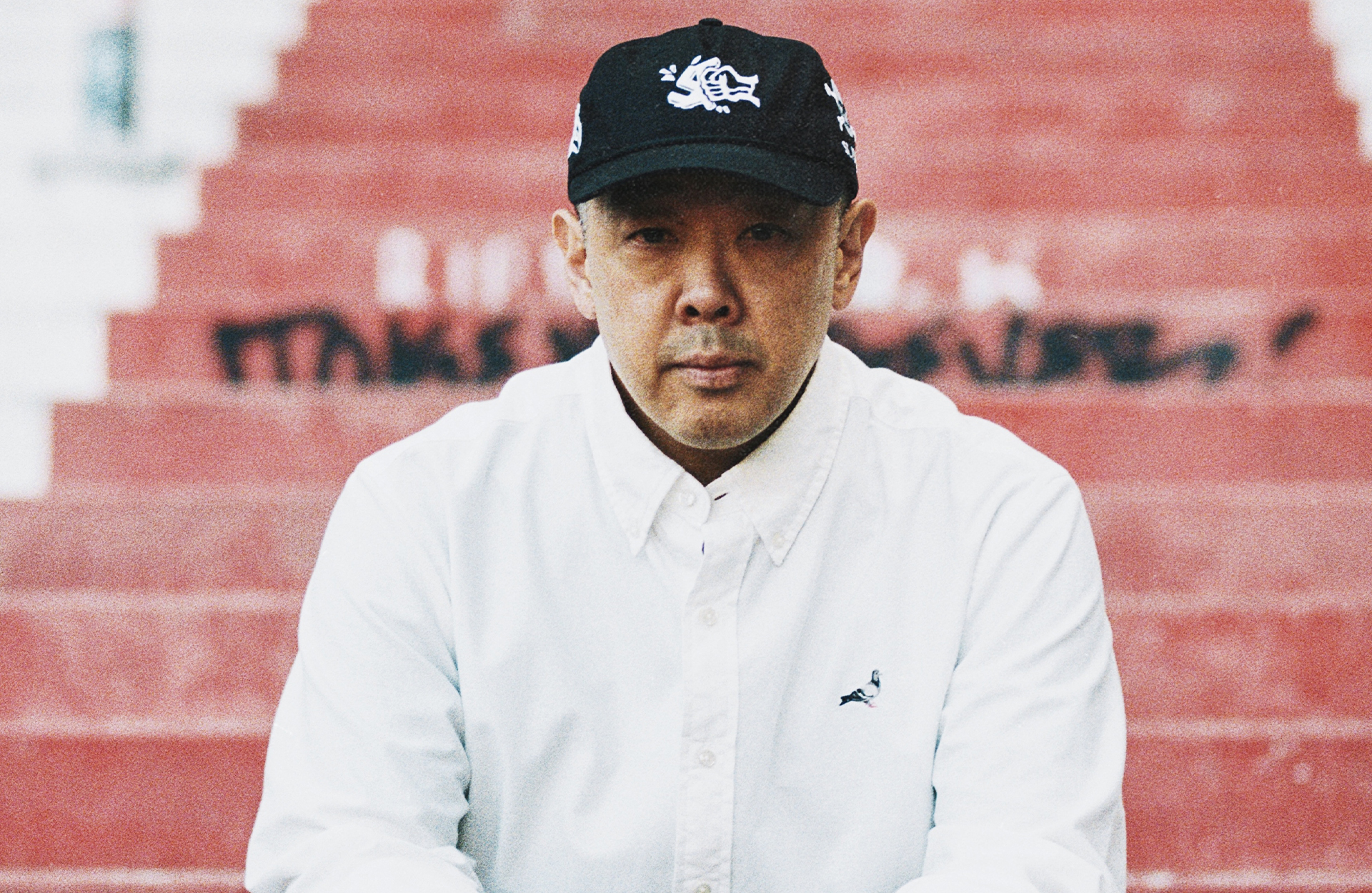
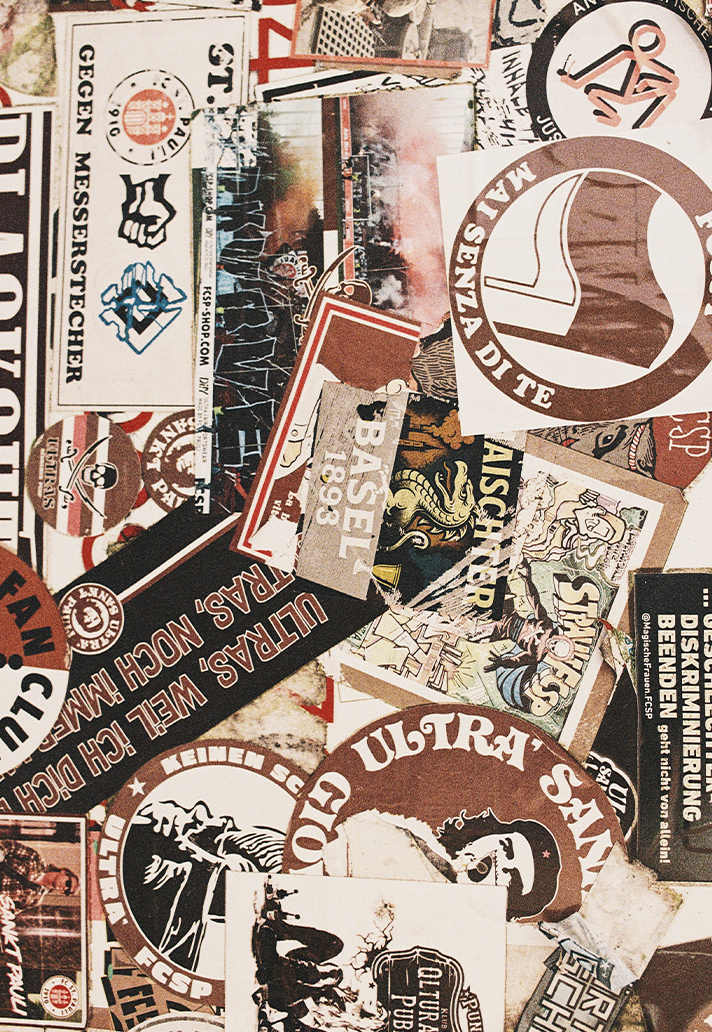
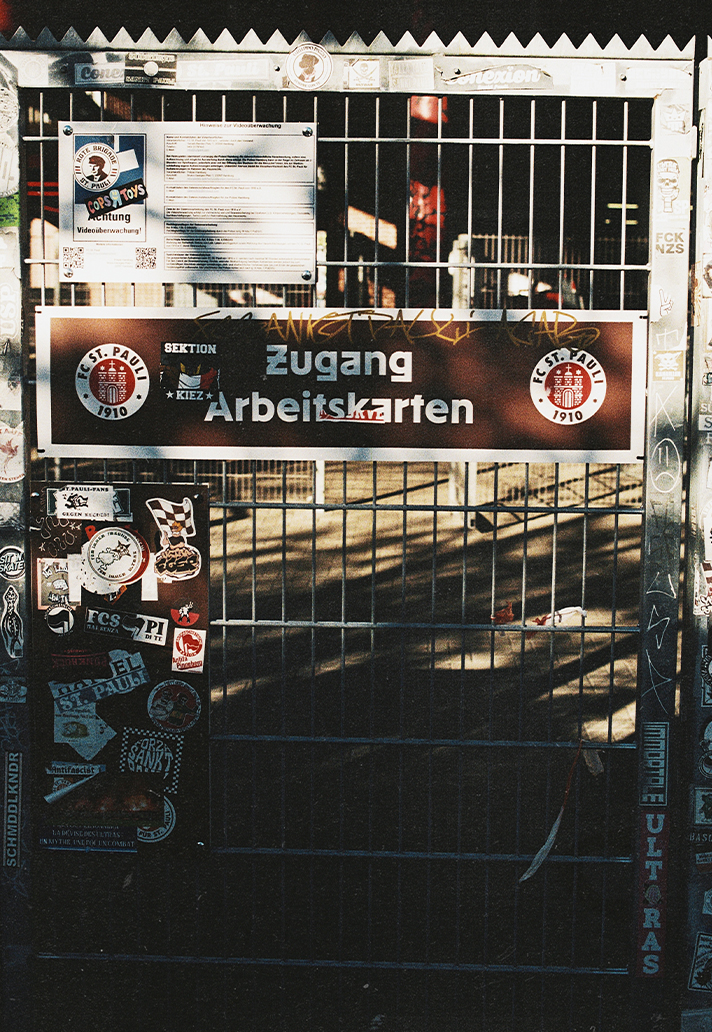
Of all the things Jeff Staple notices inside the Millerntor, it’s the stickers that tell him something important.
Left on surfaces where another stadium might have scraped them away, they preserve the contributions of people who have passed through.
For a designer who has spent almost three decades putting ideas onto things people can wear, that accumulation means something. Someone cared enough to leave their mark, someone understood enough to keep it. “In an American stadium, they’d all be scraped off and cleaned away every night,” he tells SoccerBible. “But when you do that, you rob the place of its soul.”
Staple has a pretty good understanding of how objects acquire meaning. Since founding his label in 1997, the designer has helped shape the way streetwear looks and circulates, with his 2005 Nike SB Pigeon Dunk becoming a defining release in sneaker culture. His practice has extended through STAPLE and creative agency Reed Art Department, building a career around translating a point of view into something people want to own.
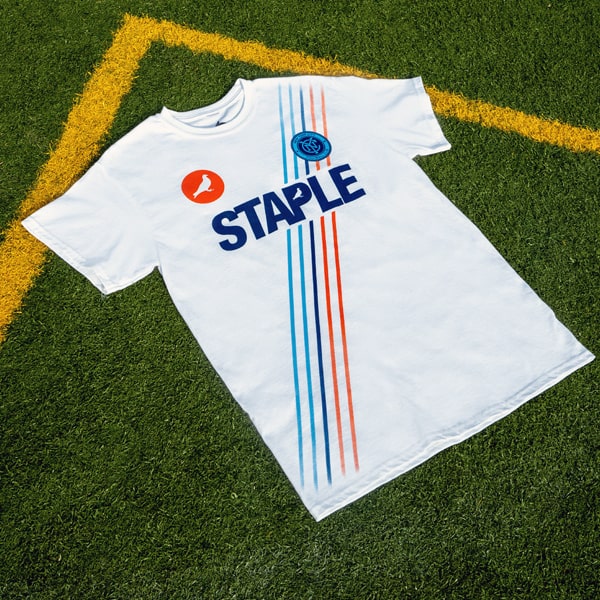
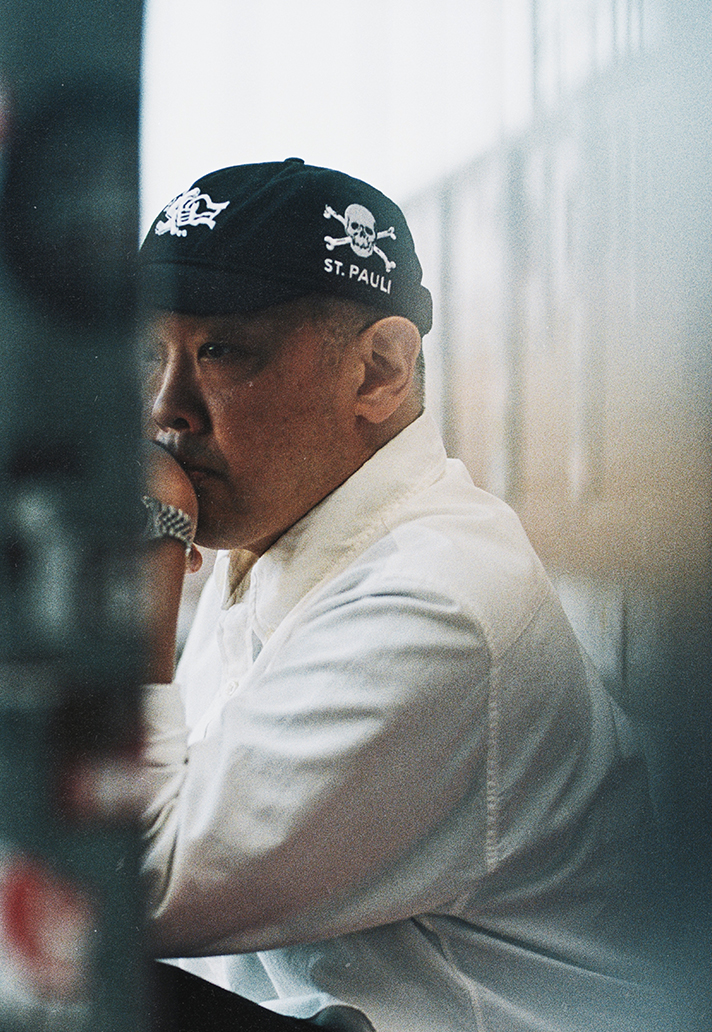
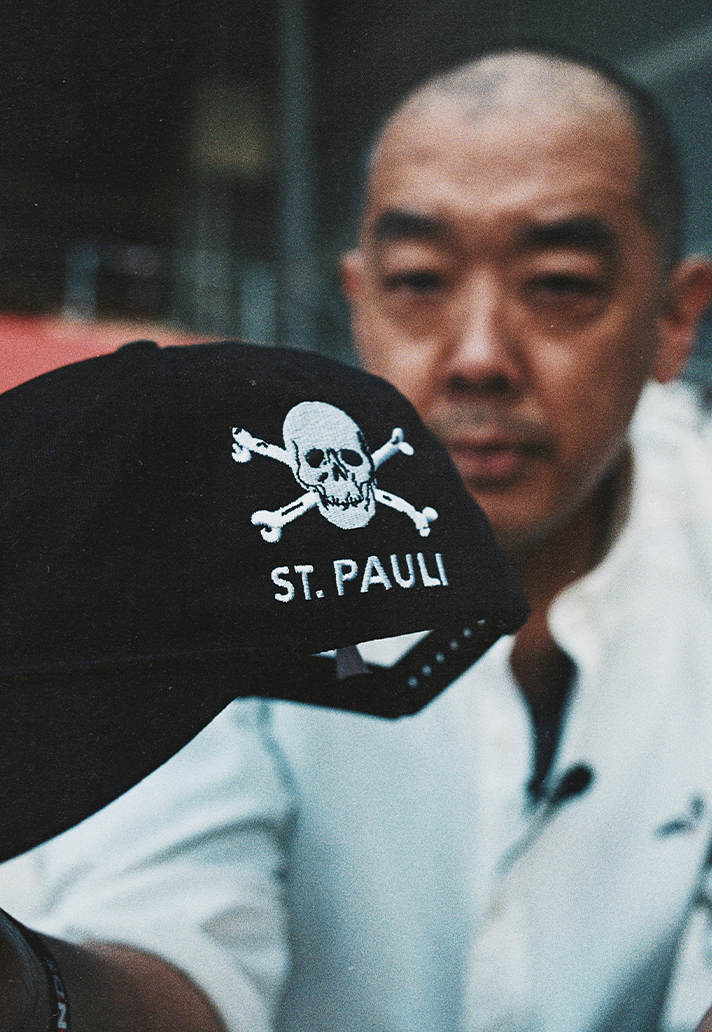
That experience brings him to Hamburg for a collaboration with FC St. Pauli, where his pigeon meets the club’s skull across clothing and accessories. T-shirts, a zip hoodie and a scarf give the partnership familiar places to live: garments worn on the street, in the stands and wherever the wearer takes them afterwards.
The interesting part, though, is how Staple understands his role here. As fashion’s interest in football continues to produce an enthusiastic supply of collaborations, there’s an easy assumption that the visiting designer arrives with the cultural expertise. Staple sees rather a lot of expertise already in the building. “The chanting, the slogans, the vocabulary that only each individual football club has, the colours, the flags. All of those things already existed in football.”
For our latest VANGUARD conversation, we sat down with Staple to discuss designing for a community with strong opinions, developing creative instinct and finding something familiar a long way from home.
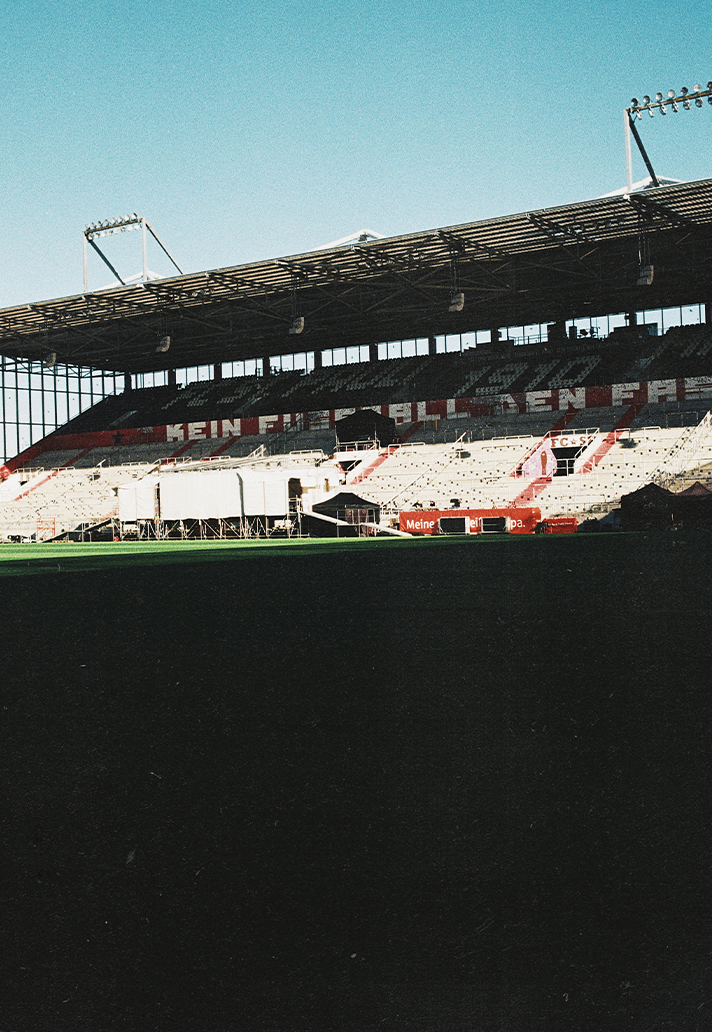
We’re sitting inside the Millerntor, surrounded by decades of football history and culture. What’s it like to see your work come to life in a place like this?
It’s so surreal, man. Seriously. When I first walked out into the stadium and saw the history that was here, it was really eye-opening. I had one of those pinch-myself moments. When I saw the artwork that I’d created outside, on the columns and the walls, it was crazy. It’s crazy to think about how far the culture has come. I feel like I’m a messenger of that culture, you know? So to see it represented here, in a place like this, is a real honour.
You’ve spent almost three decades turning ideas into physical products and cultural moments. Did working with a club like St. Pauli bring a different kind of responsibility?
Absolutely. Because of the heritage this club embodies, I felt a really great level of responsibility. And also, selfishly, I didn’t want millions of fans mad at me for doing some whack shit with their club! I’m never really that worried about the product, the design or the storytelling, because I feel like I have a firm grasp on those things.
The challenge is that you just don’t know how the public is going to receive it. I can do my best to make sure I’ve done the right research and understood the DNA of the brand I’m working with. I know my own brand DNA, so that’s not a problem. Then it’s about mixing those two things together. It’s similar to being a chef. You make this stew with two different ingredients, you take a taste and think, “This tastes good to me.” But now you’re about to serve it to all these people, and they might think, “This tastes like shit.”
Thankfully, that hasn’t happened too often in my career, otherwise I wouldn’t keep getting orders! I think taste is something that becomes refined over time. If you do enough reps, if you’ve tasted enough things, you start to develop a palate. You begin to understand what people will like and what they won’t. I’d like to think I’ve developed a pretty good instinct for that.
When you started researching St. Pauli, what did you discover that really resonated with you?
Probably the most surprising thing I learned was that this club, unlike so many others, is owned by its community and its people. Rather than being owned by three banks or something. I thought that comparison to street culture was so cool. Even though I’m the owner of Staple, if thousands of people didn’t each buy one Staple T-shirt, there would be no Staple. So in a sense, it’s community-driven too.
I don’t work in a business where Saks Fifth Avenue or Bloomingdale’s place an order and that’s why I’m able to stay in business. I’m able to stay in business because individual people buy individual pieces of clothing from me. Ultimately, those people are my shareholders. So to see the way St. Pauli operates is really quite punk compared to other sports organisations.
Even walking around the stadium, I noticed that each of the suites is owned by a different group and designed by that group. Whereas in America, one bank would own the whole suite and they’d all look like you’d just walked into a bank. Which is so lame. It’s little things like that which make this place special.
Football and streetwear have become increasingly intertwined, but St. Pauli was living that crossover long before collaborations became fashionable. What do you think happens when those worlds connect?
I think the codes of football have always been there. The chanting, the slogans, the vocabulary that only each individual football club has, the colours, the flags. All of those things already existed in football.
If anything, street culture has sampled bits of football culture and made them its own. So I’d actually say that street culture can learn way more from football culture than the other way around. Staple turns 30 next year, which already puts us in the top one percent of the oldest streetwear brands. But St. Pauli goes back to 1910. That’s over a hundred years of history. So I felt much more responsibility in handling the legacy of St. Pauli. To me, this wasn’t really a 50/50, equal collaboration. I felt a much greater responsibility to take care of St. Pauli than the other way around.
St. Pauli’s identity travels through fashion, music and art, often independently of what happens on the pitch. What do you think makes that connection so strong?
Even though they’re not always the statistical winners, the pride that comes with being part of this club is immeasurable. That’s the thing that really stands out to me. People aren’t necessarily buying into success. They’re buying into something they believe in. And when you’ve got that kind of connection, that kind of pride and identity, it becomes so much bigger than football.
Interview and Photography by Pete Martin